

holbox — yum balam
Sand island in northern Quintana Roo, inside the Yum Balam Flora and Fauna Protection Area. Tarpon on fly and spinning.
Holbox is a narrow island between the Gulf of Mexico and Conil (Yalahau) Lagoon, at the northern tip of Quintana Roo. Tarpon (sábalo) is the main target: in summer, schools of large fish pass in open, shallow water near the island, and smaller tarpon live in the lagoon and mangroves year-round. Fishing with fly and spinning, looking for fish rolling on the surface. Snook in the mangroves and barracuda in the channels round out the fishing. In summer the region also hosts whale sharks, and boats share the sea with wildlife tourism.
best season
May to September is the season for large tarpon passing the north of the peninsula; smaller tarpon and snook stay in the lagoon year-round.
Local rules: Holbox is in the Yum Balam Flora and Fauna Protection Area (Conanp). The management plan (summary in the DOF of Oct 5, 2018) treats sport fishing as catch and release and requires following NOM-017-PESC-1994. Those fishing from a boat need Conapesca's permit; tarpon (sábalo) is reserved for sport fishing, with a maximum bag of 2 per day, but release is the rule in the protected area. Confirm the local rules.
- getting there
- From Cancún, about 2 to 3 hours by road to Chiquilá and then a ferry or launch to Holbox. On the island, you get around on foot, by bicycle or electric cart.
- facilities
- Beach inns and hotels, local fishing guides with pangas and tour operators.
- country
- Quintana Roo, Mexico
tip
Look for tarpon early, in flat seas, when the fish roll and show themselves. Bring heavy fluorocarbon leader and a very sharp hook: a tarpon's mouth is hard.
Loading…
Each card shows the day's index (0 to 100) and, below it, a strip with the index for each hour, from 0h to 23h. from poor to excellent.
what you can catch here
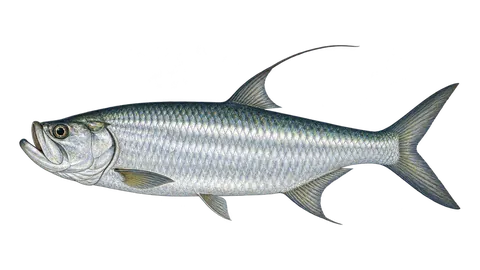
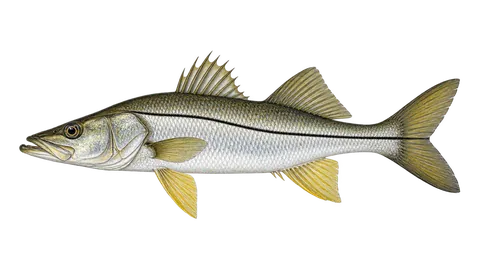
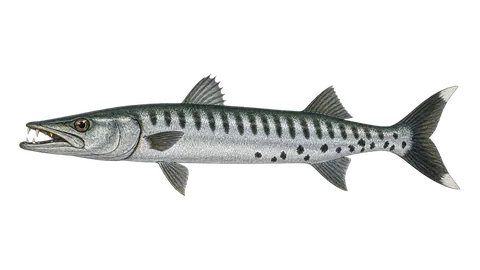
before you fish in Mexico
Anyone fishing from a boat needs an individual recreational-sport fishing permit (permiso de pesca deportivo-recreativa), issued by Conapesca and obtained online through the e5cinco system, with fees paid per day, week, month, year or excursion. 2025 values reported by Conapesca: 1 day, MXN 204; 1 week, MXN 510; 1 month, MXN 766; 1 year, MXN 1,021; excursion, MXN 1,453 (adjusted every year). Fishing from land does not require a permit; spearfishing requires an individual permit (NOM-017-PESC-1994, amended in 2013).
- Marlin, sailfish, swordfish, sábalo/chiro, roosterfish and mahi-mahi (dorado de mar) are reserved for sport fishing within 50 nautical miles of the coastal baseline.
- Sea catch limit: up to 10 fish per angler per day, with a maximum of 5 of the same species. Billfish (marlins, sailfish and swordfish), sharks and giant sea bass (Stereolepis gigas): 1 per day. Sábalo, mahi-mahi, roosterfish and baya: 2 per day. In freshwater, 5 per day. Fish caught beyond the limit are released alive back to the sea.
- Fishing within 250 m of beaches with bathers and of commercial fishing boats or nets is prohibited. Sport-caught fish may not be sold, and billfish may not be filleted on board.
- In natural protected areas, sport fishing is only allowed under the terms of the decree and each area's management program (Conanp); many have closed zones and stretches for catch and release only.
The rules and closed seasons in the rest of the app are Brazilian. Outside Brazil, the regulations of the country and province apply: confirm with the official agency.
sources and references
Access, facilities and season information changes: check with the lodge, a local guide or the city hall before you travel.
- official DOF — Resumen del Programa de Manejo del Área de Protección de Flora y Fauna Yum Balam (05/10/2018)Sport and recreational fishing as catch and release; rule 37 requires following NOM-017
- official DOF — Modificación a la NOM-017-PESC-1994 (pesca deportivo-recreativa), publicada em 25/11/2013Species reserved within the 50-mile zone, bag limits (item 4.9) and permits