Skip to content
fishing forecast

oyapock eartheater

Geophagus camopiensis · Cichlidae · omnivore

Freshwateressential profile

Cará from the Oiapoque and Approuague rivers, on the border of Amapá with French Guiana, which lives in rocky stretches of the larger rivers. It has commercial use and is sold for the aquarium.

Also called: cará-do-oiapoque, acará-tinga, cará, oyapock eartheater

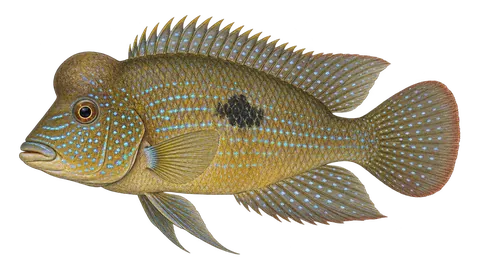
Scientific illustration of Oyapock eartheater
maximum
18 cm
location

Sample location: choose yours to see the forecast for where you fish.

period

Reading the weather across 3 global models and 31 simulations…

the species

everything about the oyapock eartheater

overview

who is the oyapock eartheater

The cará-do-Oiapoque is a cichlid of the family Cichlidae, of the cará group, fish that feed near the bottom. It reaches 17.5 cm. It occurs in the Oiapoque River basin in Amapá and the Approuague basin in French Guiana. It usually lives in rocky stretches of the larger rivers during low water, and is often caught in the eddies below falls with sand and rock bottoms. Males without a forehead bump have long filaments on the caudal, dorsal and ventral fins. It has commercial use and is sold for the aquarium.

Essential profile. Identification, where it occurs and rules, with data from FishBase and the cited regulations. Season, time of day, technique and bait are added once we have a good source for the oyapock eartheater; in the meantime, see the similar species.

how to recognize it

identification

Cichlid with a body compressed sideways and a spiny dorsal fin, like the other caras. Males may have a bump on the forehead or, when they do not, long filaments on the caudal, dorsal and ventral fins. It lives in rocky stretches of the larger rivers and occurs only in the Oiapoque and Approuague rivers, which sets it apart from other caras in the country, such as the cará (Geophagus brasiliensis).

distribution

where found

open on the large map

Occurs in the Oiapoque River, in Amapá, and the Approuague River, in French Guiana, in rocky stretches of the larger rivers.

Habitat: Rocky stretches of the larger rivers in low-water season and eddies below falls, with sand and rock bottoms.

native to the basins

Amazon
what the law says

rules for the oyapock eartheater

Summary of the regulations we found, with the source for each. Rules change; before keeping or transporting fish, check with the state environmental agency.
Conservation: Not on the Brazilian national list (Ministerial Ordinance GM/MMA No. 1.667/2026).

We found no species-specific rule beyond the region's general rules.

piracema closures in the basins where the species lives

Spawning closure (piracema) in Mato Grosso (all basins)

01/10 to 31/01MT

Allowed: All fishing modalities are prohibited in rivers, including catch and release (Law 9.096/2009, art. 19-A). Exceptions: subsistence fishing from shore (3 kg or 1 fish, no transport or sale) and scientific fishing. Law 13.159/2025 now allows licensed sport fishing in UHE/PCH hydropower reservoirs, natural lakes and border rivers, subject to a scientific study and a license from the environmental agency. We have not confirmed whether these licenses are already being issued.

Source: IN Interministerial MAPA/MMA nº 10/2017; Resolução Cepesca-MT nº 1/2026; Lei estadual MT nº 9.096/2009, arts. 19-A and 27 (Leis 12.434/2024 and 13.159/2025)

Closed season in the rivers of Marajó Island (PA)

01/01 to 30/04PA

Allowed: The same recreational-angler exceptions as in Portaria 48/2007 apply (handline or rod, 5 kg + 1 fish), unless a stricter state rule applies.

Source: Portaria IBAMA nº 48/2007

Closed season in the Amazon basin in Amapá

15/11 to 15/03AP

Allowed: Recreational anglers with handline or rod, line and hook are outside the Annex II prohibitions, with a bag limit of 5 kg + 1 fish, unless a stricter state rule applies.

Source: Portaria IBAMA nº 48/2007

Border rivers MT/RO and MT/PA

05/11 to 28/02MTROPA

Allowed: See the exceptions in Portaria 48/2007 and the state rules for each bank.

Source: Portaria IBAMA nº 48/2007

catch and release
catch and release Releasing the fish alive, quickly and with a wet hand. During a closed season it isn't always allowed: what the regulation says applies.

The dorsal fin has spines that can prick. Hold it by the body and remove the hook without forcing it.

calculator

how much it weighs without taking it out of the water

Length-weight relationship W = a·Lb (a = 0.02291, b = 3.01; FishBase (relação peso-comprimento bayesiana, estimativa da própria espécie)). It's an average: a fat or lean fish can vary by 10% to 20%.

estimated weight

—

sources and references

Essential profile: size, length-weight, depth, countries and conservation come from FishBase and the cited regulations, and the texts were written from those sources. Season, time of day, sensitivities, technique and baits and lures are not included yet, because we did not find a good source for this species.

  1. scientific FishBase: Geophagus camopiensis (ficha da espécie)Size, length-weight, depth, habitat, distribution, biology, and IUCN status. Page checked on Oct 13, 2026.
  2. scientific FishBase: nomes populares de Geophagus camopiensisNames by country and language.
  3. official Portaria GM/MMA nº 1.667, de 27 de abril de 2026: Lista Nacional Oficial de Espécies da Fauna Ameaçadas de Extinção (peixes e invertebrados aquáticos)The species is not on the list. Checked in the DOU of April 28, 2026.
don't confuse

similar species