Skip to content
fishing forecast

oceanic whitetip shark

Carcharhinus longimanus · Carcharhinidae · predator

Seanational list: CR · critically endangered

Open-sea shark with a huge, rounded first dorsal fin and white tips on its fins, often accompanied by pilot fish. Critically Endangered (CR) in Brazil and worldwide: capture banned.

Also called: tubarão-galha-branca-oceânico, tubarão-galha-branca, cação-galha-branca, cação-troço-troço

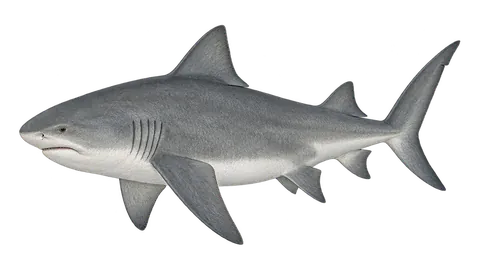
Scientific illustration of Oceanic whitetip shark
common size
195–270 cm
maximum
400 cm
common weight
55–155 kg
record/max.
167.4 kg
depth
0–152 m
ideal water
22–27 °C
location

Sample location: choose yours to see the forecast for where you fish.

period

Reading the weather across 3 global models and 31 simulations…

the species

everything about the oceanic whitetip shark

overview

who is the oceanic whitetip shark

The oceanic whitetip shark is a circumglobal pelagic shark of tropical and warm temperate waters, which rises to the surface and sometimes comes close to the coast. It travels with remoras, dolphinfish and pilot fish, and eats oceanic fish (including tunas and dolphinfish), squid, rays, turtles, seabirds and carrion. Satellite tagging in the Bahamas showed that it spends 99.7% of its time above 200 m, that several individuals returned to the area after travelling hundreds of kilometres, and that it makes short dives down to 1,082 m, more often at night. The population has suffered a severe decline, and the species is Critically Endangered (CR) on the national list and in the IUCN global assessment. It is a bold shark, and FishBase links it to open-sea attacks: respect it. Do not seek out the species.

fun facts

  • In the Bahamas, several of the 11 adults tagged by satellite (10 females and 1 male) returned to the area after about 150 days, the first evidence of a return migration for the species (Howey-Jordan et al., 2013).
  • It spent 99.7% of its time above 200 m, but all the tagged animals made short dives down to 1,082 m and 7.75 °C, more often at night, probably to hunt.
  • It travels with remoras, dolphinfish and pilot fish, according to FishBase.
  • It has been on the ICCAT prohibited retention list since 2010 (Recommendation 10-07) and in Appendix II of CITES since September 2014.
how to recognize it

identification

Robust body, with a huge first dorsal fin with a rounded tip, and long, broad pectoral fins, like oars. Short, rounded snout. Grey-bronze back, sometimes brown or bluish; pale belly, sometimes yellowish. White (or white-spotted) tips on the first dorsal, the pectorals and the lower lobe of the tail; juveniles have dark spots. Often travels with remoras and pilot fish. The reef whitetip shark is much smaller, slimmer and a reef dweller; the dusky shark and the bull shark (cabeça-chata) have no white tips.

distribution

where found

open on the large map

Circumglobal in tropical and subtropical waters (FishBase: 46°N to 43°S), in open sea and on the shelf edge, farther from the coast than most sharks on this list. In Brazil, further offshore, on all coasts.

Habitat: Open sea, from the surface to the slope (dives down to about 1,000 m), usually over waters more than 184 m deep; only sometimes comes close to the coast.

coast

North CoastNortheast CoastSoutheast CoastSouth Coastoceanicshelf
calendar and clock

when to fish

best season

time of year
JanFebSeaAprMayJunJulAugSepOctNovDec

Estimate: no well-documented season in Brazil; the weights are neutral. Capture is banned all year.

best time of day

0h6h12h18h sunrise ~6amsunset ~6pm

Any time. Active by day and by night: in the Bahamas there was no difference between the average depth by day and by night; deep dives were more frequent at night.

weather, water and behavior

what affects the oceanic whitetip shark
sensitivity The little bars show how much each factor affects this species. Five full: it feels it a lot.

cold and cold fronts

Prefers water of 18 to 28 °C (FishBase).

atmospheric pressure

Little known effect.

moon

No known effect.

rain

Not very relevant.

water level

Not applicable at sea.

noise

Curious and not very shy; often hangs around boats and schools.

wind

Rough seas end trips offshore.

tide

No relevant tide in the ocean; currents and schools of fish matter.

depth

99.7% of the time above 200 m; short dives down to 1,082 m.

technique, gear and bait

how to fish

rod
Catch banned in Brazil; there is no recommended gear for targeting the species.
spinning / baitcasting reel
Not applicable.
line
Not applicable.
leader
Not applicable. If a shark takes the steel leader, cut close to the mouth when releasing it.
hook
Barbless circle hook (or one with the barb flattened) for any open-sea fishing: it comes out more easily and causes less injury.

accessories

  • cutting pliers
  • long-handled hook remover
  • thick gloves

tip from an angler

If an oceanic whitetip bites by accident, do not bring it aboard. Keep it alongside, in the water, and cut the line flush with the hook. It is a bold shark: work with no one in the water and everyone aboard alert.

what the law says

rules for the oceanic whitetip shark

Summary of the regulations we found, with the source for each. Rules change; before keeping or transporting fish, check with the state environmental agency.
Conservation: On the national list as CR (it was VU on the previous list). Global: Critically Endangered (CR, assessed 07/11/2018 by the IUCN). Appendix II of CITES since 14/09/2014. The whole family Carcharhinidae has been in Appendix II of CITES since 25/11/2023.

Threatened species in Brazil: catch banned

full protection

The national list (Portaria GM/MMA nº 1.667/2026) classifies the species as CR. Under Portaria GM/MMA nº 1.666/2026 (art. 3), VU, EN and CR species have full protection: catch, transport, storage, processing and trade are banned. If you hook one by accident, release it right away, with minimal handling.

Source: Portaria GM/MMA nº 1.666/2026, art. 3º, and Portaria GM/MMA nº 1.667/2026

Finning prohibited: shark only whole, with its fins

fins naturally attached to the body

In Brazil, finning is banned: cutting off the fins and discarding the rest of the body. The rule covers landing, transport, and trade by fishing vessels: every shark or ray must arrive whole, with its fins naturally attached to the body (partially folding them against the body is allowed); carrying an animal aboard without fins or with loose fins, and transferring sharks and rays between vessels, is prohibited. This does not authorize catching this species, which is banned.

Source: Instrução Normativa Interministerial MPA/MMA nº 14, of Nov 26, 2012, art. 3º (Ministry of Fisheries and Aquaculture and Ministry of Environment)

ICCAT (Rec. 10-07): retaining on board, transshipping, landing or selling the oceanic whitetip shark (Carcharhinus longimanus) is prohibited

retaining, landing, storing and selling the species, whole or in parts, is prohibitedconfirm with the agency

ICCAT Recommendation 10-07 requires member countries to prohibit, in any fishery, retaining on board, transshipping, landing, storing, selling or offering for sale the oceanic whitetip shark (Carcharhinus longimanus), whole or in parts. It is an obligation for countries, not a rule for the angler: how each country applies it to recreational fishing varies, and we did not check each country's domestic rules or the current ICCAT compendium. When in doubt, release it in the water.

Source: ICCAT Recommendation 10-07 (International Commission for the Conservation of Atlantic Tunas)

Puerto Rico (USA): retention of the oceanic whitetip shark banned for HMS license holders

retention banned; release alive

In NOAA Fisheries' compliance guide for recreational Atlantic highly migratory species (HMS) fishing, the oceanic whitetip shark is on the prohibited retention list: it must be released. Since 2 February 2024 it has been illegal to possess or retain the oceanic whitetip in the US exclusive economic zone. The rule applies to HMS license holders wherever they fish, and includes the US Caribbean. The guide says to release any shark with an interdorsal ridge when identification is in doubt. Confirm Puerto Rico's local rules with the competent agency.

Source: NOAA Fisheries, HMS Compliance Guide: Recreational Fishing (published August 2025), section VIII, 'Prohibited retention' list; 50 CFR part 635

Mexico: no more than 1 shark per angler per day

1 specimen per angler per day (counts as 5 against the quota of 10)

In recreational sport fishing in Mexican saltwaters, the limit for sharks is one specimen per angler per day, which counts as five toward the total limit of ten fish. Fish caught in sport fishing may not be sold. Catch and release does not count toward the limit: prefer releasing.

Source: NOM-017-PESC-1994 (recreational sport fishing), amendment published in the DOF, items 4.9.1 b, 4.9.5 and 4.11 (Sagarpa/Conapesca)

Colombia: marine sharks and rays are not fishery resources

commercial or sport extraction not permittedconfirm with the agency

In 2021 Colombia stopped considering sharks and marine rays a fishery resource and began treating them as a hydrobiological resource; the recitals of Decree 281/2021 state that they may not be extracted for commercial or sport purposes, and the decree created an environmental protection plan. Later AUNAP rules dealt with incidental catch in artisanal fishing; we did not check the consolidated text. When in doubt, release it into the water.

Source: Decreto nº 281, of Mar 18, 2021 (Ministry of Environment and Sustainable Development), which adds Section 27 to Decree 1076/2015; Resolución AUNAP nº 0380/2021

Argentina: directed fishing for sharks and rays banned for the federal fleet; incidental sharks returned to the sea

directed fishing for chondrichthyans banned; return live sharks without gaff; finning bannedconfirm with the agency

Federal Fisheries Council Resolution 8/2021 (Consejo Federal Pesquero) bans directed fishing for chondrichthyans (sharks, rays and chimaeras), finning (cutting off the fins and discarding the body) and the use of gaffs to return live animals to the sea, and requires that sharks caught by chance be returned quickly and with minimal trauma, except cazón, gatuzo, pez ángel, espinoso and pintarroja. The text refers to trips and vessels, that is, the federal commercial fleet, and invites the provinces to adopt similar measures; we did not find a specific rule for sport fishing in Buenos Aires. For sport anglers, good practice is to release the shark in the water, without a gaff.

Source: Resolución CFP nº 8/2021, of Jun 3, 2021, Annex I, arts. 1º, 6º, 7º, 8º and 12 (Federal Fisheries Council, B.O. Jun 11, 2021)

Panama: shark finning banned in its jurisdictional waters

banned: cutting off the fins and throwing the body back into the sea

Law 9 of 2006 bans finning in Panama's jurisdictional waters. The law's definition of shark fishing covers directed or incidental catch by artisanal, commercial, industrial and sport vessels. The fine for artisanal fishing reaches 1,000 balboas, without prejudice to criminal liability. In the sources we checked, we did not find a specific Panamanian rule on retention or release for sport anglers.

Source: Ley nº 9, of Mar 16, 2006 (National Assembly of Panama), Gaceta Oficial nº 25.506, of Mar 20, 2006, arts. 1º, 2º and 13

catch and release
catch and release Releasing the fish alive, quickly and with a wet hand. During a closed season it isn't always allowed: what the regulation says applies.

This is not catch and release: it is release of accidental catch. Do not bring the shark aboard; keep it alongside, in the water, and cut the line as close to the hook as possible. It is bold and may circle the boat: keep everyone out of the water and do not take photos.

in the kitchen

Capture and trade banned in Brazil. In other countries the meat, leather, liver oil and fins were used (FishBase), but the species is now Critically Endangered: release it.

calculator

how much it weighs without taking it out of the water

Length-weight relationship W = a·Lb (a = 0.00562, b = 3.06; FishBase (relação peso-comprimento bayesiana, estimativa da própria espécie)). It's an average: a fat or lean fish can vary by 10% to 20%.

estimated weight

—

sources and references

The seasonal weights (months), the time of day and the sensitivities (cold, pressure, moon, wind, rain, tide, strong light, murky water and noise) are the app's editorial estimates, based on the literature below and on field experience from anglers and guides. The water temperature range and the common size range are also editorial estimates, supported by FishBase. The months show when an angler usually finds the species, not a catch season. They are not official data or measurements made for this species, and they may vary by region and year. Legal rules appear in the rules section, with the norm and a link.

  1. scientific FishBase: Carcharhinus longimanus (ficha da espécie)Size, length-weight, depth, habitat, distribution, biology and IUCN status. Page checked on 13/10/2026. The common size range runs from the average size at maturity (196 cm) to the common length (270 cm) reported by FishBase. The common weight was calculated from the length-weight relationship in the profile (lw) at the ends of the common size range.
  2. scientific FishBase: nomes populares de Carcharhinus longimanusNames by country and language.
  3. official Portaria GM/MMA nº 1.667, de 27 de abril de 2026: Lista Nacional Oficial de Espécies da Fauna Ameaçadas de Extinção (peixes e invertebrados aquáticos)The species is on the list. Checked in the DOU of April 28, 2026.
  4. official Instrução Normativa Interministerial MPA/MMA nº 14, de 26 de novembro de 2012: desembarque, transporte, armazenamento e comércio de tubarões e raias (proibição do finning)Text of Sislegis/MAPA (DOU of Nov 28, 2012), checked 13/10/2026.
  5. official Portaria GM/MMA nº 1.666, de 27 de abril de 2026: regras de proteção das espécies ameaçadas da lista nacionalArt. 3: full protection of VU, EN and CR species; § 4: incidental catch with immediate release of the live animal.
  6. official ICCAT: Recomendação 10-07 sobre a conservação do tubarão-galha-branca-oceânico (Carcharhinus longimanus)Recommendation text checked on 13/10/2026; the current compendium of measures in force was not checked.
  7. official NOAA Fisheries: Guía de Cumplimiento para HMS, Pesca Recreacional (agosto de 2025)List of sharks allowed and prohibited for retention in recreational Atlantic fishing in the USA, including Puerto Rico. Checked on 13/10/2026; the CFR regulations prevail over the summary.
  8. scientific Howey-Jordan, L. A. et al. (2013). Complex movements, philopatry and expanded depth range of a severely threatened pelagic shark, the oceanic whitetip (Carcharhinus longimanus) in the western North Atlantic. PLoS ONE 8(2): e56588.Abstract checked on PubMed Central (PMC3577883) on 13/10/2026.
  9. official México: Modificación a la NOM-017-PESC-1994 (pesca deportivo-recreativa), DOFOfficial text in the Diario Oficial de la Federación (DOF); items 4.9, 4.10 and 4.11 checked on Oct 13, 2026.
  10. official Colômbia: Decreto 281 de 2021 (proteção e conservação de tubarões, raias marinhas e quimeras), Gestor Normativo da Função PúblicaRecitals and Section 27 checked on Oct 13, 2026. Later AUNAP changes on incidental catch were not checked.
  11. official Argentina: Resolução CFP nº 8/2021, medidas de manejo de condrictios (Consejo Federal Pesquero)Text checked on 13/10/2026. This is a rule for the federal commercial fleet; the rule for sport fishing in Buenos Aires was not found.
  12. official Panamá: Lei nº 9 de 2006, que proíbe o aleteo de tubarões nas águas jurisdicionais (Gaceta Oficial 25.506)Scanned copy of the Official Gazette on FAOLEX; partial reading due to scanning faults. Arts. 1, 2 and 13 checked on Oct 13, 2026.
  13. official Fiperj: Peixes cartilaginosos marinhos ameaçados de extinção (Portarias GM/MMA 1.666 e 1.667/2026), atualizado em 11/05/2026Poster from the Fundação Instituto de Pesca do Estado do Rio de Janeiro with common names and categories of the species on the national list.
  14. press IISD SDG Knowledge Hub: CITES protections come into effect for sharks and manta rays (setembro de 2014)The oceanic whitetip shark was included in Appendix II of CITES in 2013, in force since 14/09/2014, according to the article. We did not check the text of the Appendices.
  15. official U.S. Fish and Wildlife Service: Amendments adopted at CoP19 entered into force on November 25, 2023 (CITES Notification 2023/137)US wildlife service bulletin: all species of the family Carcharhinidae moved to CITES Appendix II on Nov 25, 2023. Checked on Oct 13, 2026; the text of the Appendices on the CITES website was not opened.
don't confuse

similar species