

gatún lake — gamboa
Canal reservoir in Panama with sargento, speckled peacock bass introduced in the 1960s, and tarpon that pass through the locks, near the capital.
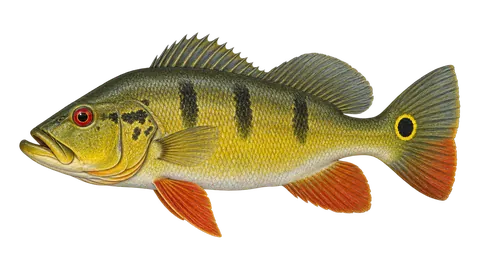
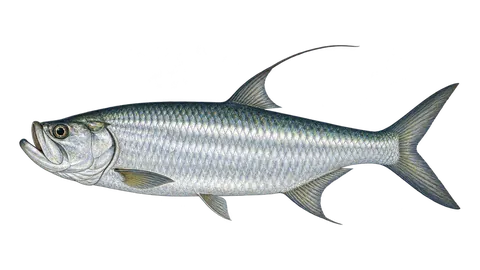
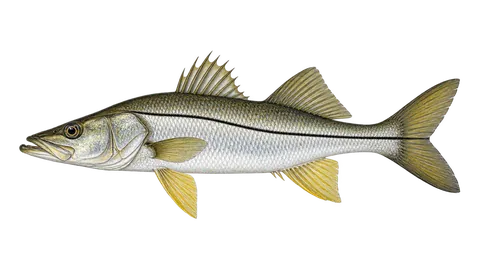
Gatún Lake was formed by the Gatún dam on the Chagres River and is part of the ships' route through the Panama Canal. In the coves, islands and drowned trees outside the navigation channel lives the sargento, a peacock bass (Cichla) brought from South America in the late 1960s. Panama's fishing rule and a Smithsonian study call it Cichla monoculus; other works use C. ocellaris or C. pleiozona. It takes surface plugs, jigs and mid-water lures. Tarpon pass through the locks and live in the lake, and white snook has also been recorded. The peacock bass has displaced the native fauna: a 2017 study found that small native fish along the shore are 96% less abundant than before the introduction.
best season
Sargento (speckled peacock bass) bites all year. In the dry season, January to April, it rains little, the water clears, and surface fishing tends to pay off.
Local rules: The waters of the Canal and its basin belong to the Panama Canal Authority (ACP) and fall outside ARAP Decree 9 of 2026. Under the ACP navigation regulation (Agreement 360 of 2019), small boats travel on the lake outside the buoys and cross the channel only at right angles; anchoring to fish in the channel and at the anchorages is prohibited, and fishing or pleasure boats may not enter within 2 nautical miles of the lock approaches without authorization. Release the tarpon. Confirm local rules.
- getting there
- Gamboa is about 40 minutes by car from Panama City, on the Canal's edge, near the mouth of the Chagres River. Fishing boats leave from Gamboa and other points on the lake.
- facilities
- Fishing guides with boats, many offering hotel pickup; lodging in Gamboa and Panama City. There are no services on the islands.
- country
- Panamá, Panama
tip
Stay away from the shipping channel and the buoys: ships do not divert or stop. For sargento, surface plugs early and mid-water jigs in bright sun.
Loading…
Each card shows the day's index (0 to 100) and, below it, a strip with the index for each hour, from 0h to 23h. from poor to excellent.
what you can catch here
before you fish in Panama
ARAP's new rules (Executive Decree 9, of June 10, 2026) take effect six months after publication, in December 2026. From then on, anyone over 12 years old needs the ARAP sport angler card (carné), issued online (immediately, for foreigners), at the Ventanilla Única or at the regional offices. For foreigners: B/.20 for 7 days, B/.60 for 30 days and B/.150 for 180 days. Customers of an authorized tourist fishing boat are covered by the captain's card, and the boat needs its own license. Until it takes effect, ARAP's previous rule applies (Resolution ADM/ARAP 002/2012): confirm with ARAP or your operator.
- Billfish (blue, white, black and striped marlin, spearfish, sailfish and swordfish): species of exclusive sport fishing interest, catch and release only; with natural bait, circle hooks are mandatory; taking the fish out of the water for photos is prohibited (Executive Decree 10/2026, from December 2026).
- Atlantic cubera snapper, roosterfish and tarpon are also to become catch and release only; the exception is keeping 1 swordfish and 1 tarpon per boat per day, not for sale (Executive Decree 9/2026).
- Sharks and rays: catching or keeping them in sport fishing is prohibited. Retention limit of 25 fish per boat per day (15 in tourist fishing) and selling fish is prohibited (Executive Decree 9/2026).
- In protected areas (such as Coiba National Park), fishing is only allowed where the management plan permits it, and the card or license does not authorize fishing in a closed zone.
The rules and closed seasons in the rest of the app are Brazilian. Outside Brazil, the regulations of the country and province apply: confirm with the official agency.
sources and references
Access, facilities and season information changes: check with the lodge, a local guide or the city hall before you travel.
- official ACP — Acuerdo nº 360, de 12 de diciembre de 2019 (Reglamento para la Navegación en Aguas del Canal de Panamá)Art. 35: anchoring to fish or dragging nets is prohibited in anchorages and navigable channels; art. 163, items 12 and 13: navigation, fishing or sport without authorization within 2 nautical miles of the lock approaches, in the channel and in the anchorages; Rule 34: on Gatún Lake, boats up to 20 m outside the buoys, crossing the channel at right angles
- official ARAP — Decreto Ejecutivo nº 9, de 10 de junio de 2026 (pesca deportiva)Art. 2: the waters of the Panama Canal and its basin are excluded from the decree; Annex III (inland waters) lists the sargento as Cichla monoculus and tarpon
- scientific Sharpe, De León, González e Torchin (2017) — Tropical fish community does not recover 45 years after predator introduction. Ecology 98(2): 412-424Speckled peacock bass (Cichla monoculus) introduced into Gatún Lake; still the most abundant predator; native shore fish 96% less abundant
- scientific Schreiber et al. (2023) — Environmental DNA (eDNA) reveals potential for interoceanic fish invasions across the Panama Canal. Ecology and Evolution 13(1): e9675Megalops atlanticus and Centropomus undecimalis recorded in the Canal's freshwaters; calls the sargento Cichla ocellaris, introduced to Panama in 1969