Skip to content
fishing forecast

sand perch

Diplectrum formosum · Serranidae · predator

Sea

A small barred serranid from sandy bottoms, seagrass beds and bays, up to 30 cm. It turns up unsought in bottom fishing and, despite its size, is a good pan fish.

Also called: michole-da-areia, canguito, jajá, sand perch, sandperch

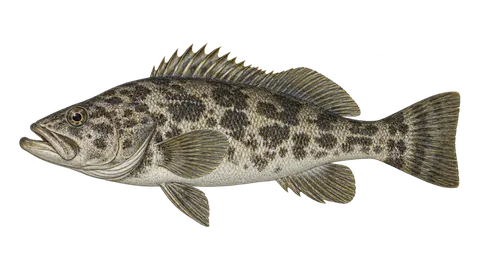
Scientific illustration of Sand perch
common size
13–22 cm
maximum
30 cm
common weight
0.0–0.1 kg
record/max.
— kg
depth
1–80 m
ideal water
21–28 °C
location

Sample location: choose yours to see the forecast for where you fish.

period

Reading the weather across 3 global models and 31 simulations…

the species

everything about the sand perch

overview

who is the sand perch

The michole-da-areia is a small serranid, a relative of groupers and badejos, that lives in bays, seagrass areas and shallow banks, from the shore down to 80 m. It ranges from North Carolina, the northern Gulf of Mexico and the Bahamas to Uruguay, and the species' latitude range covers the entire Brazilian coast. It is solitary and hides when startled. It is a simultaneous hermaphrodite: each fish has ovarian and testicular tissue at the same time. It matures around 13 cm, is common at 16 cm and reaches 30 cm. In fishing it is bycatch of natural bait on sandy bottoms, but FishBase describes it as a popular pan fish despite its size.

fun facts

  • It is a simultaneous hermaphrodite: each fish has ovarian and testicular tissue in the same gonad, separated by a thin membrane, with no means of internal self-fertilization.
  • FishBase calls it 'sand perch' and 'sandfish' in English, and 'serrano arenero' in Spanish.
  • Fishers in the Northeast also know it by names such as jajá.
how to recognize it

identification

Elongated body, light brown on the back with several dark brown vertical bars, and white below. The dorsal fin is dark, with yellow lines running lengthwise; the tail is dark with small yellow spots, and the other fins are darkened. The preopercle (cheek bone) has spines arising from two centers. The dorsal fin has 10 spines and 12 soft rays; the anal fin, 3 spines and 7 to 8 rays. The genus has other species on the Brazilian coast (Diplectrum radiale and D. bivittatum, for example), and telling them apart uses fin markings and counts: check a field guide.

distribution

where found

open on the large map

According to FishBase, it ranges from North Carolina, the northern Gulf of Mexico and the Bahamas to Uruguay; its presence in the western Caribbean is doubtful. In Brazil, the species' latitude range (42°N to 35°S) covers all four coasts, and ICMBio has a national assessment entry. FishBase also lists Colombia, Mexico, Venezuela, the Guianas and several Caribbean islands.

Habitat: Bays, seagrass areas and shallow sand banks, from 1 to 80 m. Solitary; it takes shelter when startled.

coast

North CoastNortheast CoastSoutheast CoastSouth Coastcoastal
calendar and clock

when to fish

best season

time of year
JanFebSeaAprMayJunJulAugSepOctNovDec

A resident fish of shallow, warm waters, caught all year round. We found no seasonal calendar; the app's weights are estimates.

best time of day

0h6h12h18h sunrise ~6amsunset ~6pm

Daytime, with peaks at dawn and dusk. We found no study of its activity rhythm; like other bottom-dwelling serranids, it probably feeds by day and at dusk. Editorial estimate.

weather, water and behavior

what affects the sand perch
sensitivity The little bars show how much each factor affects this species. Five full: it feels it a lot.

cold and cold fronts

Warm-water fish (subtropical to tropical): a strong cold front slows fishing.

atmospheric pressure

Small effect; a cold front with rough seas shuts fishing down for a day or two.

moon

Small effect.

rain

Heavy rain muddies the bay water and gets in the way.

water level

Does not apply at sea. The equivalent is the clarity of the water in the bays.

noise

It hides when startled: avoid knocking the hull against the shallow bottom.

wind

Strong wind moves the boat and makes it hard to keep the bait still on the bottom.

tide

A moving tide brings food to the channels and banks; fish the rising and falling tide.

depth

From 1 to 80 m; most catches are on shallow sand bottoms.

technique, gear and bait

how to fish

rod
5' to 6'6", 6 to 12 lb
spinning / baitcasting reel
spinning reel 1000 to 2500
line
monofilament or braided line 8 to 15 lb
leader
fluorocarbon 15 to 25 lb, 40 to 60 cm
hook
small single hook, no. 2 to 1/0

lures

  • small jigheads with silicone tails

natural baits

  • shrimp
  • squid pieces
  • strips of fish

accessories

  • alicate
  • ruler

tip from an angler

Leave the bait still on the sandy bottom, near seagrass or gravel patches, and set the hook on the first tug: the fish is small and steals large baits.

what the law says

rules for the sand perch

Summary of the regulations we found, with the source for each. Rules change; before keeping or transporting fish, check with the state environmental agency.
Conservation: Not on the Brazilian national list (Portaria GM/MMA nº 1.667/2026). ICMBio published a national assessment profile in 2025; the category was not checked for this profile. We found no specific federal rule for the species.

Mexico: up to 5 per species and 10 saltwater fish per day

5 specimens of the species per angler per day, within the limit of 10 saltwater fish

In recreational sport fishing in Mexican federal waters, each angler may keep up to 10 marine fish per day, no more than 5 of the same species. The michole-da-areia is not among the species reserved for sport fishing (marlin, sailfish, swordfish, tarpon, roosterfish and dorado, up to 50 nautical miles from shore, item 0.3 of the rule) nor among those with their own limit (billfish, sharks, pescada, tarpon, dorado, roosterfish and baya), and it has no quota of its own. Fish above the limit must be returned alive to the water, and sport-caught fish may not be sold.

Source: Amendment to NOM-017-PESC-1994 (recreational sport fishing in federal waters of Mexico), signed Oct 14, 2013, items 0.3, 4.9.1, 4.9.5 and 4.11 (Sagarpa/Conapesca)

Colombia: AUNAP license and catch-and-release in sport fishing

Individual AUNAP license; catch-and-release guidanceconfirm with the agency

AUNAP Resolution 0549 of 2022 sets the guidelines for recreational sport fishing in Colombia. Anglers need a permit: for an individual, Colombian or foreign, it is a personal, non-transferable card. The rule makes "catch and release" the guidance and admits keeping only part of the catch for personal consumption, respecting the minimum sizes it sets. We did not confirm the daily limit or the minimum sizes by species: check with AUNAP before keeping fish.

Source: Resolución AUNAP 0549 of 2022 (fishing management guidelines for sport fishing for recreational purposes), arts. 6 and 8; Official Gazette of Mar 25, 2022

catch and release
catch and release Releasing the fish alive, quickly and with a wet hand. During a closed season it isn't always allowed: what the regulation says applies.

Small, tough fish: remove the hook with pliers, without squeezing, and return it to the water. FishBase records that it has no opercular spine or venom gland.

in the kitchen

Small, but popular as a pan fish according to FishBase; fried whole.

calculator

how much it weighs without taking it out of the water

Length-weight relationship W = a·Lb (a = 0.00891, b = 3.09; FishBase (relação peso-comprimento bayesiana, estimativa da própria espécie)). It's an average: a fat or lean fish can vary by 10% to 20%.

estimated weight

—

sources and references

The season weights (months), the time of day and the sensitivities (cold, pressure, moon, wind, rain, tide, strong light, murky water and noise) are the app's editorial estimates, based on the literature below and on the field experience of anglers and guides. They are not official data nor a measurement made for this species, and they may vary by region and year. Closed seasons and legal rules appear in the rules section, with the norm and a link.

  1. scientific FishBase: Diplectrum formosum (ficha da espécie)Size, length-weight, depth, habitat, distribution, biology, and IUCN status. Page checked on Oct 13, 2026.
  2. scientific FishBase: nomes populares de Diplectrum formosumNames by country and language. Canguito and michole-da-areia are listed in Portuguese.
  3. official Portaria GM/MMA nº 1.667, de 27 de abril de 2026: Lista Nacional Oficial de Espécies da Fauna Ameaçadas de Extinção (peixes e invertebrados aquáticos)The species is not on the list. Checked in the DOU of April 28, 2026.
  4. scientific IUCN Red List: Diplectrum formosum (avaliação global: Pouco Preocupante, LC, 21/08/2012)Global assessment. Link given on the FishBase profile (Red List, version 2025-2).
  5. official ICMBio/SALVE: Ficha de Diplectrum formosum (avaliação nacional do risco de extinção)National assessment by ICMBio, published in 2025. DOI checked in Crossref on Oct 13, 2026; the assigned category was not checked for this profile.
  6. scientific Pinto, M. F.; Mourão, J. S.; Alves, R. R. N. (2015). Use of ichthyofauna by artisanal fishermen at two protected areas along the coast of Northeast Brazil. Journal of Ethnobiology and Ethnomedicine 11: 20Popular names cited by small-scale fishers from Batoque (CE): 'jacundá' and 'jajá' for Diplectrum formosum. Table 2 checked on October 13, 2026.
  7. scientific Carpenter, K. E. (org.) (2002). The living marine resources of the Western Central Atlantic. Vol. 2: Bony fishes part 1 (Acipenseridae to Grammatidae). FAO Species Identification Guide for Fishery Purposes. Roma: FAO.Reference identification guide for the species' families in the western Atlantic. Index checked Oct 13, 2026.
  8. official DOF: Modificação da NOM-017-PESC-1994, para regular a pesca deportivo-recreativa em águas de jurisdição federal do MéxicoText signed Oct 14, 2013. Species reservation for sport fishing (item 0.3), daily quotas at sea (4.9.1), catch and release of the surplus (4.9.5) and a ban on selling the fish (4.11). Text checked Oct 13, 2026; the DOF publication date does not appear in the text consulted. The daily limit was confirmed only for Mexico; for other countries we did not confirm species-specific rules.
  9. official AUNAP (Colômbia): Resolução 0549 de 2022, lineamientos de ordenación pesquera para la pesca deportiva con fines recreativosWe checked, in a partial transcription of the text, what the rule says about the personal license (art. 6) and about "catch and release" as the premise, with retention for personal consumption only within minimum sizes (art. 8). We could not read the articles on the daily quota and minimum sizes, so those figures are left out.
don't confuse

similar species