Skip to content
fishing forecast

piabanha-do-araguaia

Brycon gouldingi · Bryconidae · omnivore

Freshwaternational list: VU · vulnerable

A relative of the matrinxã, endemic to the Araguaia-Tocantins basin, with fine wavy stripes on the back. Threatened species: catching banned.

Also called: piabanha, matrinchã, matrinxã, piabanha-do-araguaia

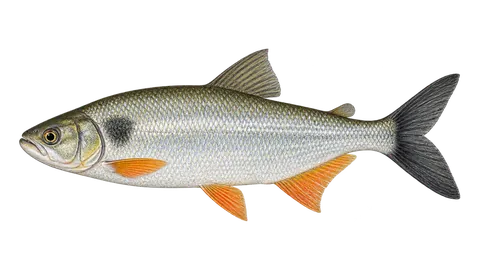
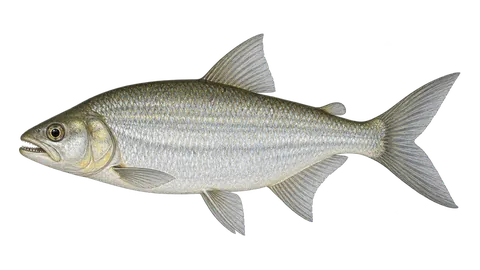
Scientific illustration of Piabanha-do-araguaia
common size
30–45 cm
maximum
55 cm
common weight
0.8–2 kg
record/max.
2.6 kg
depth
0.5–5 m
ideal water
25–30 °C
location

Sample location: choose yours to see the forecast for where you fish.

period

Reading the weather across 3 global models and 31 simulations…

the species

everything about the piabanha-do-araguaia

overview

who is the piabanha-do-araguaia

Described in 2004 from fish of the rio das Mortes, a tributary of the Araguaia. It lives in clear-water rivers of the Araguaia-Tocantins basin and eats fruit, seeds and insects that fall from the riparian forest. It can exceed 47 cm standard length and 2.6 kg. Local fishers call it matrinchã or piabanha, so it is confused with the Amazon matrinxã (Brycon amazonicus), which is not threatened. The IUCN rates it Endangered due to habitat loss, and the national list has it as Vulnerable (VU): catching, transport and sale banned. Tocantins, Goiás and Mato Grosso reinforce the ban in their rules. In Goiás, the state rule also records the species in the São Francisco basin, as non-native of unknown origin. Hooked one by chance? Release it right away.

fun facts

  • The name honours Michael Goulding, for his contributions to knowledge of Amazon fishes.
  • It eats fruit and seeds that fall from the riparian forest, which ties it directly to bank conservation.
how to recognize it

identification

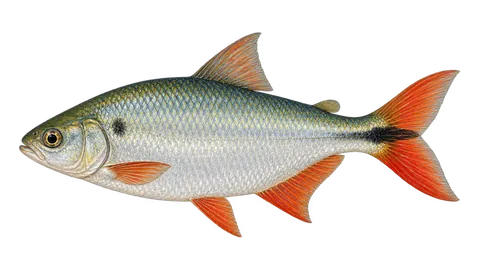
Fusiform, silvery body, dark back with several fine wavy stripes along the upper flank, darkened pectoral and pelvic fins and a dark crescent- or V-shaped mark on the caudal peduncle and base of the tail. Has 66 to 82 lateral line scales. The Amazon matrinxã lacks the wavy stripes on the back; the piraputanga has a reddish tail.

distribution

where found

open on the large map

Araguaia-Tocantins basin (rio das Mortes, Araguaia, Tocantins and tributaries) in GO, MT and TO. The Goiás rule lists it as non-native in the São Francisco basin.

Habitat: Clear-water rivers with riparian forest, rapids and eddies under fruit trees.

native to the basins

Tocantins-Araguaia

states

Goiás, Mato Grosso, Tocantins

calendar and clock

when to fish

best season

time of year
JanFebSeaAprMayJunJulAugSepOctNovDec

No season: catching banned. The weights only indicate that it can bite matrinxã baits all year round.

best time of day

0h6h12h18h sunrise ~6amsunset ~6pm

Daytime. Active by day, hunting fruit and insects that fall into the water.

weather, water and behavior

what affects the piabanha-do-araguaia
sensitivity The little bars show how much each factor affects this species. Five full: it feels it a lot.

cold and cold fronts

Cold reduces activity.

atmospheric pressure

Little known effect.

moon

Little effect.

rain

Runoff muddies the clear-water rivers.

water level

Low, clear water concentrates it under the trees.

noise

Wary in clear water.

wind

Wind that knocks fruit down can draw it in.

depth

Surface and mid-water, 0 to 3 m.

technique, gear and bait

how to fish

rod
not applicable: capture prohibited
spinning / baitcasting reel
not applicable
line
not applicable
leader
not applicable
hook
barbless hook makes release easy if it bites by chance

accessories

  • pliers for release

tip from an angler

Anyone fishing for matrinxã with fruit, insects or small baits on the Araguaia may hook a piabanha. Check the wavy stripes on the back and release it right away.

what the law says

rules for the piabanha-do-araguaia

Summary of the regulations we found, with the source for each. Rules change; before keeping or transporting fish, check with the state environmental agency.
Conservation: Threatened species already listed before 2026: catching, transport and trade banned (Portaria GM/MMA nº 1.666/2026, art. 3º). Global IUCN assessment: Endangered (EN, 2018). Caught it by accident? Release it immediately.

Threatened species: fishing prohibited

capture, transport, storage and trade prohibitedTocantins-Araguaia

The piabanha (Brycon gouldingi) is on the national list as Vulnerable (VU) and was already on the previous list. VU, EN and CR species have full protection: catching, transport, storage and trade are banned. Specimens from licensed aquaculture are not covered by the ban, and fish caught by accident must be released alive on the spot. Do not confuse it with the Amazon matrinxã (Brycon amazonicus), which is not on the list.

Source: Portaria GM/MMA nº 1.666/2026, art. 3º, and Portaria GM/MMA nº 1.667/2026

GO: threatened species excluded from catch

catching banned, despite the measure in Annex IGO

The Goiás rule excludes threatened species on the national list from catch. Annex I still has measures for the 'matrinchã B. gouldingi' in the Araguaia-Tocantins, but the exclusion of threatened species prevails: release it.

Source: IN Semad-GO nº 17/2026, art. 2º, § 2º

Matrinchã/piabanha from the Araguaia-Tocantins (Brycon gouldingi): catching prohibited

TOGOMTPATocantins-AraguaiaAmazon

Brycon gouldingi is on the national list (EN in 2022, VU in 2026), with catching prohibited. It is NOT the Amazonian matrinxã (Brycon amazonicus, slug "matrinxa"), which is not on the list. In Tocantins it appears as "piabanha" on the prohibited fishing list (Portaria Naturatins 47/2026). IN Semad-GO 17/2026 still gives sizes for "matrinchã B. gouldingi", but the same IN excludes threatened species from catching: in practice, release it.

Source: Portaria GM/MMA nº 1.667/2026; Portaria Naturatins nº 47/2026 (Annex III, as amended by Portaria 105/2026)

Mato Grosso: fishing for threatened species absolutely prohibited

MTconfirm with the agency

Section 10 of art. 19-A of Law 9.096/2009 absolutely prohibits fishing for any species that is, or comes to be, on official lists of threatened or overexploited species. This covers pintado (VU) and, from about Oct 25, 2026, tambaqui.

Source: Lei estadual MT nº 9.096/2009, art. 19-A, §10 (Lei nº 12.434/2024)

Goiás: threatened species excluded from catching

GO

IN Semad 17/2026 excludes threatened species on the national list from catching; the list updates automatically with each new MMA list. In Goiás, pintado, piracanjuba, matrinchã B. gouldingi and, after about Oct 25, 2026, new species on the list may not be killed.

Source: IN Semad-GO nº 17/2026, art. 2º, §2º

Tocantins: dourada and other species with fishing prohibited

TOTocantins-Araguaia

Annex III of Portaria Naturatins 47/2026 (wording from Portaria 105/2026) prohibits, at any size, dourada (Brachyplatystoma rousseauxii), coroatá/surubim-chicote (Platynematichthys notatus), apple stingray (arraia-maçã, Paratrygon aiereba), rubinho (Aguarunichthys tocantinsensis), aracu-boca-pra-cima (Sartor tucuruiense), pacu-dente-seco (Mylesinus paucisquamatus) and piabanha (Brycon gouldingi).

Source: Portaria Naturatins nº 47/2026, Annex III, as amended by Portaria nº 105/2026

piracema closures in the basins where the species lives

Closed season in Goiás (state rule)

01/11 to 28/02GO

Allowed: Sport and guided fishing only in reservoirs, catch and release with barbless hooks (no keeping, transporting or eating). Subsistence: up to 5 kg per day, for household consumption only.

Source: IN Semad-GO nº 17/2026, arts. 8º to 11

Spawning closure (piracema) in Mato Grosso (all basins)

01/10 to 31/01MT

Allowed: All fishing modalities are prohibited in rivers, including catch and release (Law 9.096/2009, art. 19-A). Exceptions: subsistence fishing from shore (3 kg or 1 fish, no transport or sale) and scientific fishing. Law 13.159/2025 now allows licensed sport fishing in UHE/PCH hydropower reservoirs, natural lakes and border rivers, subject to a scientific study and a license from the environmental agency. We have not confirmed whether these licenses are already being issued.

Source: IN Interministerial MAPA/MMA nº 10/2017; Resolução Cepesca-MT nº 1/2026; Lei estadual MT nº 9.096/2009, arts. 19-A and 27 (Leis 12.434/2024 and 13.159/2025)

Spawning closure (piracema) in the Araguaia River basin

01/11 to 28/02GOTOPAMT

Allowed: Recreational fishing only in reservoirs, with handline, rod, or spinning or baitcasting reel. Fish may only be eaten on site, not transported. Competitions prohibited. Subsistence: 3 kg + 1 fish. State rules (GO and TO) may be stricter.

Source: IN Interministerial MPA/MMA nº 12/2011

Spawning closure (piracema) in the Tocantins and Gurupi river basins

01/11 to 28/02TOPAMAGO

Allowed: Recreational fishing only in reservoirs, with on-site consumption. Subsistence: 5 kg + 1 fish. State rules may be stricter.

Source: IN Interministerial MPA/MMA nº 13/2011

catch and release
catch and release Releasing the fish alive, quickly and with a wet hand. During a closed season it isn't always allowed: what the regulation says applies.

Required. Remove the hook with the fish in the water and release it right away.

in the kitchen

Not applicable: capture in the wild is prohibited.

calculator

how much it weighs without taking it out of the water

Length-weight relationship W = a·Lb (a = 0.01549, b = 3.06; FishBase). It's an average: a fat or lean fish can vary by 10% to 20%.

estimated weight

—

sources and references

The season weights (months), the time of day and the sensitivities (cold, pressure, moon, wind, rain, tide, strong light, murky water and noise) are the app's editorial estimates, based on the literature below and on the field experience of anglers and guides. They are not official data nor a measurement made for this species, and they may vary by region and year. Closed seasons and legal rules appear in the rules section, with the norm and a link.

  1. scientific FishBase — Brycon gouldingi (ficha da espécie)Diagnosis (wavy stripes, dark pectoral and pelvic fins, V-shaped mark on the peduncle, 66 to 82 lateral line scales), diet, maximum size and weight, length-weight relationship and names (matrinchã, piabanha). Page checked on Oct 13, 2026.
  2. official Portaria GM/MMA nº 1.667, de 27 de abril de 2026 — Lista Nacional Oficial de Espécies da Fauna Ameaçadas de Extinção (peixes e invertebrados aquáticos)The species is listed as VU (checked in the text published in the DOU on April 28, 2026, section 1, p. 96). Without the asterisk that marks species added to the list in 2026.
  3. official Portaria GM/MMA nº 1.666, de 27 de abril de 2026 — regras e restrições para as espécies de peixes e invertebrados aquáticos ameaçadas de extinçãoArt. 3º: full protection and ban on catching, transport and trade of VU, EN and CR species; § 2º excludes licensed aquaculture; § 4º covers incidental catch with immediate release. Text checked in the DOU.
  4. scientific IUCN Red List — Brycon gouldingi (avaliação global: Em Perigo, EN, 07/11/2018)Global assessment. Link given on the FishBase entry (Red List, version 2025-2).
  5. scientific Lima, F. C. T. (2004). Brycon gouldingi, a new species from the rio Tocantins drainage, Brazil (Ostariophysi: Characiformes: Characidae), with a key to the species in the basin. Ichthyological Exploration of Freshwaters 15(3): 279-287.Species description; the URL is the bibliographic record on FishBase.
  6. official Portaria Naturatins nº 47/2026 (redação da Portaria nº 105/2026) — pesca no TocantinsAnnex III: piabanha (Brycon gouldingi) banned at any size.
  7. official IN Semad-GO nº 17/2026 — normas de pesca em GoiásArt. 2º, § 2º (threatened species excluded from catch), Annex I (old measure for the matrinchã B. gouldingi) and Annex II (non-native piabanha in the São Francisco basin). Page checked on Oct 13, 2026.
  8. official Lei estadual MT nº 9.096/2009 (redação da Lei nº 12.434/2024)Arts. 19-A, § 10 (threatened species) and 19-B (Transporte Zero, including Brycon spp.).
don't confuse

similar species