MS: minimum 30 cm
30 cmMS
Minimum size for piraputanga in MS, no maximum. Counts as the only native fish in the recreational bag limit.
Source: Decreto estadual MS nº 15.375/2020 (amends Decreto nº 15.166/2019), art. 9º - Semadesc/Imasul
Brycon hilarii
The fish of the crystal-clear waters of Bonito and the upper Paraguay. Fast, wary and excellent on a fruit-fly pattern.
Also called: piraputanga, pirapitanga

A schooling fish of the clear-water rivers at the edge of the Pantanal. It eats fruit, seeds, insects and small fish, and waits under the trees for whatever falls. In Bonito and the Bodoquena range it is the fish everyone sees on the float trips. It is fast, jumps and makes long runs for its size. In clear water it becomes very wary, which makes fishing technical. On light tackle and fly it is one of the best fights in the Center-West. In MT it was added to the zero-transport list; in MS the minimum size is 30 cm.
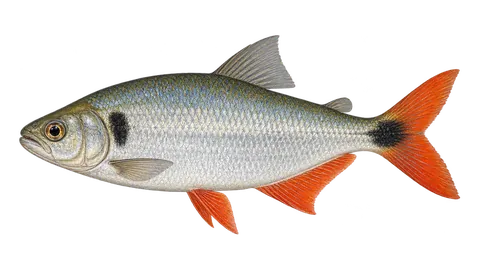
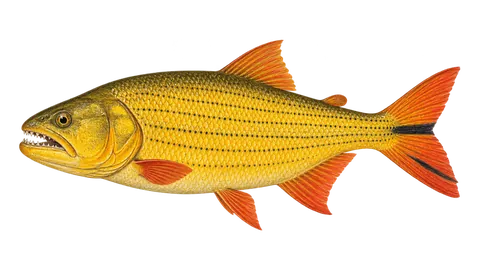
Silver, elongated body with a greenish back. Reddish fins, orange-red tail with a black spot on the peduncle that runs along the central rays. Small mouth. The dorado is deep gold and has a large mouth with conical teeth. The piracanjuba looks similar but lives in the Paraná and Uruguay basins.
Loading the next 7 days…
Each card shows the day's index (0 to 100) and, below it, a strip with the index for each hour, from 0h to 23h. from poor to excellent.
Clear-water rivers at the edge of the Pantanal: Formoso, da Prata, Sucuri and Mimoso (Bonito and Jardim), Aquidauana, Miranda, Coxim, upper Taquari, Cuiabá, Manso and upper Paraguay.
Habitat: Rapids and backwaters of clear water under fruit trees, schools near rocks and logs.
native to the basins
states
Mato Grosso do Sul, Mato Grosso
April to October, with clean rivers. September and October, as the water warms, tend to be the best.
Daytime. Active all day; in very clear water it feeds best early and late in the afternoon.
Cold mornings keep the school deep; wait for the sun to warm the water.
Little effect.
Little effect.
Bonito's rivers cloud little, but heavy rain muddies the larger rivers.
Low, clear water concentrates the school in the rapids.
Very wary. Move crouched, with no shadow over the pool, and use a fine leader.
Wind knocks down fruit and insects and can activate the surface.
Surface and mid-water, 0.3 to 2 m.
lures
natural baits
accessories
Cast the fruit-fly fly under the tree and let it drift without dragging. If the school spooks, wait 10 minutes in silence.
Boat fishing along flooded forest edges or banks with fruit trees, tapping the rod tip on the water to imitate falling fruit. A classic in the Pantanal during high water and early falling water.
ready-made kitBoat fishing, anchored or drifting, in rivers with rapids and rock in the Paraná, Paraguay, Uruguay and São Francisco basins, with artificial lures and natural bait.
ready-made kitFly fishing in rivers and lakes of the Amazon and the Pantanal, from a boat or wading in shallow water.
guideWhere fish are in each type of water, from rapids and swirls to bay mouths and corixo channels, and how river level changes everything.
Summary of the regulations we found, with the source for each. Rules change; before keeping or transporting fish, check with the state environmental agency.
Minimum size for piraputanga in MS, no maximum. Counts as the only native fish in the recreational bag limit.
Source: Decreto estadual MS nº 15.375/2020 (amends Decreto nº 15.166/2019), art. 9º - Semadesc/Imasul
Art. 19-B bans for 5 years (since Jan 1, 2024) transporting, storing and trading piraputanga caught in rivers of MT. Recreational anglers may only keep up to 2 kg or 1 fish for consumption on site (within 500 m of the river), and art. 19-C excludes the species from art. 19-B: in practice, for this species, catch and release only. The law provides for an evaluation after 3 years (2027) that may revise the list. List checked in the consolidated text published by Sema-MT on May 29, 2026; Law 13.159/2025 did not change the list.
Source: Lei estadual MT nº 9.096/2009, arts. 19-B and 19-C (added by Lei nº 12.434/2024) - Sema-MT
Transport, storage and sale are fully prohibited for 5 years from Jan 1, 2024 for: cachara, caparari, dorado, jaú, matrinchã (Brycon spp.), pintado/surubim (Pseudoplatystoma spp.), piraíba, piraputanga, pirarara, arapaima (pirarucu), trairão and peacock bass (tucunaré, Cichla spp.). For recreational anglers: catch and release only. These 12 species may not even be eaten on site, since the 2 kg or 1 fish limit excludes the art. 19-B list. The law cites jaú as Zungaro zungaro; we also include the Pantanal jaú (Z. jahu) out of caution. The list may still change: § 2 (exotic and predatory species), § 3 (review through study) and the 3-year assessment planned for 2027. A TJMT news report of Jun 2, 2026 confirms the 12 prohibited species. The STF denied a preliminary injunction in the ADIs against the law in 2024; we found no merits ruling.
Source: Decreto estadual MS nº 15.166/2019, art. 9º (as amended by Decreto nº 15.375/2020)
Allowed: Subsistence fishing by riverside residents and authorized scientific fishing. Decree 15.166/2019 (art. 11, §5) allows catch and release only in February and only in the channels of the Paraguay and Paraná rivers. For the rest of the period, not even catch and release is allowed. Check the Imasul portaria for each season.
Source: Decreto estadual MS nº 15.166/2019, art. 11; IN IBAMA nº 201/2008
Allowed: All fishing modalities are prohibited in rivers, including catch and release (Law 9.096/2009, art. 19-A). Exceptions: subsistence fishing from shore (3 kg or 1 fish, no transport or sale) and scientific fishing. Law 13.159/2025 now allows licensed sport fishing in UHE/PCH hydropower reservoirs, natural lakes and border rivers, subject to a scientific study and a license from the environmental agency. We have not confirmed whether these licenses are already being issued.
Use a rubber passaguá and remove the hook in the water. Agitated fish: release it right away, without a long photo.
Tasty flesh with many fine bones; fried in very thin steaks.
Length-weight relationship W = a·Lb (a = 0.01413, b = 3.05; FishBase (estimativa bayesiana pelo gênero)). It's an average: a fat or lean fish can vary by 10% to 20%.
estimated weight
—
The season weights (months), the time of day and the sensitivities (cold, pressure, moon, wind, rain, tide, strong light, murky water and noise) are the app's editorial estimates, based on the literature below and on the field experience of anglers and guides. They are not official data nor a measurement made for this species, and they may vary by region and year. Closed seasons and legal rules appear in the rules section, with the norm and a link.
Your location is saved only on this device and feeds the forecast, the map and the "today" on the home page.