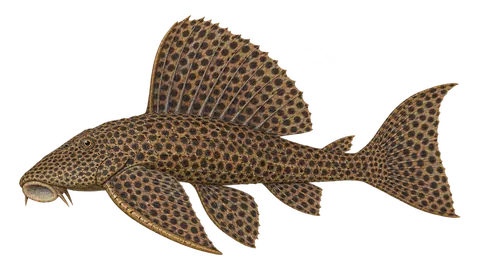
Skip to content
fishing forecast

brown hoplo

Hoplosternum littorale · Callichthyidae · omnivore

Freshwater

Small armored catfish that breathes air and lives in swamps. It builds a foam nest and is a traditional dish in Pará and Amapá.

Also called: tamoatá, tamuatá, tamboatá, camboatá, caborja, cascudo

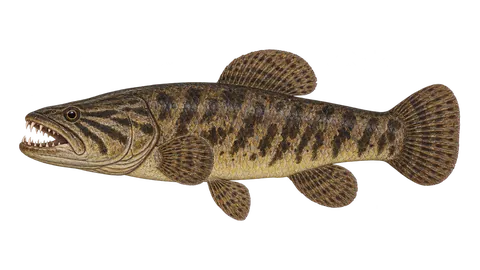
Scientific illustration of Brown hoplo
common size
12–20 cm
maximum
26 cm
common weight
0.1–0.2 kg
record/max.
0.3 kg
depth
0.2–2 m
ideal water
24–30 °C
location

Sample location: choose yours to see the forecast for where you fish.

period

Reading the weather across 3 global models and 31 simulations…

the species

everything about the brown hoplo

overview

who is the brown hoplo

Small catfish covered by two rows of bony plates on each side. It breathes atmospheric air, which lets it live in swamps, flooded areas and lakes with little oxygen. In the flood it eats insect larvae and bottom detritus; in the dry season, land insects and small crustaceans. The male builds a floating nest of foam and plant pieces and guards the eggs. It matures in about a year. It is highly prized in the cooking of Belém and Amapá, and caught with a cane pole and worm in ditches and ponds, as well as with traps and nets.

fun facts

  • It breathes air: it gulps air at the surface and absorbs oxygen through its gut.
  • It was introduced to the United States, where it already breeds in Florida.
how to recognize it

identification

Rounded body, dark brown to olive, covered by two rows of bony plates on each side. Dark spots on the body and fins. Two pairs of barbels at the mouth. A strong spine on the pectoral fin. Cascudos (Loricariidae) have a sucker mouth under the head; the tamoatá does not.

distribution

where found

open on the large map

Almost all South American basins east of the Andes, north of Buenos Aires. Very common in the eastern Amazon (Marajó, Amapá), the Pantanal and the upper Paraná. In Minas Gerais the IEF lists the tamoatá among the allochthonous species.

Habitat: Swamps, flooded areas, ditches, oxbow lakes and shallow vegetated lakes, even with low oxygen.

native to the basins

AmazonTocantins-AraguaiaWestern Northeast AtlanticParaguay (Pantanal)ParanáUruguaySouth Atlantic

states

Pará, Amapá, Amazonas, Maranhão, Tocantins, Mato Grosso, Mato Grosso do Sul, São Paulo, Paraná, Rio Grande do Sul

calendar and clock

when to fish

best season

time of yearbest: Oct–Mar
JanFebSeaAprMayJunJulAugSepOctNovDec

Easy to find at the start of the rains, when it builds nests on flooded banks, and in the dry season, when it is trapped in pools and ditches.

best time of day

0h6h12h18h sunrise ~6amsunset ~6pm

Night and twilight. Most active late in the afternoon and at night, rooting along the bottom.

weather, water and behavior

what affects the brown hoplo
sensitivity The little bars show how much each factor affects this species. Five full: it feels it a lot.

cold and cold fronts

In the South and the Pantanal, strong cold leaves the fish buried and still.

atmospheric pressure

Little known effect.

moon

Little known effect.

rain

Rains trigger nest building.

water level

In the dry season it concentrates in pools and ditches.

noise

Not very sensitive.

wind

Little effect.

depth

Very shallow, 0.2 to 1.5 m.

technique, gear and bait

how to fish

rod
2 to 3 m cane pole
spinning / baitcasting reel
optional
line
monofilament 0.20 to 0.25 mm
leader
optional
hook
small, #6 to 2

natural baits

  • minhoca
  • insect larva
  • small piece of fish

accessories

  • small sinker
  • landing net

tip from an angler

Bait on the bottom, very close to the vegetation, late in the afternoon. Watch out for the pectoral spine when removing the hook.

what the law says

rules for the brown hoplo

Summary of the regulations we found, with the source for each. Rules change; before keeping or transporting fish, check with the state environmental agency.
Conservation: Not on the national list (Portaria GM/MMA 1.667/2026).

Amazonian closed season (AP)

catch, transport and sale prohibited (commercial fishing)15/11 to 15/03APAmazon

In AP the tamoatá (Hoplosternum spp.) is in Annex II of the ordinance, with fishing prohibited from Nov 15 to Mar 15. Under art. 2 of the ordinance, anglers fishing with a handline or pole, line and hook are exempt from this ban, unless a stricter state rule applies; during the period the angler's limit is 5 kg + 1 fish.

Source: Portaria IBAMA nº 48/2007, Annexes I and II

Marajó Island (PA): closed season from Jan 1 to Apr 30

catch prohibited (commercial fishing)01/01 to 30/04PAAmazon

In the rivers of Marajó Island the tamoatá (Hoplosternum spp.) is on the fishing ban list from Jan 1 to Apr 30. Under art. 2 of the ordinance, anglers fishing with a handline or pole, line and hook are exempt from this ban, unless a stricter state rule applies; during the period the angler's limit is 5 kg + 1 fish.

Source: Portaria IBAMA nº 48/2007, Annexes I and II

piracema closures in the basins where the species lives

Spawning closure (piracema) in the Paraná River basin

01/11 to 28/02SPPRMGGOMSDF

Allowed: Recreational fishing only for non-native species and hybrids (peacock bass, tilapia, black bass, carp, croaker, etc.; piauçu remains prohibited), with handline, simple pole, or rod with spinning or baitcasting reel, up to 10 kg + 1 fish. In rivers, from shore only; in reservoirs, from a boat or from shore. Prohibited: floodplain lakes, aquatic-animal bait, within 1,500 m of dams and waterfalls, and within 500 m of confluences. Tournaments only in reservoirs and only with non-native species.

Source: IN IBAMA nº 25/2009

Closed season in Goiás (state rule)

01/11 to 28/02GO

Allowed: Sport and guided fishing only in reservoirs, catch and release with barbless hooks (no keeping, transporting or eating). Subsistence: up to 5 kg per day, for household consumption only.

Source: IN Semad-GO nº 17/2026, arts. 8º to 11

Spawning closure (piracema) in the Pantanal of Mato Grosso do Sul

05/11 to 28/02MS

Allowed: Subsistence fishing by riverside residents and authorized scientific fishing. Decree 15.166/2019 (art. 11, §5) allows catch and release only in February and only in the channels of the Paraguay and Paraná rivers. For the rest of the period, not even catch and release is allowed. Check the Imasul portaria for each season.

Source: Decreto estadual MS nº 15.166/2019, art. 11; IN IBAMA nº 201/2008

Spawning closure (piracema) in Mato Grosso (all basins)

01/10 to 31/01MT

Allowed: All fishing modalities are prohibited in rivers, including catch and release (Law 9.096/2009, art. 19-A). Exceptions: subsistence fishing from shore (3 kg or 1 fish, no transport or sale) and scientific fishing. Law 13.159/2025 now allows licensed sport fishing in UHE/PCH hydropower reservoirs, natural lakes and border rivers, subject to a scientific study and a license from the environmental agency. We have not confirmed whether these licenses are already being issued.

Source: IN Interministerial MAPA/MMA nº 10/2017; Resolução Cepesca-MT nº 1/2026; Lei estadual MT nº 9.096/2009, arts. 19-A and 27 (Leis 12.434/2024 and 13.159/2025)

Spawning closure (piracema) in the Araguaia River basin

01/11 to 28/02GOTOPAMT

Allowed: Recreational fishing only in reservoirs, with handline, rod, or spinning or baitcasting reel. Fish may only be eaten on site, not transported. Competitions prohibited. Subsistence: 3 kg + 1 fish. State rules (GO and TO) may be stricter.

Source: IN Interministerial MPA/MMA nº 12/2011

Spawning closure (piracema) in the Tocantins and Gurupi river basins

01/11 to 28/02TOPAMAGO

Allowed: Recreational fishing only in reservoirs, with on-site consumption. Subsistence: 5 kg + 1 fish. State rules may be stricter.

Source: IN Interministerial MPA/MMA nº 13/2011

Spawning closure (piracema) in the Uruguay River basin

01/10 to 31/01RSSC

Allowed: Recreational fishing from shore, or from a boat without motor. Only handline or rod, line and hook, one gear per angler, up to 5 kg. Prohibited in floodplain lakes, within 1,500 m of dams, within 500 m of confluences, and in stretches listed in the rule (e.g., Turvo River).

Source: IN IBAMA nº 193/2008

Spawning closure (piracema) in the southern basins (RS and SC, outside the Uruguay)

01/11 to 31/01RSSC

Allowed: Recreational fishing from a boat or from shore, with a single hook, one gear per angler, up to 5 kg.

Source: IN IBAMA nº 197/2008

Closed season in the Maranhão basins

01/12 to 30/03MA

Allowed: Recreational fishing from a boat or from shore with handline or rod, up to 5 kg or 1 fish. Transport only within the municipality. Competitions prohibited.

Source: Portaria IBAMA nº 85/2003

Closed season in the rivers of Marajó Island (PA)

01/01 to 30/04PA

Allowed: The same recreational-angler exceptions as in Portaria 48/2007 apply (handline or rod, 5 kg + 1 fish), unless a stricter state rule applies.

Source: Portaria IBAMA nº 48/2007

Closed season in the Amazon basin in Amapá

15/11 to 15/03AP

Allowed: Recreational anglers with handline or rod, line and hook are outside the Annex II prohibitions, with a bag limit of 5 kg + 1 fish, unless a stricter state rule applies.

Source: Portaria IBAMA nº 48/2007

Border rivers MT/RO and MT/PA

05/11 to 28/02MTROPA

Allowed: See the exceptions in Portaria 48/2007 and the state rules for each bank.

Source: Portaria IBAMA nº 48/2007

catch and release
catch and release Releasing the fish alive, quickly and with a wet hand. During a closed season it isn't always allowed: what the regulation says applies.

Hardy: release it in shallow water, near the vegetation.

in the kitchen

Tasty, firm meat. In Pará and Amapá it is stewed or baked in its own armor and served peeled.

calculator

how much it weighs without taking it out of the water

Length-weight relationship W = a·Lb (a = 0.02042, b = 2.98; FishBase). It's an average: a fat or lean fish can vary by 10% to 20%.

estimated weight

—

sources and references

The season weights (months), the time of day and the sensitivities (cold, pressure, moon, wind, rain, tide, strong light, murky water and noise) are the app's editorial estimates, based on the literature below and on the field experience of anglers and guides. They are not official data nor a measurement made for this species, and they may vary by region and year. Closed seasons and legal rules appear in the rules section, with the norm and a link.

  1. scientific FishBase — Hoplosternum littorale (ficha da espécie)Names, distribution, biology, length-weight relationship and references. Page checked on October 13, 2026.
  2. official Portaria GM/MMA nº 1.667, de 27 de abril de 2026 — Lista Nacional Oficial de Espécies da Fauna Ameaçadas de Extinção (peixes e invertebrados aquáticos)Most recent national list. The species is not on it (search by scientific name in the text published in the DOU, checked on October 13, 2026).
  3. official ICMBio/SALVE — Ficha de Hoplosternum littorale (avaliação nacional do risco de extinção)National assessment by ICMBio, published in 2023. DOI verified on Crossref.
  4. scientific IUCN Red List — Hoplosternum littorale (avaliação global: Pouco Preocupante, LC, 15/10/2020)Global assessment. Link given on the FishBase entry (Red List, version 2025-2).
  5. technical CABI Compendium — Hoplosternum littorale (armoured catfish). Sabapathy Allen, M. (2019).Species data sheet (DOI checked in Crossref).
  6. scientific Britski, H. A.; Silimon, K. Z. S.; Lopes, B. S. (2007). Peixes do Pantanal: manual de identificação. 2ª ed. Brasília: Embrapa Informação Tecnológica. 227 p.Printed work; the URL is the bibliographic record on FishBase, which cites this work for the species.
  7. scientific Ferreira, E. J. G.; Zuanon, J. A. S.; Santos, G. M. (1998). Peixes comerciais do médio Amazonas: região de Santarém, Pará. Brasília: Ibama. 211 p.Printed work; the URL is the bibliographic record on FishBase, which cites this work for the species.
  8. scientific Ota, R. R.; Deprá, G. C.; Graça, W. J.; Pavanelli, C. S. (2018). Peixes da planície de inundação do alto rio Paraná e áreas adjacentes: revised, annotated and updated. Neotropical Ichthyology 16(2): e170094.Annotated list of species of the upper Paraná River, indicating native and non-native ones. Open access; species name checked in the text.
don't confuse

similar species