Paraná basin: minimum 25 cm
25 cmSPPRGOParaná
Federal minimum size for trahira in the Paraná basin.
Source: Instrução Normativa Ibama nº 26/2009 (fishing rules for the Paraná River basin), Annex
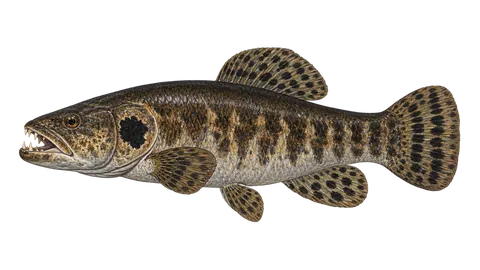
Hoplias malabaricus
The predator of lagoons and small farm ponds, found in almost all of Brazil. Explosive strike at the surface frog among the water hyacinth.
Also called: traíra, taraíra, traíra-comum

Ambush predator: it sits still in shallow water among plants and strikes anything that moves: fish, frogs, large insects. Lives in lagoons, small farm ponds, swamps, reservoirs and slack river water, even in water low in oxygen. One of Brazil's most popular fisheries. On the surface, with a frog lure or propeller bait in the middle of the water hyacinth, the strike is explosive. It has strong teeth and cuts thin line. It survives a long time out of water, so handle it calmly and release it well. It is native to almost all basins.
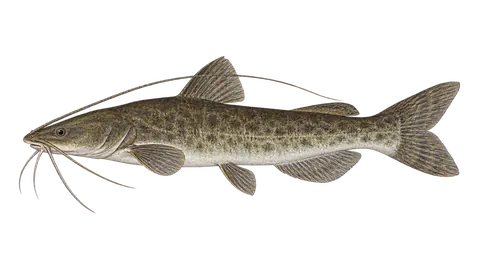
Cylindrical body, olive-brown with irregular dark spots and a yellowish belly. Large head, huge mouth with canine teeth. Dark stripes run from the eye. No adipose fin and a rounded tail. The trairão is Amazonian and much bigger. The jundiá has no scales and has barbels.
Loading the next 7 days…
Each card shows the day's index (0 to 100) and, below it, a strip with the index for each hour, from 0h to 23h. from poor to excellent.
Found in almost every basin in Brazil: lagoons, small farm ponds, reservoirs, swamps and slack river water.
Habitat: Shallow, still water with vegetation: water hyacinth, cattails, submerged grass, snags, and the edges of small ponds and reservoirs.
native to the basins
states
São Paulo, Minas Gerais, Goiás, Paraná, Santa Catarina, Rio Grande do Sul, Mato Grosso do Sul, Mato Grosso, Bahia, Rio de Janeiro, Espírito Santo, Tocantins, Pará, Amazonas, Amapá, Acre, Rondônia, Roraima, Maranhão, Piauí, Ceará, Rio Grande do Norte, Paraíba, Pernambuco, Alagoas, Sergipe, Distrito Federal
Spring and summer, with warm water. In winter it slows down, especially in the South.
Night and twilight. Most active at dusk, at night and at dawn. During the day it strikes in the shade of the vegetation.
Below 18 °C water, the trahira is almost motionless.
Muggy days before rain are usually excellent.
Small effect; warm nights produce more.
Light summer rain stirs up the surface.
A full farm pond with flooded vegetation spreads the fish out; as the level drops, they concentrate.
Walk slowly along the bank; a heavy footstep scares them off.
Strong wind hinders surface lures.
Shallow, 0.2 to 1.5 m.
lures
natural baits
accessories
Weedless frog over the water hyacinth. When it blows up, wait a second for the trahira to turn the lure, and only then set the hook.
For anyone who's never fished and wants a simple kit for a pay lake, lake, reservoir or calm river, with natural bait.
ready-made kitCasting in lagoons, marshes, small reservoirs and vegetated reservoir edges, using frogs, sapito, zara and buzzbait.
ready-made kitBoat fishing in large reservoirs in SP, MG, GO, MS and PR, where blue and yellow peacock bass were introduced. Clear water, pressured fish and plenty of submerged structure.
guideOverhead, sidearm, pitching, flipping and skipping: when to use each, how to aim at structure, and why the first cast to a spot is the one that gets the most bites.
guideZara, prop bait, popper, jerkbait, shad, jig, spoon and spinnerbait: the right movement for each and how to adjust the rhythm to water temperature and fish activity.
guideFor anyone who has never fished: license, where to go, a cheap kit that works, how to rig a bobber line, how to bait the hook and what to do when the fish bites.
Summary of the regulations we found, with the source for each. Rules change; before keeping or transporting fish, check with the state environmental agency.
Conservation: Hoplias malabaricus is a species complex; its taxonomy is under review.
Federal minimum size for trahira in the Paraná basin.
Source: Instrução Normativa Ibama nº 26/2009 (fishing rules for the Paraná River basin), Annex
Minimum size for trahira in MG, stricter than the federal rule.
Source: Portaria IEF-MG nº 111/2003 (minimum catch sizes in MG) - IEF/Semad-MG
Art. 19-B lists 'Trairão (Hoplia[s])' by genus, the same name as the trahira. It is unclear whether the trahira falls under the transport and trade ban: confirm with Sema-MT.
Source: Lei estadual MT nº 9.096/2009, arts. 19-B and 19-C (added by Lei nº 12.434/2024) - Sema-MT
Source: IN IBAMA nº 26/2009, Annex (Paraná River basin; stricter state rules prevail)
Source: Portaria IAT nº 650/2025, Annex I (interior basins of PR, except Iguazu and coastal)
Source: IN Semad-GO nº 17/2026, Annex I, Araguaia-Tocantins basin (on-site consumption only; zero transport)
Source: IN Semad-GO nº 17/2026, Annex I, Paranaíba basin (on-site consumption only; zero transport)
Source: Portaria Naturatins nº 47/2026, Annex I, as amended by Portaria nº 105/2026
Allowed: Recreational fishing only for non-native species and hybrids (peacock bass, tilapia, black bass, carp, croaker, etc.; piauçu remains prohibited), with handline, simple pole, or rod with spinning or baitcasting reel, up to 10 kg + 1 fish. In rivers, from shore only; in reservoirs, from a boat or from shore. Prohibited: floodplain lakes, aquatic-animal bait, within 1,500 m of dams and waterfalls, and within 500 m of confluences. Tournaments only in reservoirs and only with non-native species.
Source: IN IBAMA nº 25/2009
Allowed: Only exotic or hybrid species, 3 kg + 1 fish per day, with handline, rod, simple pole, or spinning or baitcasting reel. Nets prohibited. Keep the minimum distances from dams and reservoirs.
Source: Portarias IEF nº 154/2011 (São Francisco), 155/2011 (East) and 156/2011 (Grande/Paranaíba)
Allowed: Sport and guided fishing only in reservoirs, catch and release with barbless hooks (no keeping, transporting or eating). Subsistence: up to 5 kg per day, for household consumption only.
Allowed: Subsistence fishing by riverside residents and authorized scientific fishing. Decree 15.166/2019 (art. 11, §5) allows catch and release only in February and only in the channels of the Paraguay and Paraná rivers. For the rest of the period, not even catch and release is allowed. Check the Imasul portaria for each season.
Source: Decreto estadual MS nº 15.166/2019, art. 11; IN IBAMA nº 201/2008
Allowed: All fishing modalities are prohibited in rivers, including catch and release (Law 9.096/2009, art. 19-A). Exceptions: subsistence fishing from shore (3 kg or 1 fish, no transport or sale) and scientific fishing. Law 13.159/2025 now allows licensed sport fishing in UHE/PCH hydropower reservoirs, natural lakes and border rivers, subject to a scientific study and a license from the environmental agency. We have not confirmed whether these licenses are already being issued.
Allowed: Recreational fishing only in reservoirs, with handline, rod, or spinning or baitcasting reel. Fish may only be eaten on site, not transported. Competitions prohibited. Subsistence: 3 kg + 1 fish. State rules (GO and TO) may be stricter.
Allowed: Recreational fishing only in reservoirs, with on-site consumption. Subsistence: 5 kg + 1 fish. State rules may be stricter.
Allowed: In 2025/26: catch and release with barbless hooks and recreational fishing card; subsistence fishing on foot or from a rowboat, with simple pole or handline.
Source: Portaria Naturatins nº 244/2025 (2025/26 season); INIs MPA/MMA nº 12 and 13/2011
Allowed: Recreational fishing from a boat or from shore with handline, rod, spinning or baitcasting reel, up to 5 kg + 1 fish. Prohibited within 1,000 m of dams, waterfalls and rapids, and within 500 m of confluences. Floodplain lakes have a longer closed season (see next item).
Source: Portaria IBAMA nº 50/2007
Allowed: No fishing in the floodplain lakes during the period.
Source: Portaria IBAMA nº 50/2007
Allowed: Recreational fishing from shore, or from a boat without motor. Only handline or rod, line and hook, one gear per angler, up to 5 kg. Prohibited in floodplain lakes, within 1,500 m of dams, within 500 m of confluences, and in stretches listed in the rule (e.g., Turvo River).
Source: IN IBAMA nº 193/2008
Allowed: Recreational fishing from a boat or from shore, with a single hook, one gear per angler, up to 5 kg.
Source: IN IBAMA nº 197/2008
Allowed: In rivers, shore fishing only; in reservoirs, from a boat or from shore. Only non-native species, hybrids, and giant river prawn (camarão-gigante-da-malásia), up to 10 kg + 1 fish. Prohibited in floodplain lakes and within 1,000 m of dams.
Source: IN IBAMA nº 195/2008
Allowed: Same rules as the Southeast basins: only non-native species and hybrids, up to 10 kg + 1 fish; in rivers, shore fishing only.
Source: IN IBAMA nº 196/2008
Allowed: Recreational fishing from a boat or from shore with handline, rod, spinning or baitcasting reel, up to 5 kg + 1 fish per day. Prohibited within 1,500 m of dams, waterfalls and rapids. Competitions prohibited.
Source: IN MMA nº 40/2005
Allowed: Recreational fishing from a boat or from shore with handline or rod, up to 5 kg or 1 fish. Transport only within the municipality. Competitions prohibited.
Source: Portaria IBAMA nº 85/2003
Allowed: Recreational fishing with handline or rod is outside the prohibition.
Source: Portaria IBAMA nº 04/2008
Allowed: The same recreational-angler exceptions as in Portaria 48/2007 apply (handline or rod, 5 kg + 1 fish), unless a stricter state rule applies.
Source: Portaria IBAMA nº 48/2007
Allowed: Recreational anglers with handline or rod, line and hook are outside the Annex II prohibitions, with a bag limit of 5 kg + 1 fish, unless a stricter state rule applies.
Source: Portaria IBAMA nº 48/2007
Allowed: Subsistence fishing only.
Source: Portaria IBAMA nº 48/2007
Allowed: See the exceptions in Portaria 48/2007 and the state rules for each bank.
Source: Portaria IBAMA nº 48/2007
Sharp teeth: always use pliers. Don't squeeze the belly. Release it in the vegetation, where it hides.
White, tasty meat, but full of Y-shaped bones. Fried in deeply scored steaks, or as a boneless fillet.
Length-weight relationship W = a·Lb (a = 0.00891, b = 3.1; FishBase). It's an average: a fat or lean fish can vary by 10% to 20%.
estimated weight
—
The season weights (months), the time of day and the sensitivities (cold, pressure, moon, wind, rain, tide, strong light, murky water and noise) are the app's editorial estimates, based on the literature below and on the field experience of anglers and guides. They are not official data nor a measurement made for this species, and they may vary by region and year. Closed seasons and legal rules appear in the rules section, with the norm and a link.
Your location is saved only on this device and feeds the forecast, the map and the "today" on the home page.