

tapping
Tapping the rod tip on the water under the tree to mimic falling fruit and attract pacu, pirapitinga and piraputanga to the bait.
when to use it
Flood, high water and the start of the falling water, when fruit drops at the edge of the flooded forest, the bank and the igapó. It's daytime fishing, with the boat tied up and quiet. In the dry season, with water far from the forest, it loses strength. The app lists tambaqui as Vulnerable on the national list: check the rule before aiming the tapping at it.
where to look
- flooded forest and igapó
- bank with fruit tree
- edge of corixo with hanging vegetation
- shaded eddy
gear
Traditional: long rod 3.5 to 4.5 m (bamboo or telescopic), short mono line 0.50 to 0.60 mm tied at the tip, no reel. With line reserve: rod 2.1 to 3.0 m, moderate action and firm tip, 20-40 lb, with spinning reel 4000 to 5000 or round baitcasting reel. Short mono leader 60 to 80 lb, 30 to 50 cm. Short forged hook 1/0 to 4/0 (chinu, maruseigo). No sinker, or 10 g at most.
baits and lures
- laranjinha-de-pacu, tucum, ingá and other local fruits
- river crab
- green corn
- EVA or rubber fruit bait
- firm dough
how to do it
- Bring the boat up to the vegetation, under the tree that is fruiting, with the motor off.
- Bait with the same fruit falling there, or a crab, leaving the hook point free.
- Tap the rod tip on the water two to four times, sharply, next to the bait, and stop.
- Let the bait sink slowly, with no sinker, on controlled line.
- The pacu's bite is strong. Wait for it to settle and set hard: its mouth is tough and the hook has little room.
- Get the fish out of the timber in the first few meters, with the rod high and firm drag.
- Move to another tree every 10 to 15 minutes without a bite.
common mistakes
- Tapping nonstop: scares off more than it attracts.
- Noise from the boat and loud talking.
- Setting on the first light touch.
- Fine hook that bends on the bite.
- Don't confuse it with lambada (also called rela, and batida in some places), which hooks the fish by the body with treble hooks in jerks and is banned in the Paraná basin, in Mato Grosso do Sul (MS) and in Paraná (PR).
species
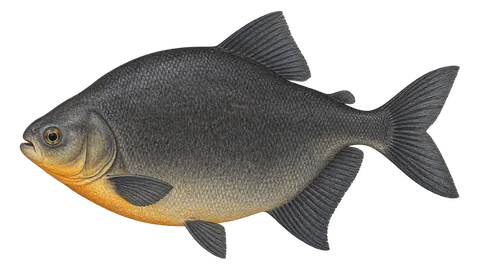
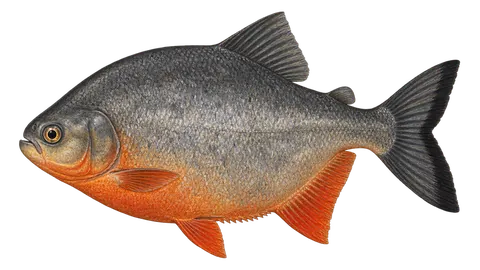
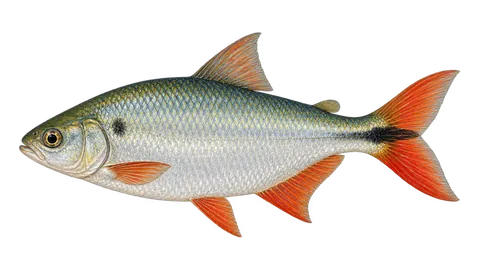
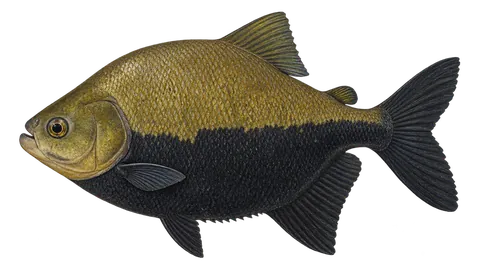
ready-made kits
sources and references
- scientific Goulding, M. (1980). The Fishes and the Forest: Explorations in Amazonian Natural History. University of California PressFrugivory of tambaqui, pirapitinga and other fish in the flooded forest.
- scientific Britski, H.A.; Silimon, K.Z.S.; Lopes, B.S. (2007). Peixes do Pantanal: manual de identificação. 2ª ed. Embrapa Informação Tecnológica
- official Instrução Normativa IBAMA nº 26/2009 — pesca na bacia do rio ParanáProhibits hooking fish by the body with jerks; in underwater fishing, the crossbow only for exotic and non-native species.
- official Decreto estadual MS nº 15.166/2019 — pesca amadora em Mato Grosso do SulBanned gear, snagging fish by the body, and underwater fishing restricted to exotic species, per the app's regras.json.