

guri reservoir — bolívar
Venezuela's largest reservoir, with black water, on the Caroní River. Peacock bass and payara in a sport fishery that once had a great reputation and is now feeling the pressure of fishing.
Guri is the reservoir of the Simón Bolívar hydroelectric dam, on the Caroní River, about 100 km upstream of its confluence with the Orinoco. At up to 4,250 km², it is Venezuela's second-largest body of water after Lake Maracaibo, a large artificial lake of black water, poor in nutrients. In the early 1980s predator fish multiplied in the lake, and Guri developed a sport fishery for peacock bass (Cichla temensis) and butterfly peacock bass (C. orinocensis), plus payara and curvinata. In the 1990s, fishing declined: studies linked the drop to poor water, rapid lake turnover and harvesting. Fishing is from a launch, with surface and mid-water lures around points, islands and coves.
best season
In the dry season, January to April, less water enters the lake and the level tends to drop, exposing points and islands. With the lake full, mid-year, Corpoelec opens the spillways (in 2026, from July 13).
Local rules: INSOPESCA sport-fishing permit; sport-caught fish may not be sold (Fishing and Aquaculture Law, Decree-Law 1.408/2014). The lake and the dams on the Lower Caroní are operated by Corpoelec: in the release season, when the spillways open, the company asks anglers, boat operators and swimmers to take precautions. Studies also link the decline of peacock bass to harvesting: release the big fish. Check your country's travel advisory before you go. Check local rules.
- getting there
- Ciudad Guayana (Puerto Ordaz and San Félix), with an airport, sits at the mouth of the Caroní on the Orinoco; the Guri dam is about 100 km upriver by road. Water access is arranged with an operator or local boatman.
- facilities
- Hotels and shops in Ciudad Guayana and limited services near the lake. Check before you go for boat, fuel and guide availability.
- country
- Bolívar, Venezuela
tip
During the release season, stay away from the spillways and the dam area. In black, nutrient-poor water, big peacock bass are rare: release the largest ones.
Loading…
Each card shows the day's index (0 to 100) and, below it, a strip with the index for each hour, from 0h to 23h. from poor to excellent.
what you can catch here
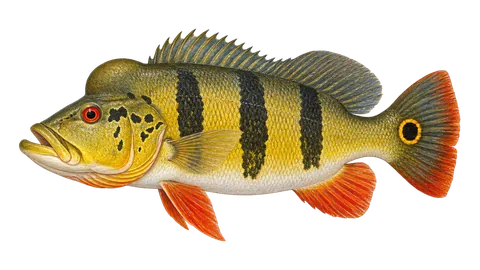
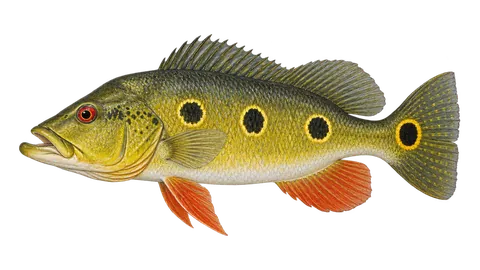
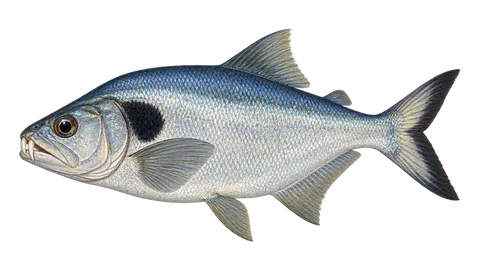
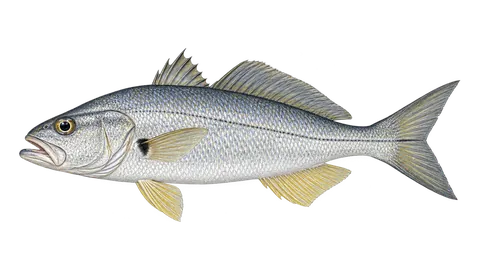
before you fish in Venezuela
The Fisheries and Aquaculture Law (Decree-Law 1,408/2014) allows sport and recreational fishing to Venezuelans and foreigners, resident or not in the country, with prior authorization. The permit is issued by INSOPESCA, is valid for up to one year and is renewable. The law (art. 29) sets the fee in tax units (U.T.): 3 U.T. for an individual and 10 U.T. for a non-resident foreigner. In a national park, the Inparques rules also apply.
- Fish from sport and recreational fishing may not be sold (Decree-Law 1,408/2014, art. 16).
- The sport fishing permit covers only permitted species and areas and may not interfere with other fisheries (Decree-Law 1,408/2014, art. 26).
- National parks (Inparques) have their own use rules and zoning: check which zones allow fishing before you go.
The rules and closed seasons in the rest of the app are Brazilian. Outside Brazil, the regulations of the country and province apply: confirm with the official agency.
sources and references
Access, facilities and season information changes: check with the lodge, a local guide or the city hall before you travel.
- scientific Williams, Winemiller, Taphorn e Balbas (1998) — Ecology and Status of Piscivores in Guri, an Oligotrophic Tropical Reservoir (North American Journal of Fisheries Management 18: 274–285)Sport fishing for Cichla temensis, C. orinocensis and payara; predator expansion in the early 1980s and decline in the 1990s, linked to poor water, rapid turnover and harvesting
- official Corpoelec — Plan de Alivio Preventivo 2026 de las centrales hidroeléctricas del Bajo Caroní (julho de 2026)Releases from July 13, 2026; precautions requested from anglers, tourists and boat operators
- official INSOPESCA — Ley de Pesca y Acuicultura (Decreto 1.408, de 13/11/2014)Authorization for sport and recreational fishing; fish may not be sold (arts. 10, 16 and 26)