

río cinaruco — santos luzardo national park
Black-water river of the Venezuelan Llanos, southern boundary of Santos Luzardo park, with three peacock bass species, including the royal peacock bass.
The Cinaruco is a black-water tributary of the Orinoco that drains the savannas of southern Apure and forms the southern boundary of Santos Luzardo National Park, also called Cinaruco-Capanaparo. It has floodplain lagoons, such as Laguna Larga, and dense riparian forest; in the dry season the channel is 40 to 200 m wide. Three native peacock bass live there: peacock bass (Cichla temensis), which exceeds 60 cm standard length, butterfly peacock bass (C. orinocensis) and royal peacock bass (C. intermedia). From 1999 to 2003, researchers and sport-fishing groups tagged more than 2,000 peacock bass to study their movements, and most were recaptured less than 1 km from the tagging point. Fishing is by casting, from a boat with a guide.
best season
In falling water and the dry season, November to April, when sport anglers go to the river; in high water, many lagoons are inaccessible. Rains run May to September, and the river level varies by more than 5 m a year.
Local rules: National park created by Decree 2.018/1988 and managed by Inparques: confirm with Inparques where fishing is allowed and the rules of use. Netting is illegal inside the park, but net fishers work the lagoons, and studies from the early 2000s already showed a decline in the maximum size of peacock bass caught. INSOPESCA sport-fishing permit; fish may not be sold. Release big peacock bass. Check your country's travel advisory before you go. Check local rules.
- getting there
- By road, via the San Fernando de Apure–Puerto Páez highway, which crosses the park. Puerto Páez sits at the mouth of the Meta, across from Puerto Carreño (Colombia). On the river, by boat only.
- facilities
- Minimal infrastructure and basic shops in Puerto Páez. In the 2000s sport-fishing clubs and operators worked there: check who operates today before you go.
- country
- Apure, Venezuela
tip
Peacock bass spawn in the dry season and as the water rises, and stop feeding to guard the young. Release large fish quickly and don't keep pressing pairs guarding a nest.
Loading…
Each card shows the day's index (0 to 100) and, below it, a strip with the index for each hour, from 0h to 23h. from poor to excellent.
what you can catch here
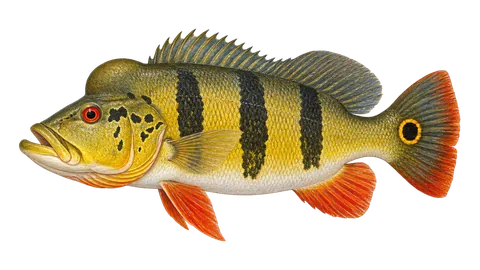
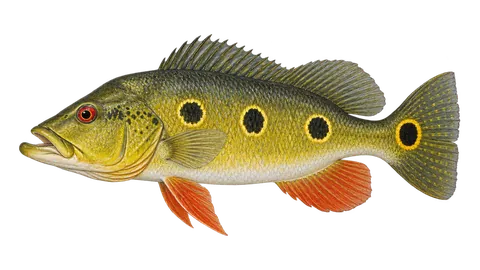
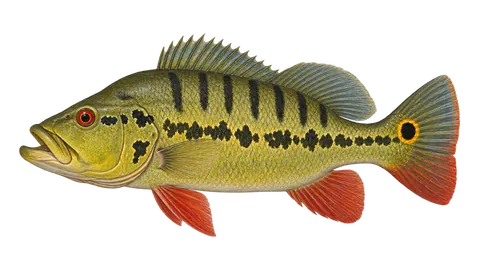
before you fish in Venezuela
The Fisheries and Aquaculture Law (Decree-Law 1,408/2014) allows sport and recreational fishing to Venezuelans and foreigners, resident or not in the country, with prior authorization. The permit is issued by INSOPESCA, is valid for up to one year and is renewable. The law (art. 29) sets the fee in tax units (U.T.): 3 U.T. for an individual and 10 U.T. for a non-resident foreigner. In a national park, the Inparques rules also apply.
- Fish from sport and recreational fishing may not be sold (Decree-Law 1,408/2014, art. 16).
- The sport fishing permit covers only permitted species and areas and may not interfere with other fisheries (Decree-Law 1,408/2014, art. 26).
- National parks (Inparques) have their own use rules and zoning: check which zones allow fishing before you go.
The rules and closed seasons in the rest of the app are Brazilian. Outside Brazil, the regulations of the country and province apply: confirm with the official agency.
sources and references
Access, facilities and season information changes: check with the lodge, a local guide or the city hall before you travel.
- scientific Hoeinghaus, Layman, Arrington e Winemiller (2003) — Movement of Cichla species (Cichlidae) in a Venezuelan floodplain river (Neotropical Ichthyology 1(2))Cinaruco as the park's southern boundary; three native Cichla; tagging with sport-fishing groups (1999–2003); fishing November to April; netting illegal in the park
- official Decreto 2.018, de 24/2/1988 (Gaceta Oficial 33.958, de 4/5/1988) — cria o Parque Nacional Santos LuzardoText reproduced in the IVIC's Compendio Legal sobre Áreas Protegidas Estrictas de Venezuela, which is no longer online; 584,368 ha between the Capanaparo and Cinaruco rivers; cites the San Fernando–Puerto Páez road
- official Inparques — Instituto Nacional de ParquesAgency that manages national parks; the website does not include fishing rules specific to Santos Luzardo
- official INSOPESCA — Ley de Pesca y Acuicultura (Decreto 1.408, de 13/11/2014)Authorization for sport and recreational fishing; fish may not be sold (arts. 10, 16 and 26)