Skip to content
fishing forecast

midas cichlid

Amphilophus citrinellus · Cichlidae · omnivore

Freshwater

The mojarra of Nicaragua's great lakes, famous in the aquarium trade for its orange form. Small and feisty, it is light-tackle fishing from rocky shores.

Also called: ciclídeo-midas, midas, mojarra-do-lago-nicarágua, Midas cichlid

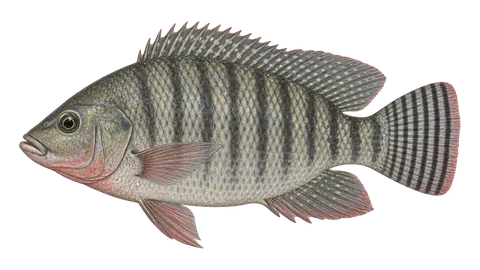
Scientific illustration of Midas cichlid
common size
15–22 cm
maximum
25 cm
common weight
0.1–0.3 kg
record/max.
0.5 kg
depth
0.5–10 m
ideal water
25–30 °C
location

Sample location: choose yours to see the forecast for where you fish.

period

Reading the weather across 3 global models and 31 simulations…

the species

everything about the midas cichlid

overview

who is the midas cichlid

Cichlid from the San Juan River basin in Nicaragua and Costa Rica, including Lakes Nicaragua (Cocibolca) and Managua (Xolotlán), and crater lagoons such as Masaya and Apoyo. It lives on rocky shores, with crevices where it spawns and guards its young, and is uncommon in rivers. It eats algae and what grows on the rocks, snails, larvae and small fish. About one in ten changes color as it grows and turns orange or gold; the rest are gray, brown or black, camouflaged on the bottom. It is the basis of one of the most studied cases of speciation in fishes. For anglers it is a light, fun target, caught with natural bait or micro-lures.

fun facts

  • In Nicaragua's crater lagoons, populations of the midas cichlid complex gave rise to new species, a classic case of sympatric speciation.
  • The orange form, rare in nature, was the most sought after by the aquarium trade.
how to recognize it

identification

Deep, compressed body, small mouth with thin lips; adult males develop a bump on the nape and longer fins. Two color patterns: gray to brown with dark bars, or orange to gold, sometimes with black spots. The red devil (Amphilophus labiatus) has thick lips and a more pointed snout; tilapias have a different mouth and a dark spot on the dorsal fin of juveniles.

distribution

where found

open on the large map

Not found in Brazil. San Juan River basin in Nicaragua and Costa Rica: Lakes Nicaragua and Managua and crater lagoons such as Masaya and Apoyo. It was released outside its native range by aquarists (for example, in Puerto Rico), with no importance for fishing.

Habitat: Rocky lake shores, with crevices and walls; calm stretches of low rivers.

calendar and clock

when to fish

best season

time of yearbest: Dec–May
JanFebSeaAprMayJunJulAugSepOctNovDec

Fishable all year. During spawning, pairs guard their crevices and strike any lure that comes close.

best time of day

0h6h12h18h sunrise ~6amsunset ~6pm

Daytime. Active by day, feeding on the rocks in shallow water; at night it shelters in crevices.

weather, water and behavior

what affects the midas cichlid
sensitivity The little bars show how much each factor affects this species. Five full: it feels it a lot.

cold and cold fronts

Rare in the region.

atmospheric pressure

Little effect.

moon

Little effect.

rain

Heavy rain muddies the shore and reduces visual fishing.

water level

A stable level favors fishing on the rocks.

noise

Not very wary near the rocks.

wind

Strong waves on the rocky shore hinder light-tackle fishing.

depth

From 0.5 to 5 m near the rocks.

technique, gear and bait

how to fish

rod
light rod 5'6" to 6' (4 to 10 lb) or cane pole
spinning / baitcasting reel
spinning reel 1000 to 2000
line
monofilament 6 to 10 lb
leader
optional
hook
size 8 to 4

lures

  • micro jig 1 to 3 g
  • spinner No. 0 to 1
  • small nymphs and streamers for fly fishing

natural baits

  • minhoca
  • piece of shrimp
  • massa

accessories

  • small pliers

tip from an angler

Fish tight to the rocks with small bait: the midas nibbles a lot, so the hook must be small.

what the law says

rules for the midas cichlid

Summary of the regulations we found, with the source for each. Rules change; before keeping or transporting fish, check with the state environmental agency.

catch and release
catch and release Releasing the fish alive, quickly and with a wet hand. During a closed season it isn't always allowed: what the regulation says applies.

Small, tough fish: remove the hook with pliers and release it quickly, near the rocks.

in the kitchen

Eaten fried whole in the region, like other mojarras.

calculator

how much it weighs without taking it out of the water

Length-weight relationship W = a·Lb (a = 0.02692, b = 3.03; FishBase (estimativa bayesiana para a família e o formato do corpo); peso máximo calculado por esta relação). It's an average: a fat or lean fish can vary by 10% to 20%.

estimated weight

—

sources and references

The season weights (months), the time of day and the sensitivities (cold, pressure, moon, wind, rain, tide, strong light, murky water and noise) are the app's editorial estimates, based on the literature below and on the field experience of anglers and guides. They are not official data nor a measurement made for this species, and they may vary by region and year. Closed seasons and legal rules appear in the rules section, with the norm and a link.

  1. scientific FishBase — Amphilophus citrinellus (ficha da espécie)Names, distribution, biology, length-weight relationship, list of countries and references. Page checked 13/10/2026. The published maximum length is 24.4 cm standard length (without the tail).
  2. scientific IUCN Red List — Amphilophus citrinellus (avaliação global: Pouco Preocupante, LC, 07/11/2019)Global assessment. Link given on the FishBase entry (Red List, version 2025-2).
  3. official INPESCA (Nicarágua) — Tallas mínimas de captura permitidas: aguas continentales (2019)Official table with minimum sizes for mojarra, tiger guapote, lagunero guapote, gaspar, snook, roncador and tarpon.
  4. scientific Barluenga, M.; Stölting, K. N.; Salzburger, W.; Muschick, M.; Meyer, A. (2006). Sympatric speciation in Nicaraguan crater lake cichlid fish. Nature 439: 719-723.DOI checked in Crossref.
don't confuse

similar species