

stillfishing
Natural bait on the bottom with the rod on a holder and the ratchet or light drag, waiting for fish that move at night or before dawn.
when to use it
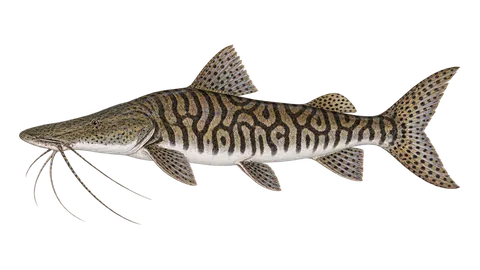
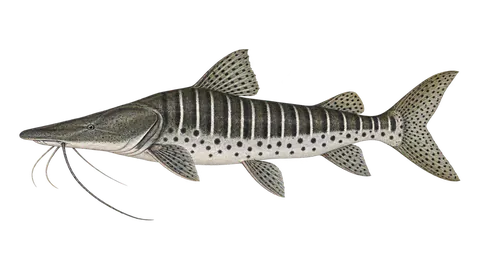
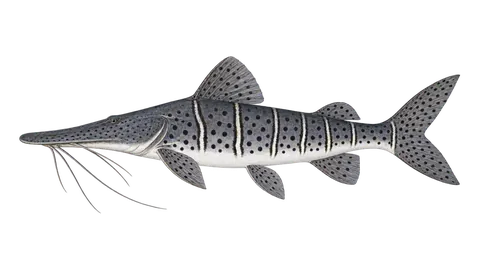
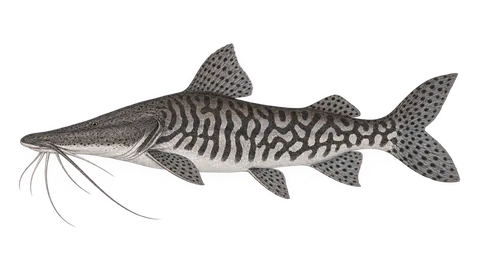
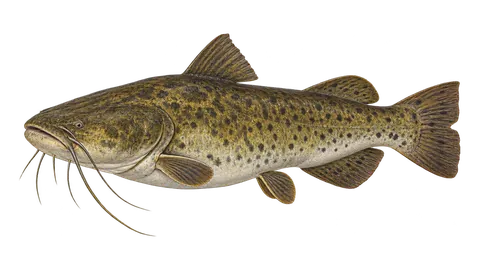
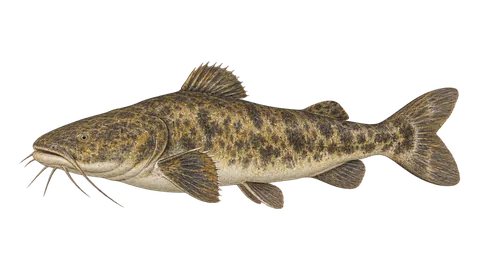
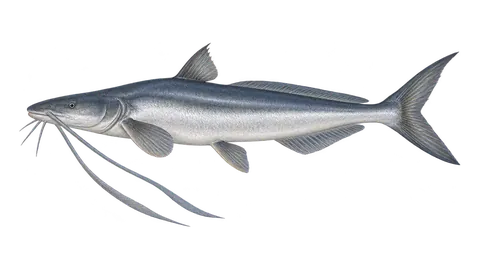
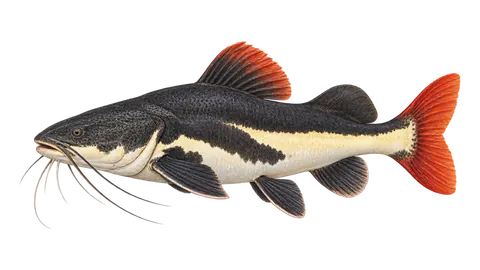
Catfish that patrol at night (barbado, jundiá, mandi, cachara, surubim, caparari) and jaú in the pool, fished from the bank or the camp where you can't move around. Useful for covering two spots with two rods. Avoid it with fish you plan to release if you can't attend the rod right away.
where to look
- foot of bank
- pool head
- meeting of river and corixo
- beach that drops into the channel
- eddy next to rapids
gear
Rod 1.8 to 2.4 m, moderate action, with a firm holder (pipe, fork or boat rod holder); baitcasting reel with a loud ratchet or spinning reel with free-spool (baitrunner type); mono 0.35 to 0.60 mm or braid 30 to 80 lb, depending on the fish; heavy mono or wire leader; circle hook sized to the mouth (2/0 to 12/0); sliding sinker; bell or light on the rod tip.
baits and lures
- tuvira and muçum
- minhocuçu
- piece of fish
- heart and liver
- lambari and piau, where allowed
- sardine and squid (estuary)
how to do it
- Choose a crossing point: foot of a bank, pool head, meeting of waters, channel edge.
- Rig with a sliding sinker and circle hook, bait well, cast and take up the slack.
- Set the rod in the holder at a high angle, with the ratchet on or free-spool engaged, so the fish takes the bait without feeling resistance.
- Stay close and alert. If you hear the ratchet run: pick up the rod, turn off the ratchet or close the free-spool, and reel firmly until the line is tight. With a circle hook, don't yank.
- Check the bait every 20 to 30 minutes.
- Respect the state limit on rods and hooks: in Paraná, for example, it's a maximum of 3 rigs in the water per angler.
common mistakes
- Leaving the rod unattended: the fish swallows the hook deep, takes the rod, or dies on the hook.
- Locked drag with the rod in the holder: the fish rips out the rod and holder.
- J hook with large bait on a fish you'll release: use a circle hook.
- Setting more rods than the rule allows.
- Confusing waiting fishing with trotline or other fixed gear left in the water, which are not among the gear allowed to amateurs.
species
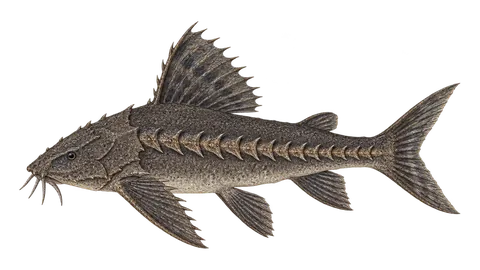
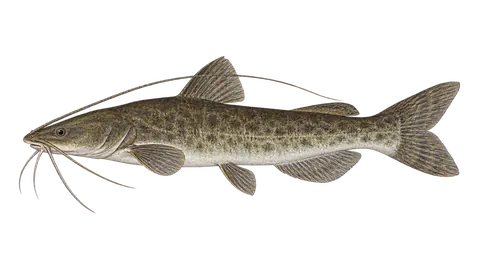
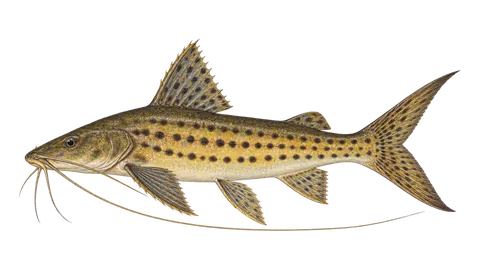
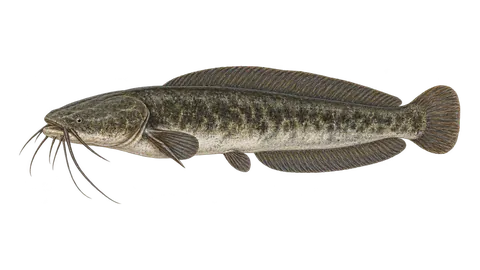
sources and references
- scientific Cooke, S.J.; Suski, C.D. (2004). Are circle hooks an effective tool for conserving marine and freshwater recreational catch-and-release fisheries? Aquatic Conservation: Marine and Freshwater Ecosystems 14: 299–326
- official Portaria SAP/MAPA nº 616/2022 — normas gerais da pesca amadoraGear allowed to amateurs (arts. 4 and 5), bait (art. 11) and transport (arts. 6, 12 and 13), per the app's regras.json.
- official Portaria IAT nº 650/2025 (PR) — pesca nas águas interiores do ParanáUp to 3 rigs in the water per angler, trolling banned, treble hook only factory-mounted on artificial lures, per the app's regras.json.
- scientific Britski, H.A.; Silimon, K.Z.S.; Lopes, B.S. (2007). Peixes do Pantanal: manual de identificação. 2ª ed. Embrapa Informação Tecnológica