

beni river — riberalta
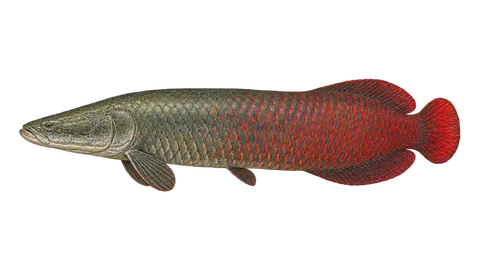
The paiche port of the Bolivian Amazon. Here paiche (arapaima) is an introduced species, fished in floodplain lagoons of the Beni and Madre de Dios.
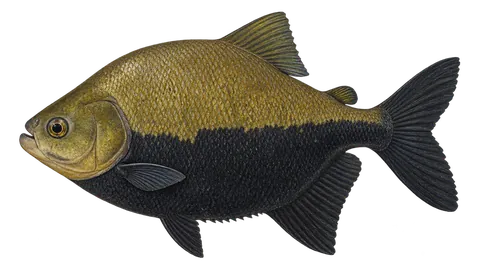
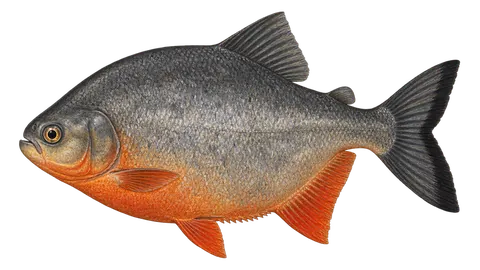
Riberalta is in the north of the Beni, near where the Beni meets the Madre de Dios, and is the country's main landing point for paiche (arapaima). Paiche is not native to Bolivia: it was introduced to the northern Bolivian Amazon more than half a century ago. Today it fills floodplain lagoons (várzea) in the Beni, Orthon and Madre de Dios basins and makes up about half of the commercial catch landed at Riberalta. Sport fishing is loosely organized: visitors go out with local fishermen to the lagoons and look for fish when they surface to breathe. There is also pacu (what Bolivians call tambaqui) and tambaqui (pirapitinga), which feed on fruit in the flooded forest during high water and along the edges during low water.
best season
Dry season, June to October, when the floodplain lagoons (várzea) drop and paiche (arapaima) are easier to find.
Local rules: In Bolivia, paiche is an introduced species; we have not confirmed a closed season or minimum size specific to it. The license, registration and closed seasons set by IPD-PACU (Law 938/2017) apply. On the Brazilian side, pirarucu has its own rules. Confirm the local rules.
- getting there
- Airport with regional flights. By road, it connects to Guayaramerín, on the border with Guajará-Mirim (RO). For the lagoons, take a boat from the port.
- facilities
- Simple hotels in town. Boat and guide are arranged with port fishermen; don't expect a sport fishing lodge.
- country
- Beni, Bolivia
tip
For paiche, watch the lagoon quietly and wait for the fish to surface: cast a big lure in front of the swirl. Bring heavy gear and long pliers.
Loading…
Each card shows the day's index (0 to 100) and, below it, a strip with the index for each hour, from 0h to 23h. from poor to excellent.
what you can catch here
before you fish in Bolivia
Law 938/2017 (Sustainable Fishing and Aquaculture) defines sport fishing as a non-profit activity and assigns IPD-PACU the issuance of licenses and the National Single Fishing Register. Requirements, deadlines and fees are set in the law's regulation and in a resolution of the Ministry of Rural Development and Lands: confirm with IPD-PACU or with the operator. In a protected area, entry depends on SERNAP and, in indigenous territory, on indigenous organizations.
- Closed seasons are set by IPD-PACU and must be announced at least 30 days in advance (Law 938, art. 16). During a closed season it is prohibited to take, hold, transport and sell the protected species.
- Fishing with explosives, firearms, chemical substances and bottom trawling is prohibited (Law 938, art. 17).
- Everyone who fishes must be registered in the National Single Register of Fishing and Aquaculture (Law 938, art. 29).
- In the Indigenous Territory and Isiboro-Sécure National Park (TIPNIS), sport fishing is fly-only with mandatory release, within community tourism operations (SERNAP).
The rules and closed seasons in the rest of the app are Brazilian. Outside Brazil, the regulations of the country and province apply: confirm with the official agency.
sources and references
Access, facilities and season information changes: check with the lodge, a local guide or the city hall before you travel.
- scientific Van Damme et al. (2015) — The expansion of Arapaima cf. gigas in the Bolivian Amazon as informed by citizen and formal science (Management of Biological Invasions)Introduced more than half a century ago; lagoons of the Beni, Orthon and Madre de Dios basins; about 50% of the commercial catch in Riberalta
- official Estado Plurinacional da Bolívia — Lei nº 938/2017 (Pesca e Aquicultura Sustentáveis)Text on FAOLEX (FAO)