Skip to content
catalog Ariidae · omnivore

guri sea catfish

Genidens genidens

EstuarySea

The most common catfish in the estuaries of the South and Southeast. Bites bottom baits all year; watch the spines.

Also called: bagre-guri, bagre-urutu, guriaçu, bagre-mandi, bagre

Scientific illustration of Guri sea catfish
common size
20–35 cm
maximum
42 cm
common weight
0.1–0.5 kg
record/max.
0.8 kg
depth
0.5–20 m
ideal water
18–27 °C
overview

who is the guri sea catfish

The guri sea catfish is a medium-sized sea catfish, common in bays, estuaries and coastal lagoons of the Southeast and South, such as the Cananéia and Paranaguá complexes and Lagoa dos Patos. It lives on mud and sand bottoms and eats small crustaceans, mollusks, worms and fish. Like the other catfish in its family, the male incubates the eggs in its mouth. It is caught by artisanal fishing and often takes the hook of anglers fishing bottom from piers, banks or canoes. Unlike the white sea catfish, which is Endangered and whose targeted fishing is banned outside SP and PR, the guri sea catfish is not on the national list of threatened species and has a 20 cm minimum size from Espírito Santo to Rio Grande do Sul.

fun facts

  • The male carries the eggs and young in its mouth during incubation.
  • The sting from the dorsal and pectoral spines hurts a lot and can become infected: wash well and seek care if it swells.
how to recognize it

identification

Scaleless sea catfish with a flattened head and bony plate, three pairs of barbels (one on the maxilla and two on the chin), serrated spines on the dorsal and pectoral fins, adipose fin and forked tail. Grayish-brown back and pale belly. Rarely exceeds 40 cm: a catfish of this type over 50 cm is probably the white sea catfish, which must be released outside SP and PR.

how guri sea catfish fishing looks

Loading the next 7 days…

Each card shows the day's index (0 to 100) and, below it, a strip with the index for each hour, from 0h to 23h. from poor to excellent.

distribution

where found

open on the large map

From Bahia to Rio Grande do Sul, reaching the Río de la Plata estuary (Uruguay and Argentina). It is most abundant in estuaries and bays of the Southeast and South.

Habitat: Estuaries, bays, coastal lagoons and mangrove channels with mud or sand bottoms; enters brackish water and river mouths.

coast

Northeast CoastSoutheast CoastSouth Coastcoastal

states

Bahia, Espírito Santo, Rio de Janeiro, São Paulo, Paraná, Santa Catarina, Rio Grande do Sul

calendar and clock

when to fish

best season

time of yearbest: Nov–Mar
JanFebSeaAprMayJunJulAugSepOctNovDec

Can be fished all year. In strong cold, activity drops in the shallows; in spring and summer the schools are more active inside the estuaries.

best time of day

0h6h12h18h sunrise ~6amsunset ~6pm

Night and twilight. Feeds more at dusk and at night, rooting the bottom. In murky water it also bites by day.

weather, water and behavior

what affects the guri sea catfish
sensitivity The little bars show how much each factor affects this species. Five full: it feels it a lot.

cold and cold fronts

A cold front drops activity in the shallows for a day or two.

atmospheric pressure

Not very sensitive.

moon

Dark nights and spring tides usually produce more.

rain

Likes murky water; even moderate rain helps.

water level

With more salt water in the estuary, it moves farther upstream; a river flood pushes it toward the inlet.

noise

Not very sensitive.

wind

Strong wind makes it hard to feel the bite on the bottom.

tide

Fish with the tide running; on the flood it follows salt water into the channels.

depth

From 0.5 to 10 m in estuaries; deeper in bays and nearshore sea.

technique, gear and bait

how to fish

rod
5'6" to 7'0", 8 to 20 lb, or cane pole with small spinning reel
spinning / baitcasting reel
spinning reel 2000 to 4000
line
monofilament 0.25 to 0.35 mm or braided line 10 to 20 lb
leader
monofilament 20 to 30 lb
hook
maruseigo 10 to 14 or circle 1/0 to 2/0

natural baits

  • shrimp
  • corrupto
  • sea worm (polychaete)
  • sardine pieces
  • marisco

accessories

  • pliers
  • thick cloth for holding
  • sinker 10 to 40 g

tip from an angler

Use little bait and a sliding sinker: the guri sea catfish nibbles and steals big bait.

what the law says

rules for the guri sea catfish

Summary of the regulations we found, with the source for each. Rules change; before keeping or transporting fish, check with the state environmental agency.
Conservation: Not on the national list (Portaria GM/MMA 1.667/2026). Minimum size of 20 cm on the coast from ES to RS (IN MMA 53/2005).

Minimum size 20 cm (ES to RS)

20 cm (TL)ESRJSPPRSCRSSoutheast CoastSouth Coast

On the coast from ES to RS it is banned to fish for, keep on board or land guri sea catfish under 20 cm total length. The 20% tolerance of the catch (by weight) provided in the rule is for enforcement at landings; recreational anglers must release the small ones. The rule does not apply to trawling.
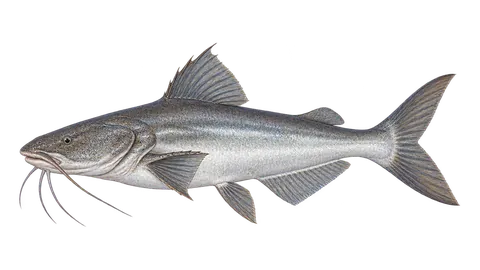
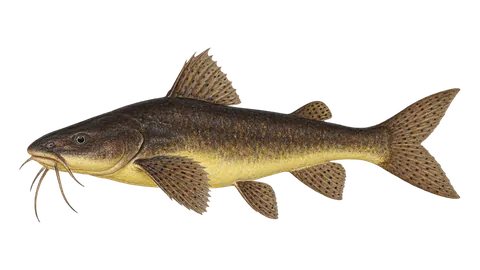
Source: IN MMA nº 53/2005, Annex II (Genidens genidens)

catch and release
catch and release Releasing the fish alive, quickly and with a wet hand. During a closed season it isn't always allowed: what the regulation says applies.

Hold it with thick cloth behind the pectoral fins, away from the spines, and remove the hook with pliers. A male with eggs or young in its mouth must go back in right away.

in the kitchen

Light, tasty meat, good in moqueca, stew and fried in steaks. Skin it and clean it right after catching.

calculator

how much it weighs without taking it out of the water

Length-weight relationship W = a·Lb (a = 0.00724, b = 3.07; FishBase (estimativa bayesiana, comprimento total)). It's an average: a fat or lean fish can vary by 10% to 20%.

estimated weight

—

sources and references

The season weights (months), the time of day and the sensitivities (cold, pressure, moon, wind, rain, tide, strong light, murky water and noise) are the app's editorial estimates, based on the literature below and on the field experience of anglers and guides. They are not official data nor a measurement made for this species, and they may vary by region and year. Closed seasons and legal rules appear in the rules section, with the norm and a link.

  1. scientific FishBase — Genidens genidens (ficha da espécie)Names, distribution, biology, length-weight relationship and references. Page checked on October 13, 2026.
  2. official Portaria GM/MMA nº 1.667, de 27 de abril de 2026 — Lista Nacional Oficial de Espécies da Fauna Ameaçadas de Extinção (peixes e invertebrados aquáticos)Most recent national list. The species is not on it (search by scientific name in the text published in the DOU, checked on October 13, 2026).
  3. official ICMBio/SALVE — Ficha de Genidens genidens (avaliação nacional do risco de extinção)ICMBio national assessment, published in 2026. DOI checked on Crossref.
  4. scientific IUCN Red List — Genidens genidens (avaliação global: Pouco Preocupante, LC, 27/01/2009)Global assessment. Link given on the FishBase entry (Red List, version 2025-2).
  5. official Instrução Normativa MMA nº 53, de 22 de novembro de 2005 — tamanho mínimo de captura de espécies marinhas e estuarinas do litoral Sudeste e SulText reproduced from the DOU of Nov 24, 2005, checked on Oct 13, 2026. Annex II; § 2 of art. 2 (exemption in competitions) was revoked by IN MMA nº 3/2006.
  6. scientific Figueiredo, J. L.; Menezes, N. A. (1978). Manual de peixes marinhos do sudeste do Brasil. II. Teleostei (1). São Paulo: Museu de Zoologia da USP. 110 p.Printed work; the URL is the bibliographic record on FishBase, which cites this work for the species.
  7. scientific Menezes, N. A.; Buckup, P. A.; Figueiredo, J. L.; Moura, R. L. (orgs.) (2003). Catálogo das espécies de peixes marinhos do Brasil. São Paulo: Museu de Zoologia da USP. 160 p.List of marine species recorded in Brazil. Printed work; the URL is the bibliographic record in FishBase, which cites this work for the species.
don't confuse

similar species