

madamango sea catfish
Cathorops spixii
Small estuary catfish, very common in mangroves and channels from North to South. It steals the bait of bottom anglers.
- common size
- 15–25 cm
- maximum
- 30 cm
- common weight
- 0.1–0.2 kg
- record/max.
- 0.2 kg
- depth
- 0.5–20 m
- ideal water
- 22–29 °C
how to recognize it
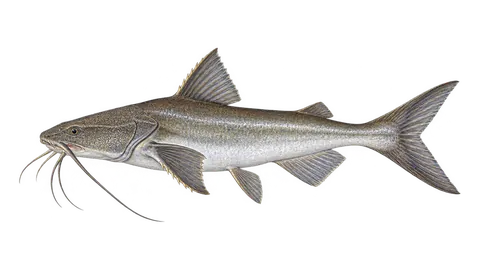
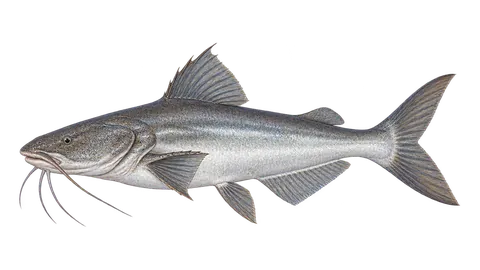
Small catfish (up to about 30 cm), scaleless, with a broad flattened head, downturned mouth and short barbels. Dark brown to almost black back and pale yellow belly, which gives it its name. Serrated spines on the dorsal and pectoral fins. Differs from the guri sea catfish and white sea catfish by its smaller size, lower mouth and yellowish belly tone.
Also called: bagre-amarelo, uriacica, bagre-de-areia, gonguito, bagrinho
don't confuse with:
where found
open on the large mapWhere to look: Estuaries, mangroves, channels and shallow bays with mud bottoms; river mouths and coastal lagoons, including brackish and hypersaline ones.
From Amapá to Santa Catarina, in estuaries and bays. Very common in the estuaries of São Paulo and Paraná (Cananéia, Iguape, Paranaguá).
coast
states
Amapá, Pará, Maranhão, Piauí, Ceará, Rio Grande do Norte, Paraíba, Pernambuco, Alagoas, Sergipe, Bahia, Espírito Santo, Rio de Janeiro, São Paulo, Paraná, Santa Catarina
when to fish
next 7 days
Loading the next 7 days…
best season
Present all year in estuaries; in cold weather activity drops in the South and Southeast.
best time of day
Night and twilight. Most active from late afternoon into night, but in murky water it bites at any hour.
what affects the madamango sea catfish
cold and cold fronts
In the South and Southeast, cold reduces activity.
atmospheric pressure
Not very sensitive.
moon
Small effect.
rain
Rain and muddy water don't hurt.
water level
Follows the salt wedge; with heavy rain it moves down near the inlet.
noise
Not very sensitive.
wind
Strong wind only makes it harder to read the bite.
tide
A running tide brings schools into the channels; at slack tide the bite drops off.
depth
Shallows from 0.5 to 5 m in estuaries.
how to fish
natural baits
- shrimp pieces
- sea worm (polychaete)
- marisco
- sardine pieces
tip from an angler
If it's stealing the bait meant for the fish you want, move spots or lift the bait off the bottom.
- rod
- cane pole or rod 5'0" to 6'6", 6 to 15 lb
- spinning / baitcasting reel
- spinning reel 1000 to 3000
- line
- monofilament 0.20 to 0.30 mm
- leader
- monofilament 0.30 to 0.40 mm
- hook
- maruseigo 8 to 12
accessories
- pliers
- cloth to grip
catch and release
Hold it with cloth behind the pectoral fins and remove the hook with pliers. Release small ones quickly, in shallow water.
rules for the madamango sea catfish
Rules change; before keeping or transporting fish, check with the state environmental agency.
Minimum size 12 cm (ES to RS)
12 cm (TL)ESRJSPPRSCRS details
On the coast from ES to RS it is banned to fish for, keep on board or land yellow catfish (Cathorops spixii) under 12 cm total length. The 20% tolerance of the catch (by weight) provided in the rule is for enforcement at landings; recreational anglers must release the small ones. The rule does not apply to trawling.
Conservation: Not on the national list (Portaria GM/MMA 1.667/2026). Minimum size of 12 cm on the coast from ES to RS (IN MMA 53/2005).
how much it weighs without taking it out of the water
estimated weight
—
how we calculate
Length-weight relationship W = a·Lb (a = 0.00661, b = 3.06; FishBase (estimativa bayesiana, comprimento total)). It's an average: a fat or lean fish can vary by 10% to 20%.
more about the madamango sea catfish
The yellow catfish (bagre-amarelo) is a small sea catfish, abundant in estuaries, mangroves, coastal lagoons and river mouths, where it lives on mud bottoms. It tolerates a wide range of salinity, from almost fresh water to hypersaline. It eats small invertebrates and small fish; juveniles feed on amphipods, isopods and copepods. It is among the most common fish in the estuaries of São Paulo and Paraná and shows up in large numbers as bycatch of shrimp trawling. For recreational anglers, it's the small catfish that bites nonstop when bottom fishing from piers and banks. The meat is good quality and sold locally. Like other ariids, the male incubates the eggs in its mouth.
Family: Ariidae · omnivore
fun facts
- The name comes from its yellowish belly.
- It is one of the fish most often caught accidentally by shrimp trawling in Southeast estuaries.
in the kitchen
Good meat, fried whole or in stew. Skin it and watch the spines when cleaning.
similar species
sources and references (7)
The season weights (months), the time of day and the sensitivities (cold, pressure, moon, wind, rain, tide, strong light, murky water and noise) are the app's editorial estimates, based on the literature below and on the field experience of anglers and guides. They are not official data nor a measurement made for this species, and they may vary by region and year. Closed seasons and legal rules appear in the rules section, with the norm and a link.
- scientific FishBase — Cathorops spixii (ficha da espécie)Names, distribution, biology, length-weight relationship and references. Page checked on Oct 13, 2026. The maximum weight in this profile was calculated from the length-weight relationship for 30 cm; FishBase only gives the weight of a trawl sample.
- official Portaria GM/MMA nº 1.667, de 27 de abril de 2026 — Lista Nacional Oficial de Espécies da Fauna Ameaçadas de Extinção (peixes e invertebrados aquáticos)Most recent national list. The species is not on it (search by scientific name in the text published in the DOU, checked on October 13, 2026).
- official ICMBio/SALVE — Ficha de Cathorops spixii (avaliação nacional do risco de extinção)ICMBio national assessment, published in 2025. DOI checked on Crossref.
- scientific IUCN Red List — busca por Cathorops spixiiAccording to FishBase (2025-2 version of the Red List), the species has not been assessed by the IUCN. Search for "Cathorops spixii" on the site.
- official Instrução Normativa MMA nº 53, de 22 de novembro de 2005 — tamanho mínimo de captura de espécies marinhas e estuarinas do litoral Sudeste e SulText reproduced from the DOU of Nov 24, 2005, checked on Oct 13, 2026. Annex II; § 2 of art. 2 (exemption in competitions) was revoked by IN MMA nº 3/2006.
- scientific Marceniuk, A. P.; Betancur-R., R.; Acero P., A.; Muriel-Cunha, J. (2012). Review of the genus Cathorops (Siluriformes: Ariidae) from the Caribbean and Atlantic South America, with description of a new species. Copeia 2012(1): 77–97.Revision of the genus. Printed work; the URL is the bibliographic record in FishBase, which cites this work for the species.
- scientific Carvalho-Filho, A. (1999). Peixes: costa brasileira. 3ª ed. São Paulo: Melro. 320 p.Printed work; the URL is the bibliographic record on FishBase, which cites this work for the species.