Skip to content
catalog Atherinopsidae · omnivore

peruvian silverside

Odontesthes regia

SeaEstuary

The sea pejerrey of Peru and Chile: small, silvery and in schools near piers, rocks and bays. A light, table fishery, with a minimum size and spawning closure in Peru.

Also called: peixe-rei-do-pacífico, pejerrey-peruano, peixe-rei

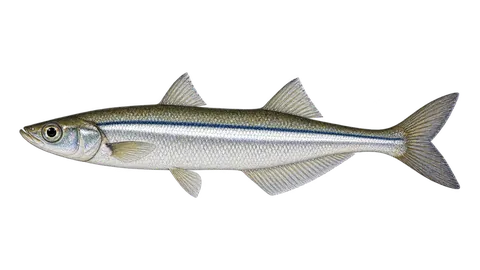
Scientific illustration of Peruvian silverside
common size
14–20 cm
maximum
21 cm
common weight
0.0–0.1 kg
record/max.
0.1 kg
depth
0–10 m
ideal water
14–19 °C
overview

who is the peruvian silverside

The peixe-rei-do-pacífico, the pejerrey of Peru and Chile, is a small atherinopsid of the Humboldt Current, from Paita in northern Peru to Aysén in southern Chile. It lives in schools in the coastal strip, in bays, coves and near piers and rocks, and enters estuaries. It is active by day and mainly eats anchoveta eggs and plankton. It rarely exceeds 20 cm. It is caught by artisanal fishers with gillnets and by amateur anglers on piers and rocks, with fine line and several small hooks, and is a popular table fish, fried or in ceviche. It is not the freshwater pejerrey (Odontesthes bonariensis), introduced into lakes in Peru and Chile.

fun facts

  • It mainly eats anchoveta eggs, from the most fished fish in the world.
  • In Peru, removing pejerrey roe, attached to algae and ropes, has been prohibited since 2001.
how to recognize it

identification

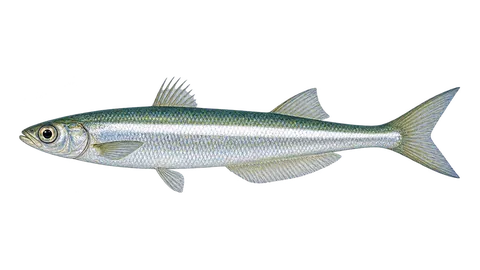
Elongated, slender body, small mouth and large eye, bluish to greenish back and silvery flanks with a broad silver band along the body. Two small, well-separated dorsal fins, long anal fin and forked tail. In saltwater on the Peruvian and Chilean coast, the silverside is this species; the Argentine silverside appears only in lakes and rivers where it was introduced.

how peruvian silverside fishing looks

Loading the next 7 days…

Each card shows the day's index (0 to 100) and, below it, a strip with the index for each hour, from 0h to 23h. from poor to excellent.

distribution

where found

open on the large map

Does not occur in Brazil. Southeastern Pacific, from Paita (Peru) to Aysén (Chile).

Habitat: Coastal strip, bays and coves, along piers, jetties and rocks; enters estuaries.

calendar and clock

when to fish

best season

time of yearbest: Apr–Jul
JanFebSeaAprMayJunJulAugSepOctNovDec

In Peru it is caught all year, but there is a spawning closure in September and October, with dates set each year. In El Niño years the distribution changes.

best time of day

0h6h12h18h sunrise ~6amsunset ~6pm

Daytime. Active by day, in schools near the surface and in midwater; the morning usually produces more at the piers.

weather, water and behavior

what affects the peruvian silverside
sensitivity The little bars show how much each factor affects this species. Five full: it feels it a lot.

cold and cold fronts

Adapted to cold water; El Niño, with warm water, displaces the schools.

atmospheric pressure

Rough sea from a change in weather hurts pier and rock fishing.

moon

Little effect.

rain

It hardly ever rains on the Peruvian coast; on the southern Chilean coast, heavy rain muddies the coastal water.

water level

Not applicable at sea.

noise

Moderate: the school moves away with noise and with shadow on the water.

wind

Strong wind makes it hard to control the fine line.

tide

Moving tide along piers and rocks concentrates food and schools.

depth

0.5 to 5 m, in midwater.

technique, gear and bait

how to fish

rod
2.4 to 3.6 m, light, or cane pole
spinning / baitcasting reel
spinning reel 1000 to 2500
line
monofilament 0.18 to 0.22 mm
leader
monofilament 0.16 to 0.20 mm
hook
fine hooks, sizes 8 to 4

lures

  • small artificial lure rig (sabiki type)

natural baits

  • shrimp in small pieces
  • fish fillet in thin strips
  • small muy-muy

accessories

  • 3- to 5-hook rig
  • small float
  • ground fish chum

tip from an angler

Small bait and small hook: the pejerrey nibbles a lot. A little chum keeps the school close to the pier.

what the law says

rules for the peruvian silverside

Summary of the regulations we found, with the source for each. Rules change; before keeping or transporting fish, check with the state environmental agency.
Conservation: Old global assessment. We found no specific rule in Chile.

Peru: annual spawning closure (September and October)

dates set each year by the Ministry of Productionconfirm with the agency

Peru applies a spawning closure to pejerrey in September and October, with start and end dates set by resolution each year based on IMARPE monitoring. Before fishing in those months, check the year's resolution on the Ministry of Production website.

Source: R.M. nº 468-2016-PRODUCE and annual resolutions of the Ministry of Production (Peru)

catch and release
catch and release Releasing the fish alive, quickly and with a wet hand. During a closed season it isn't always allowed: what the regulation says applies.

A delicate fish that loses scales: wet your hand, remove the hook quickly and release without squeezing.

in the kitchen

White, fine flesh; fried whole or in ceviche, very popular in Peru.

calculator

how much it weighs without taking it out of the water

Length-weight relationship W = a·Lb (a = 0.00525, b = 2.99; FishBase (estimativa bayesiana com dados da espécie e do gênero, comprimento total); o tamanho máximo publicado (21 cm) é comprimento padrão, sem a cauda, e o peso máximo foi calculado por esta relação). It's an average: a fat or lean fish can vary by 10% to 20%.

estimated weight

—

sources and references

The season weights (months), the time of day and the sensitivities (cold, pressure, moon, wind, rain, tide, strong light, murky water and noise) are the app's editorial estimates, based on the literature below and on the field experience of anglers and guides. They are not official data nor a measurement made for this species, and they may vary by region and year. Closed seasons and legal rules appear in the rules section, with the norm and a link.

  1. scientific FishBase — Odontesthes regia (ficha da espécie)Names, distribution, biology, length-weight relationship, country list and references. Page checked on Oct 13, 2026.
  2. scientific IUCN Red List — Odontesthes regia (avaliação global: Pouco Preocupante, LC, 01/03/2007)Global assessment. Link given on the FishBase entry (Red List, version 2025-2).
  3. official Resolução Ministerial nº 150-2006-PRODUCE (Peru) — disposições para a pesca do pejerrey no CallaoCopy in the FAOLEX database, checked on 13/10/2026. Cites R.M. nº 232-2003-PRODUCE (14 cm total length, 10% tolerance, 1-inch mesh) and R.M. nº 212-2001-PE (prohibition on removing roe).
  4. official Ministério da Produção do Peru (PRODUCE) — Pesca y Consumo Responsable: tallas mínimas de capturaOfficial minimum size table for consumers, checked on 13/10/2026. The page does not indicate the rule behind each value.
  5. official Ministério da Produção do Peru (PRODUCE) — Pesca y Consumo Responsable: vedasOfficial list of closed seasons with the rule for each one, checked on 13/10/2026.
don't confuse

similar species