overview
who is the chinook salmon
Native to the North Pacific, it was introduced into southern Chile through stocking programs and escaped from farms. Over recent decades it formed self-reproducing populations in Chilean rivers and reached rivers in Argentina, including some that drain into the Atlantic. It is anadromous: it hatches in a river, goes to sea, grows for a few years and returns to its home river to spawn, late summer and autumn. It dies after spawning. Adults that run up the river no longer feed properly, but they strike lures by reflex and aggression. It is the largest freshwater sport fish in Patagonia, and fish of 8 to 20 kg are common. Being invasive, researchers monitor its impact on native fauna.
fun facts
- It dies after spawning: at the end of the season rivers are left with carcasses, which carry nutrients from the sea into the environment.
- Its spread through Patagonia is one of the rare cases of Pacific salmon establishing itself on its own outside its native range.
how to recognize it
identification
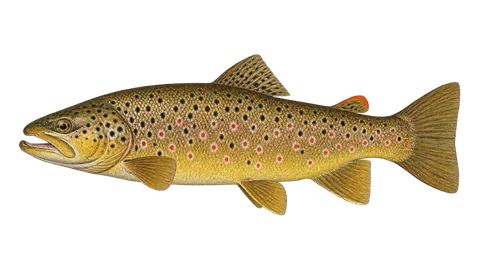
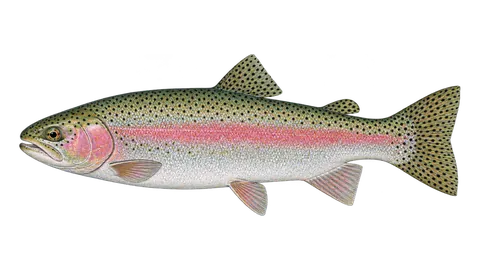
Large, spindle-shaped body, deep in adults. At sea and at the start of the run it is silvery, with a greenish-blue back and small black spots on the back and on both lobes of the tail. The gum of the lower jaw is black, the surest sign of the species. At spawning it turns olive, dark red or purplish, and males develop a hooked jaw (kype). Trouts do not have a black gum and are much smaller.
how chinook salmon fishing looks
Loading the next 7 days…
Each card shows the day's index (0 to 100) and, below it, a strip with the index for each hour, from 0h to 23h. from poor to excellent.