

crucifix sea catfish
Sciades proops · Ariidae · predator
Large catfish of the estuaries and mangroves of the North and Northeast, reaching 1 m. It fights hard on the bottom and its skull is famous for its crucifix pattern.
Also called: uritinga, iritinga, bagre-crucifixo, guri-branco

- common size
- 40–60 cm
- maximum
- 100 cm
- common weight
- 0.8–3 kg
- record/max.
- 9.0 kg
- depth
- 1–15 m
- ideal water
- 26–30 °C

the right time
to be on the water
Choose the place and the species. The index, from 0 to 100, combines weather, sun, moon and tide with each fish's habits. Up to 28 days, with each day's confidence.
Reading the weather across 3 global models and 31 simulations…
—
hour by hour
tap or drag on the chart to read each hour · on a keyboard, arrow keyssee hour-by-hour table
why this index at —?
choose the day
Each card shows the day's index (0 to 100) and, below it, a strip with the index for each hour, from 0h to 23h. from poor to excellent.
the fishing month at a glance
what's the best window for the crew?
Choose how many fishing days. We compare each stretch by its average index, discount days with a warning or closed season, and show the 3 best.
trend for the coming weeks
Line: the middle value of 31 simulations of the American GEFS model. Band: where 8 out of 10 fall. Narrow, firm trend; wide, high uncertainty.
everything about the crucifix sea catfish
who is the crucifix sea catfish
The uritinga is a marine catfish that lives mainly in estuaries and brackish lagoons, from Colombia to Brazil, and also goes up into fresh water. It stays over shallow mud bottoms and eats fish and shrimp. It exceeds 1 m and 9 kg, but the usual size is 40 to 60 cm. It lives three to four years, matures between 1.5 and 2 years, and breeds from November to April. In Pará and Maranhão it is a common catch on longlines, bottom lines and gillnets, and amateur anglers find it in mangrove channels and bays, using fish or shrimp bait, especially at night. It is sold fresh.
fun facts
- The cleaned skull, with the crucifix pattern on the underside, is sold worldwide as a souvenir and amulet.
- FishBase records that it grows more slowly in two dry periods of the year, in March and from August to November.
identification
Somewhat flattened head, mouth on the underside and three pairs of barbels (one at the corner of the mouth and two on the chin). Dark grayish back and pale belly; serrated spines on the dorsal and pectoral fins. Nape bony plate with a notch at the front and a small rear chamber of the swim bladder, which separates it from the gurijuba. The cleaned skull shows, on the underside, a pattern resembling a crucifix.
where found
From Amapá to the Northeast, most common in the estuaries of Pará and Maranhão. Outside Brazil, from the Guianas to Colombia and the Caribbean islands.
Habitat: Estuaries, brackish lagoons, mangrove channels and bays with shallow, muddy bottoms; it also enters stretches of fresh water.
coast
states
Amapá, Pará, Maranhão, Piauí, Ceará, Rio Grande do Norte, Paraíba, Pernambuco, Alagoas, Sergipe
when to fish
best season
Caught all year. Breeding runs from November to April; in the dry season of the second half of the year, saltier water draws the catfish into the estuaries.
best time of day
Night and twilight. Most active at night and in murky water; by day it bites on the bottom of channels and holes.
what affects the crucifix sea catfish
sensitivity The little bars show how much each factor affects this species. Five full: it feels it a lot.
cold and cold fronts
No significant effect on the equatorial coast.
atmospheric pressure
Not very sensitive.
moon
Spring tides at new and full moon increase the current and activity in the channels.
rain
Adapted to muddy water; rain doesn't bother it.
water level
It follows the saltwater wedge: in the dry season it moves further up the estuaries.
noise
Not very sensitive to murky water.
wind
Strong wind bothers the boat more than the fish.
tide
Fish the ebb at the mouths of igarapés (creeks) and mangrove channels.
depth
1 to 10 m, in channels and holes.
how to fish
- rod
- 6'6" to 7'0", 20 to 40 lb
- spinning / baitcasting reel
- spinning reel 4000 to 6000 or medium baitcasting reel
- line
- braid 30 to 50 lb
- leader
- monofilament 0.60 to 0.80 mm
- hook
- circle or wide gap 4/0 to 7/0
natural baits
- fish in steaks or fillet
- shrimp
- fish guts
accessories
- pliers and gloves
- damp cloth to hold the fish
tip from an angler
Fish the ebb at the mouths of igarapés (creeks) and mangrove channels, with enough sinker to keep the bait still on the bottom.
rules for the crucifix sea catfish
Summary of the regulations we found, with the source for each. Rules change; before keeping or transporting fish, check with the state environmental agency.
Conservation: Not assessed by the IUCN, according to FishBase. Not on the national list (Portaria GM/MMA 1.667/2026). We found no specific federal rule for the species.
We found no species-specific rule beyond the region's general rules.
catch and release
catch and release Releasing the fish alive, quickly and with a wet hand. During a closed season it isn't always allowed: what the regulation says applies.
The serrated spines of the dorsal and pectoral fins puncture and cause infection: use gloves and pliers, hold the fish from behind the spines and release it horizontally, in the water.
in the kitchen
Firm, tasty flesh, eaten fresh in the North in caldeiradas, roasts and moquecas.
how much it weighs without taking it out of the water
Length-weight relationship W = a·Lb (a = 0.00603, b = 3.17; FishBase (estimativa bayesiana com dados da espécie e da subfamília, comprimento total)). It's an average: a fat or lean fish can vary by 10% to 20%.
estimated weight
—
sources and references
The season weights (months), the time of day and the sensitivities (cold, pressure, moon, wind, rain, tide, strong light, murky water and noise) are the app's editorial estimates, based on the literature below and on the field experience of anglers and guides. They are not official data nor a measurement made for this species, and they may vary by region and year. Closed seasons and legal rules appear in the rules section, with the norm and a link.
- scientific FishBase — Sciades proops (ficha da espécie)Names, distribution, biology, length-weight relationship, country list and references. Page checked on Oct 13, 2026.
- official Portaria GM/MMA nº 1.667, de 27 de abril de 2026 — Lista Nacional Oficial de Espécies da Fauna Ameaçadas de Extinção (peixes e invertebrados aquáticos)Most recent national list. The species is not on it (search by scientific name in the text published in the DOU, checked on October 13, 2026).
- official ICMBio/SALVE — Ficha de Sciades proops (avaliação nacional do risco de extinção)National extinction risk assessment by ICMBio, published in 2025. DOI checked on Crossref.
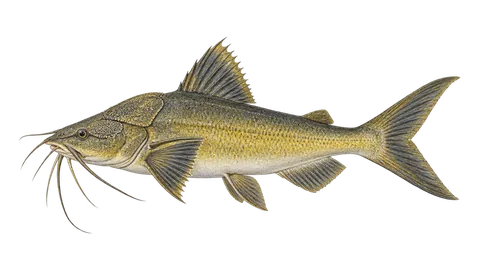
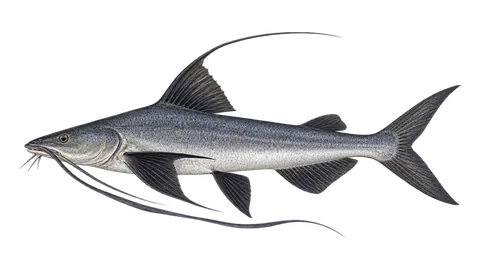
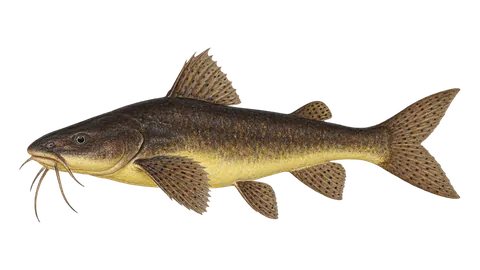
similar species
where each number comes from
The weather comes from three independent global models, cross-checked hour by hour: when they agree, confidence goes up; when they diverge, the band between them shows on the chart. Beyond 16 days, we use the GEFS ensemble of 31 simulations: if 20 of the 31 predict rain, the chance of rain is 65%. Sun and moon are calculated astronomically, with no uncertainty.
The index adds up, weighted for each species: time of day (species curve anchored to real sunrise and sunset), moon (transits, rise and set, phase), pressure (3 h trend and 24 h swing), water temperature (in rivers, estimated from air temperature; at sea, estimated by an ocean model), wind, rain, clouds, tide and the month in the species' cycle.
sources for this lookup
how accurate the forecast is
Accuracy measured in the reference project (4 regions, 93 days, forecast vs. observed): maximum temperature is off by 0.6 °C on average the next day and 1.7 °C at 7 days; rain of 5 mm or more is detected 76% of the time the next day and 57% at 7 days. Detection isn't everything: the false alarm rate isn't published here yet, and 93 days in 4 regions is still a small sample. We now also measure every day, at the app's destinations: