Skip to content
fishing forecast

brazilian bocachico

Prochilodus brevis · Prochilodontidae · detritivore

Freshwater

The curimatã of the rivers and dams of the Northeast. A net and cast-net fish of the sertão, found in markets from Ceará to Paraíba.

Also called: curimatã, curimatá, curimatã-comum, curimbatá

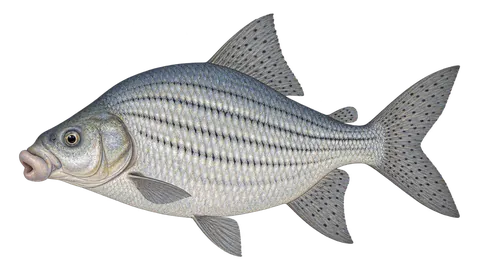
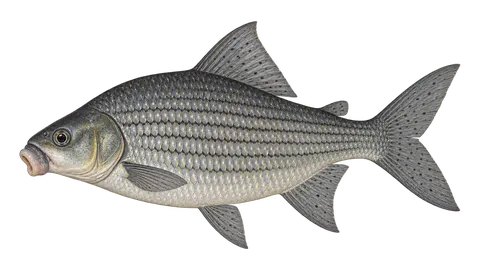
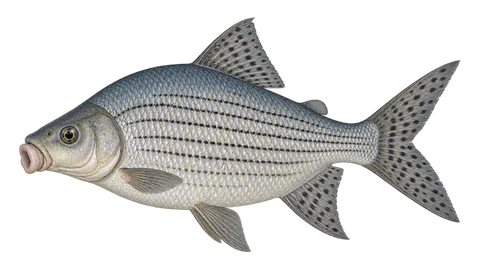
Scientific illustration of Brazilian bocachico
common size
20–30 cm
maximum
33 cm
common weight
0.1–0.4 kg
record/max.
0.6 kg
depth
0.5–6 m
ideal water
26–31 °C
location

Sample location: choose yours to see the forecast for where you fish.

period

Reading the weather across 3 global models and 31 simulations…

the species

everything about the brazilian bocachico

overview

who is the brazilian bocachico

A smaller curimatã, typical of coastal rivers and the semi-arid dams of the Northeast. It eats mud and detritus and breeds in the rainy season, when the rivers run again and the dams fill. It is one of the most valuable species in artisanal dam fishing, along with tilapia, pescada and trahira, and it was widely studied by DNOCS in dams such as Pereira de Miranda, in Pentecoste (CE). On the hook it is caught rarely, with dough and a small hook over groundbait. In inland markets it is sold fresh and salted.

fun facts

  • FishBase holds age and growth studies done by DNOCS at the Pereira de Miranda dam, in Pentecoste (CE), under the former name Prochilodus cearensis.
  • Breeding follows the rainy season, which in the semi-arid is short and irregular.
how to recognize it

identification

Tall, silver body with fine dark lines formed by the scale edges. Fleshy sucker mouth. Greyish fins, without strong bands. It is the only Prochilodus in the coastal rivers of the eastern Northeast; the larger curimatã-pacu is from the São Francisco.

distribution

where found

open on the large map

Small and medium coastal rivers of the eastern Northeast and semi-arid dams, such as those on the Jaguaribe (CE), Piranhas-Açu (RN/PB) and Apodi.

Habitat: Dams, intermittent and perennial rivers, slack water with muddy bottoms.

native to the basins

Eastern Northeast Atlantic

states

Ceará, Rio Grande do Norte, Paraíba, Pernambuco

calendar and clock

when to fish

best season

time of yearbest: Feb–Apr
JanFebSeaAprMayJunJulAugSepOctNovDec

Available all year in the dams. In the rains (February to May in Ceará) the schools move to spawn, and there is a closed season for nets.

best time of day

0h6h12h18h sunrise ~6amsunset ~6pm

Daytime, with peaks at dawn and dusk. Feeds during the day; most active early and late in the afternoon.

weather, water and behavior

what affects the brazilian bocachico
sensitivity The little bars show how much each factor affects this species. Five full: it feels it a lot.

cold and cold fronts

Little effect from the Northeast's climate.

atmospheric pressure

Little effect.

moon

Little known effect.

rain

The first rains and rising rivers trigger spawning.

water level

A low dam concentrates the fish; a full dam spreads it out.

noise

Sinks with movement along the bank.

wind

Strong wind on a large dam hinders float fishing.

depth

Bottom, 1 to 4 m.

technique, gear and bait

how to fish

rod
3 to 4 m cane pole or light 6' rod, 8 to 15 lb
spinning / baitcasting reel
spinning reel 1000 to 2500 (optional)
line
monofilament 0.20 to 0.30 mm
leader
optional
hook
small, #6 to 2

natural baits

  • flour dough
  • bread dough
  • feed dough

accessories

  • bran chum
  • small float

tip from an angler

Groundbait the spot one day ahead and use soft dough with a small hook hidden in it.

what the law says

rules for the brazilian bocachico

Summary of the regulations we found, with the source for each. Rules change; before keeping or transporting fish, check with the state environmental agency.
Conservation: Not on the national list (Portaria GM/MMA 1.667/2026).

CE: closed season Feb 1 to Apr 30

mesh nets and trade prohibited01/02 to 30/04CEEastern Northeast Atlantic

In the Ceará basins, mesh gear and trade in curimatã (and in piau, sardinha, branquinha, piaba and tambaqui) are prohibited from Feb 1 to Apr 30. Angling with a handline or pole is outside the ban.

Source: Portaria IBAMA nº 04/2008

RN: closed season Dec 1 to Feb 28

fishing prohibited during the period01/12 to 28/02RNEastern Northeast Atlanticconfirm with the agency

The curimatã is on the closed-season list for the Rio Grande do Norte basins, from Dec 1 to Feb 28. We did not check the angler exceptions in the text of the rule: confirm with Ibama.

Source: IN IBAMA nº 209/2008

PB: closed season Dec 1 to Feb 28

fishing prohibited during the period01/12 to 28/02PBEastern Northeast Atlanticconfirm with the agency

The curimatã is on the closed-season list for the Paraíba basins, from Dec 1 to Feb 28. We did not check the angler exceptions in the text of the rule: confirm with Ibama.

Source: IN IBAMA nº 210/2008

piracema closures in the basins where the species lives

Closed season in the Ceará basins

01/02 to 30/04CE

Allowed: Recreational fishing with handline or rod is outside the prohibition.

Source: Portaria IBAMA nº 04/2008

catch and release
catch and release Releasing the fish alive, quickly and with a wet hand. During a closed season it isn't always allowed: what the regulation says applies.

Delicate mouth: remove the hook carefully and release it quickly.

in the kitchen

Tasty meat with bones. Fried, grilled or in caldeirada; widely sold salted in the sertão.

calculator

how much it weighs without taking it out of the water

Length-weight relationship W = a·Lb (a = 0.01514, b = 3.0; FishBase). It's an average: a fat or lean fish can vary by 10% to 20%.

estimated weight

—

sources and references

The season weights (months), the time of day and the sensitivities (cold, pressure, moon, wind, rain, tide, strong light, murky water and noise) are the app's editorial estimates, based on the literature below and on the field experience of anglers and guides. They are not official data nor a measurement made for this species, and they may vary by region and year. Closed seasons and legal rules appear in the rules section, with the norm and a link.

  1. scientific FishBase — Prochilodus brevis (ficha da espécie)Names, distribution, biology, length-weight relationship and references. Page checked on October 13, 2026.
  2. official Portaria GM/MMA nº 1.667, de 27 de abril de 2026 — Lista Nacional Oficial de Espécies da Fauna Ameaçadas de Extinção (peixes e invertebrados aquáticos)Most recent national list. The species is not on it (search by scientific name in the text published in the DOU, checked on October 13, 2026).
  3. official ICMBio/SALVE — Ficha de Prochilodus brevis (avaliação nacional do risco de extinção)National assessment by ICMBio, published in 2024. DOI verified on Crossref.
  4. scientific IUCN Red List — Prochilodus brevis (avaliação global: Pouco Preocupante, LC, 07/11/2018)Global assessment. Link given on the FishBase entry (Red List, version 2025-2).
  5. scientific Castro, R. M. C.; Vari, R. P. (2004). Detritivores of the South American fish family Prochilodontidae (Teleostei: Ostariophysi: Characiformes): a phylogenetic and revisionary study. Smithsonian Contributions to Zoology 622: 1–189.Revision of the family, with the distribution of Prochilodus brevis. DOI checked in Crossref.
  6. scientific Nascimento, W. S.; Nascimento, R. S. S.; Chellappa, N. T.; Chellappa, S. (2012). Biologia reprodutiva do curimatã comum, Prochilodus brevis (Characiformes: Prochilodontidae) no açude Marechal Dutra, Rio Grande do Norte, Brasil. Biota Amazônia 2(2): 31–43.DOI checked in Crossref.
  7. scientific Freire, D. O.; Chacon, J. O. (1971). Idade e crescimento da curimatã comum, Prochilodus cearensis Steindachner, no açude Pereira de Miranda, Pentecoste, Ceará, Brasil. Boletim Técnico do DNOCS 29: 95–109.Printed work; the URL is the bibliographic record on FishBase, which cites this work for the species.
don't confuse

similar species