MG: minimum 40 cm
40 cmMGSão Francisco
Minimum size for the curimatã-pacu in Minas Gerais (the IEF table cites Prochilodus marggravii, the former name of P. argenteus).
Source: Portaria IEF-MG nº 111/2003 (IEF minimum size table)
Prochilodus argenteus
Brazil's largest curimatã, endemic to the São Francisco. A piracema fish from Três Marias and food for the dorado and surubim.
Also called: curimatã-pacu, curimatá-pacu, curimatã, grumatã, xira

Found only in the São Francisco basin, the curimatã-pacu is the largest in its family and exceeds 6 kg. It eats mud and organic matter from the bottom and forms large migratory schools that run upriver to spawn at the start of the rains. It is one of the most important species in the river's commercial fishing, alongside the curimatã-pioa. Studies at Três Marias showed that, inside the reservoir, the species' breeding process collapses: like other migrants, it depends on stretches of free-flowing river to spawn. On the hook, it is caught with dough and a small hook, over groundbait; it fights hard and needs a well-set drag.
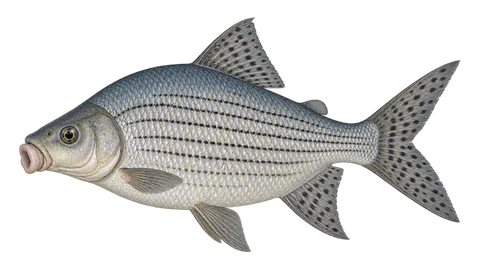
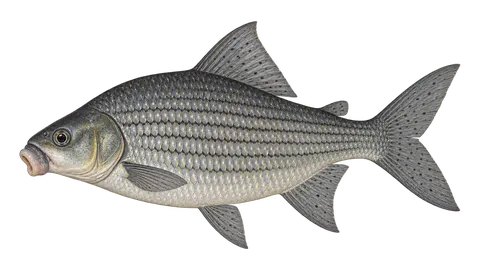
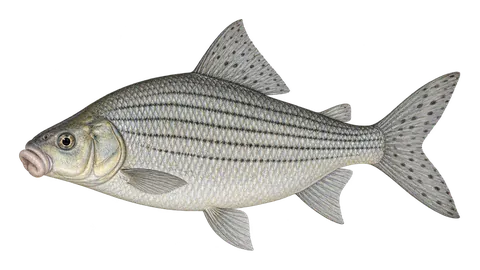
Tall, silver body with a bluish back and dark-edged scales forming fine lines. Sucker mouth. It grows larger and has a taller body than the curimatã-pioa (Prochilodus costatus), which shares the river with it. In the São Francisco, a sucker-mouthed fish over 40 cm is almost always curimatã-pacu.
Loading the next 7 days…
Each card shows the day's index (0 to 100) and, below it, a strip with the index for each hour, from 0h to 23h. from poor to excellent.
Endemic to the São Francisco basin, from the upper river in Minas Gerais to the lower course. FishBase records introductions in rivers of the Northeast.
Habitat: River channel, slack water with muddy bottoms, oxbow lakes and reservoirs; rapids during migration.
native to the basins
introduced in
states
Minas Gerais, Bahia, Pernambuco, Alagoas, Sergipe
famous destinations
Concentrated at the start of the rains, when the river rises to spawn (the piracema, a spawning closure, runs from November to February). Otherwise it is good on groundbait in the warm months.
Daytime, with peaks at dawn and dusk. Feeds during the day on the bottom; schools move most early in the morning and late in the afternoon.
Strong cold keeps the fish still on the bottom.
Little effect.
Little known effect.
The first heavy spring rains trigger the migration.
A rising river pulls the school upriver.
Tolerant, but it sinks with a motor nearby.
Little effect.
Bottom, 1 to 6 m.
natural baits
accessories
Steady groundbait at the same spot and firm dough. Big fish: set the drag before you start.
Summary of the regulations we found, with the source for each. Rules change; before keeping or transporting fish, check with the state environmental agency.
Conservation: Not on the national list (Portaria GM/MMA 1.667/2026).
Minimum size for the curimatã-pacu in Minas Gerais (the IEF table cites Prochilodus marggravii, the former name of P. argenteus).
Source: Portaria IEF-MG nº 111/2003 (IEF minimum size table)
Allowed: Only exotic or hybrid species, 3 kg + 1 fish per day, with handline, rod, simple pole, or spinning or baitcasting reel. Nets prohibited. Keep the minimum distances from dams and reservoirs.
Source: Portarias IEF nº 154/2011 (São Francisco), 155/2011 (East) and 156/2011 (Grande/Paranaíba)
Allowed: Sport and guided fishing only in reservoirs, catch and release with barbless hooks (no keeping, transporting or eating). Subsistence: up to 5 kg per day, for household consumption only.
Allowed: Recreational fishing from a boat or from shore with handline, rod, spinning or baitcasting reel, up to 5 kg + 1 fish. Prohibited within 1,000 m of dams, waterfalls and rapids, and within 500 m of confluences. Floodplain lakes have a longer closed season (see next item).
Source: Portaria IBAMA nº 50/2007
Allowed: No fishing in the floodplain lakes during the period.
Source: Portaria IBAMA nº 50/2007
Heavy fish with a delicate mouth: use a landing net, support the belly and release it quickly.
Fatty, tasty meat with bones. Whole, grilled over coals or in fried steaks.
Length-weight relationship W = a·Lb (a = 0.01445, b = 2.97; FishBase). It's an average: a fat or lean fish can vary by 10% to 20%.
estimated weight
—
The season weights (months), the time of day and the sensitivities (cold, pressure, moon, wind, rain, tide, strong light, murky water and noise) are the app's editorial estimates, based on the literature below and on the field experience of anglers and guides. They are not official data nor a measurement made for this species, and they may vary by region and year. Closed seasons and legal rules appear in the rules section, with the norm and a link.
Your location is saved only on this device and feeds the forecast, the map and the "today" on the home page.