Skip to content
fishing forecast

dourado-do-são-francisco

Salminus franciscanus · Bryconidae · predator

Freshwater

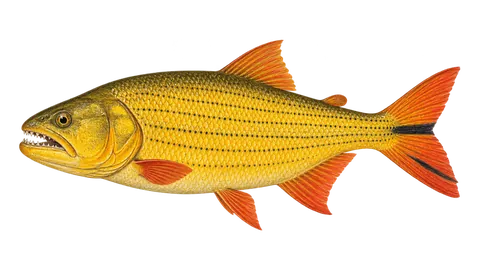
The Velho Chico (São Francisco River) golden dorado. Same temperament as the Pantanal golden dorado, in rocky stretches and rapids such as Pirapora and downstream of Três Marias.

Also called: dourado, dourado-do-velho-chico, dourado-do-são-francisco

Scientific illustration of Dourado-do-São-Francisco
common size
45–75 cm
maximum
93 cm
common weight
2–6 kg
record/max.
20.0 kg
depth
0.5–6 m
ideal water
23–29 °C
location

Sample location: choose yours to see the forecast for where you fish.

period

Reading the weather across 3 global models and 31 simulations…

the species

everything about the dourado-do-são-francisco

overview

who is the dourado-do-são-francisco

A species native to the São Francisco basin, separated from the Plata golden dorado in 2007. In the water it is practically the same fish: a rapids predator, migrant and fighter, that leaps and shakes its head to escape the hook. It hunts curimatãs, piaus, lambaris and mandis in rocky stretches and rapid outlets. The classic spots are in Minas Gerais: Pirapora, the stretch below Três Marias and tributaries such as the Paracatu, Urucuia and das Velhas. Dams and silting have reduced populations in the upper and mid-lower river. Catch-and-release sport fishing is the most sensible way to enjoy the fish.

fun facts

  • It was described as a species separate from the Plata golden dorado only in 2007.
  • It is endemic to the São Francisco: it does not naturally occur in any other basin.
how to recognize it

identification

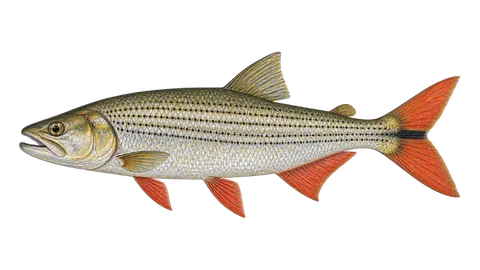
Golden body with lines of dark specks on the scales, reddish fins and a black band in the middle of the tail. It looks almost identical to the Plata golden dorado; the practical difference is the basin: in the São Francisco, it is this species. The tabarana is smaller, slimmer and silvery.

distribution

where found

open on the large map

São Francisco main channel and tributaries. In MG: Pirapora, the stretch downstream of Três Marias, and the Paracatu, Urucuia, das Velhas, Abaeté and Pandeiros rivers. In BA: middle São Francisco and left-bank tributaries.

Habitat: Rocky stretches, rapids, side-lagoon outlets and backwaters behind islands. Running, oxygenated water.

native to the basins

São Francisco

states

Minas Gerais, Bahia

calendar and clock

when to fish

best season

time of yearbest: Aug–Oct
JanFebSeaAprMayJunJulAugSepOctNovDec

Dry season from May to October, with low, clear water. August to October is the peak at Pirapora and below Três Marias.

best time of day

0h6h12h18h sunrise ~6amsunset ~6pm

Daytime, with peaks at dawn and dusk. Best from dawn to mid-morning and late afternoon. In strong sun it drops to the pool.

weather, water and behavior

what affects the dourado-do-são-francisco
sensitivity The little bars show how much each factor affects this species. Five full: it feels it a lot.

cold and cold fronts

Cold July mornings delay the strikes; fishing improves after 9 a.m.

atmospheric pressure

Settled weather helps. Sudden change leaves the fish wary.

moon

Small effect.

rain

The first rains muddy the river and scatter the fish.

water level

Stable flow and clean water. Sudden changes in Três Marias releases alter their behavior.

noise

Approach the rapids from below, without the motor running over the rocky stretch.

wind

Little effect in running water.

depth

Shallow in the rapids; pool just below during the hot hours.

technique, gear and bait

how to fish

rod
5'6" to 6'6", fast action, 15 to 30 lb
spinning / baitcasting reel
low-profile baitcasting reel 100 to 200 or spinning reel 3000 to 4000
line
braid 30 to 50 lb
leader
fluorocarbon 50 to 60 lb or coated wire leader 30 to 45 lb
hook
reinforced treble hooks 1/0 to 3/0, preferably barbless

lures

  • mid-water lure 9 to 12 cm
  • spoon 15 to 20 g
  • hair jig
  • surface stickbait

natural baits

  • lambari
  • tuvira
  • small piau

accessories

  • alicate
  • boga-grip
  • polarized glasses

tip from an angler

Work the lure from upstream to downstream through the rapids, close to the rocks. Once hooked, keep the rod tip low to reduce the jumps.

what the law says

rules for the dourado-do-são-francisco

Summary of the regulations we found, with the source for each. Rules change; before keeping or transporting fish, check with the state environmental agency.
Conservation: Populations reduced in the upper and mid-lower São Francisco by dams.

piracema closures in the basins where the species lives

Closed season in Goiás (state rule)

01/11 to 28/02GO

Allowed: Sport and guided fishing only in reservoirs, catch and release with barbless hooks (no keeping, transporting or eating). Subsistence: up to 5 kg per day, for household consumption only.

Source: IN Semad-GO nº 17/2026, arts. 8º to 11

Spawning closure (piracema) in the São Francisco River basin (rivers and reservoirs)

01/11 to 28/02MGBAPEALSEGODF

Allowed: Recreational fishing from a boat or from shore with handline, rod, spinning or baitcasting reel, up to 5 kg + 1 fish. Prohibited within 1,000 m of dams, waterfalls and rapids, and within 500 m of confluences. Floodplain lakes have a longer closed season (see next item).

Source: Portaria IBAMA nº 50/2007

São Francisco: floodplain lakes

01/11 to 30/04MGBAPEALSEGODF

Allowed: No fishing in the floodplain lakes during the period.

Source: Portaria IBAMA nº 50/2007

catch and release
catch and release Releasing the fish alive, quickly and with a wet hand. During a closed season it isn't always allowed: what the regulation says applies.

Pliers and a boga-grip. Release it quickly into the current, holding the fish facing the water until it flicks its tail and swims off.

in the kitchen

White flesh with Y-shaped bones; baked or in steaks. Respect the minimum size and prefer to release large fish.

calculator

how much it weighs without taking it out of the water

Length-weight relationship W = a·Lb (a = 0.00832, b = 3.12; FishBase). It's an average: a fat or lean fish can vary by 10% to 20%.

estimated weight

—

sources and references

The season weights (months), the time of day and the sensitivities (cold, pressure, moon, wind, rain, tide, strong light, murky water and noise) are the app's editorial estimates, based on the literature below and on the field experience of anglers and guides. They are not official data nor a measurement made for this species, and they may vary by region and year. Closed seasons and legal rules appear in the rules section, with the norm and a link.

  1. scientific FishBase — Salminus franciscanus (ficha da espécie)Names, distribution, biology, length-weight relationship and references. Page checked on October 13, 2026.
  2. official Portaria GM/MMA nº 1.667, de 27 de abril de 2026 — Lista Nacional Oficial de Espécies da Fauna Ameaçadas de Extinção (peixes e invertebrados aquáticos)Most recent national list. The species is not on it (search by scientific name in the text published in the DOU, checked on October 13, 2026).
  3. official ICMBio/SALVE — Ficha de Salminus franciscanus (avaliação nacional do risco de extinção)National assessment by ICMBio, published in 2024. DOI verified on Crossref.
  4. scientific IUCN Red List — Salminus franciscanus (avaliação global: Pouco Preocupante, LC, 07/11/2018)Global assessment. Link given on the FishBase entry (Red List, version 2025-2).
  5. scientific Lima, F. C. T.; Britski, H. A. (2007). Salminus franciscanus, a new species from the rio São Francisco basin, Brazil (Ostariophysi: Characiformes: Characidae). Neotropical Ichthyology 5(3): 237–244.Describes the São Francisco golden dorado and compares it with S. brasiliensis and S. hilarii (checked in the text).
don't confuse

similar species