Skip to content
fishing forecast

matrinchã

Brycon falcatus · Bryconidae · omnivore

Freshwater

Silvery and feisty, a close relative of the matrinxã, it lives in the rivers of the Amazon, the Orinoco and the Guianas. It eats fruit, seeds, leaves, insects and fish, and rises to surface and mid-water lures. Caution: 'piabanha' is also the name of protected species.

Also called: matrinchã, matrinxã, piabanha

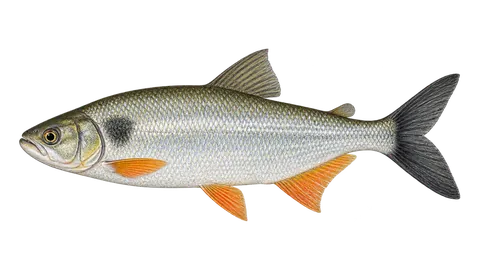
Scientific illustration of Matrinchã
common size
28–42 cm
maximum
49 cm
common weight
0.6–1.7 kg
record/max.
4.4 kg
depth
0.5–5 m
ideal water
23–28 °C
location

Sample location: choose yours to see the forecast for where you fish.

period

Reading the weather across 3 global models and 31 simulations…

the species

everything about the matrinchã

overview

who is the matrinchã

Fish of the family Bryconidae known as matrinchã, matrinxã and piabanha. It lives in rivers of the Amazon and Orinoco basins and in the rivers of the Guianas, in small shoals. It is omnivorous: studies in the Negro River, the Tocantins, Colombian Amazonia and the Teles Pires record fruit, seeds, flowers, leaves, insects, crabs and fish, with riparian forest and flooded forest supplying part of its food. On the Teles Pires (MT), fishing with soy and corn chum is common and changes what the fish eats. It reaches 48.9 cm standard length and 4.4 kg, but the usual size is 28 to 42 cm and 0.6 to 1.7 kg. It puts up a strong fight on light tackle, at the surface and in mid-water.

fun facts

  • A study on the Teles Pires found soy and corn as the main items in the stomachs of fish caught at chummed spots.
  • In the Cristalino River, without chum, the diet included leaves, crabs, fish, seeds, flowers and fruit.
  • The name matrinchã applies to several Brycon species, which is why rules usually cite the whole genus (Brycon spp.).
how to recognize it

identification

Silvery fish with an elongated, compressed body, an adipose fin and a terminal mouth with multi-pointed teeth, like other Brycon. Matrinxãs and matrinchãs are told apart by scale and ray counts and by color details that change with age and water; in the field, the safest way is by region and reference photos. If in doubt about the piabanha-do-Araguaia (Brycon gouldingi), which is threatened and banned from capture, release the fish.

distribution

where found

open on the large map

Rivers of the Amazon basin, such as the Negro River (AM) and the Teles Pires (MT), with records in the Tocantins; also the Orinoco and the rivers of Guyana, Suriname and French Guiana.

Habitat: Rivers, in eddies and current stretches along the riparian forest, where fruit and flowers fall; at high water it enters the flooded forest. Found in clearwater and blackwater rivers.

native to the basins

AmazonTocantins-Araguaia

states

Mato Grosso, Amazonas

calendar and clock

when to fish

best season

time of yearbest: Jun–Oct
JanFebSeaAprMayJunJulAugSepOctNovDec

Dry season, June to September in southern Amazonia: low river, fish concentrated in pools and chum spots, as in the Teles Pires. At high water it spreads through the flooded forest, where food is plentiful, and fishing is poorer.

best time of day

0h6h12h18h sunrise ~6amsunset ~6pm

Daytime, with peaks at dawn and dusk. Active by day, most active early and late in the afternoon, when it rises to feed on fruit, insects and small fish near the forest.

weather, water and behavior

what affects the matrinchã
sensitivity The little bars show how much each factor affects this species. Five full: it feels it a lot.

cold and cold fronts

Cold snaps (friagem) shut down activity for a few days.

atmospheric pressure

Stable weather favors it; a sharp drop before a storm usually gives a short peak.

moon

Small effect.

rain

Heavy rain muddies the water and scatters the fish; light rain does not get in the way.

water level

A falling river and dry season are the best scenario; at high water the fish moves into the flooded forest.

noise

Shy shoal: approach slowly and avoid knocking the hull.

wind

Light chop helps surface lures; strong wind makes casting harder.

depth

Mid-water, 0.5 to 3 m, near branches and cutbanks.

technique, gear and bait

how to fish

rod
6' to 6'6", medium-fast action, 10 to 20 lb
spinning / baitcasting reel
spinning reel 2500 to 3500 or low-profile baitcasting reel 100
line
braid 20 to 30 lb
leader
fluorocarbon 20 to 30 lb, about 1 m
hook
No. 2 to 1/0 on natural bait; treble hooks No. 4 to 2 on artificial lures

lures

  • small popper, 6 to 8 cm
  • small prop bait
  • minnow, 7 to 9 cm
  • streamer fly or fruit imitation

natural baits

  • forest fruit
  • milho
  • gafanhoto
  • minhoca

accessories

  • polarized glasses
  • landing net
  • alicate

tip from an angler

Approach quietly and cast along the riparian vegetation and the branches with fruit. With natural bait, leave fruit or corn at mid-depth. Where chumming is practiced, check the local rule before using it.

what the law says

rules for the matrinchã

Summary of the regulations we found, with the source for each. Rules change; before keeping or transporting fish, check with the state environmental agency.
Conservation: Not on the Brazilian national list (Ministerial Ordinance GM/MMA No. 1.667/2026).

Closed season Nov 15 to Mar 15 in AM, AC, RO (Madeira) and PA

catch, transport and sale banned; handline or rod are exempt, with a limit of 5 kg + 1 fish15/11 to 15/03AMACROPAAmazon

Portaria Ibama nº 48/2007 (Annex II) bans matrinxã (Brycon spp.) in Acre and Amazonas, and jatuarana (Brycon spp.) in Pará and in the Madeira basin in Rondônia, from Nov 15 to Mar 15. The rule names the whole genus, so matrinchã is included. Art. 2º, II, exempts artisanal and recreational anglers who use handline or rod and line, where no stricter state rule applies, and art. 3º limits the recreational angler to 5 kg + 1 fish in the period. Tournaments are banned during the closed season (art. 4º).

Source: Portaria Ibama nº 48/2007, Annexes I and II and arts. 2º to 4º

Amapá: the list names matrinxã and matrinchã (Brycon cephalus)

fishing banned Nov 15 to Mar 15 under the list (the rule cites Brycon cephalus)15/11 to 15/03APAmazonconfirm with the agency

In Amapá, Portaria 48/2007 lists matrinxã (Brycon cephalus) in the Amazon basin and matrinchã/jatuarana (Brycon cephalus) in the Araguari, Flexal, Cassiporé, Calçoene, Cunani and Uaçá basins. Brycon cephalus is the old name of the Amazonian matrinxã, but 'matrinchã' is the common name of Brycon falcatus; when in doubt, treat the fish as protected during the period. Recreational anglers with handline or rod are exempt from the Annex II bans (art. 2º, II).

Source: Portaria Ibama nº 48/2007, Annexes I and II (Amapá)

Mato Grosso: matrinchã under Transporte Zero

catch and release; transport, storage and sale banned until Dec 31, 2028MTAmazonTocantins-Araguaia

Art. 19-B, V, of Lei 9.096/2009 (wording from Lei 12.434/2024) bans for five years, from Jan 1, 2024, transporting, storing and selling matrinchã (Brycon spp.) caught in MT rivers. The recreational angler only practices catch and release; keeping on site (up to 2 kg or 1 fish, within 500 m of the river) applies only to species outside this list (art. 19-C, §4º).

Source: Lei estadual MT nº 9.096/2009, arts. 19-B and 19-C (added by Lei nº 12.434/2024) - Sema-MT

Mato Grosso: matrinchã at least 35 cm

35 cmMTAmazonTocantins-Araguaia

Annex II of MT's fishing law (Amazon and Araguaia-Tocantins basins) sets 35 cm for matrinchã (Brycon spp.). With Transporte Zero in force, the fish goes back into the water, and the size serves as a reference for enforcement.

Source: Lei estadual MT nº 9.096/2009, art. 28 and Annex II - Sema-MT

Colombia: Orinoquia closed season, from Easter to May 31

from the first Monday after Holy Week until May 31: no storing, transporting or selling consumable fish outside the municipality

AUNAP Resolution nº 2663/2022 creates, in the departments of Meta, Vichada, Casanare, Arauca, Guaviare and Guainía, a closed season that starts on the first Monday after Holy Week and runs until May 31 each year. During this period it is banned to store, transport and sell consumable fish taken from the natural environment outside the municipality or department; sales may only take place within the municipality itself, directly by the subsistence fisher. The rule covers storage, transport and trade; confirm with AUNAP the rules for sport fishing in this period.

Source: Resolución AUNAP nº 2663, of Nov 9, 2022, arts. 1º and 2º

piracema closures in the basins where the species lives

Closed season in Goiás (state rule)

01/11 to 28/02GO

Allowed: Sport and guided fishing only in reservoirs, catch and release with barbless hooks (no keeping, transporting or eating). Subsistence: up to 5 kg per day, for household consumption only.

Source: IN Semad-GO nº 17/2026, arts. 8º to 11

Spawning closure (piracema) in Mato Grosso (all basins)

01/10 to 31/01MT

Allowed: All fishing modalities are prohibited in rivers, including catch and release (Law 9.096/2009, art. 19-A). Exceptions: subsistence fishing from shore (3 kg or 1 fish, no transport or sale) and scientific fishing. Law 13.159/2025 now allows licensed sport fishing in UHE/PCH hydropower reservoirs, natural lakes and border rivers, subject to a scientific study and a license from the environmental agency. We have not confirmed whether these licenses are already being issued.

Source: IN Interministerial MAPA/MMA nº 10/2017; Resolução Cepesca-MT nº 1/2026; Lei estadual MT nº 9.096/2009, arts. 19-A and 27 (Leis 12.434/2024 and 13.159/2025)

Spawning closure (piracema) in the Araguaia River basin

01/11 to 28/02GOTOPAMT

Allowed: Recreational fishing only in reservoirs, with handline, rod, or spinning or baitcasting reel. Fish may only be eaten on site, not transported. Competitions prohibited. Subsistence: 3 kg + 1 fish. State rules (GO and TO) may be stricter.

Source: IN Interministerial MPA/MMA nº 12/2011

Spawning closure (piracema) in the Tocantins and Gurupi river basins

01/11 to 28/02TOPAMAGO

Allowed: Recreational fishing only in reservoirs, with on-site consumption. Subsistence: 5 kg + 1 fish. State rules may be stricter.

Source: IN Interministerial MPA/MMA nº 13/2011

Closed season in the rivers of Marajó Island (PA)

01/01 to 30/04PA

Allowed: The same recreational-angler exceptions as in Portaria 48/2007 apply (handline or rod, 5 kg + 1 fish), unless a stricter state rule applies.

Source: Portaria IBAMA nº 48/2007

Closed season in the Amazon basin in Amapá

15/11 to 15/03AP

Allowed: Recreational anglers with handline or rod, line and hook are outside the Annex II prohibitions, with a bag limit of 5 kg + 1 fish, unless a stricter state rule applies.

Source: Portaria IBAMA nº 48/2007

Border rivers MT/RO and MT/PA

05/11 to 28/02MTROPA

Allowed: See the exceptions in Portaria 48/2007 and the state rules for each bank.

Source: Portaria IBAMA nº 48/2007

catch and release
catch and release Releasing the fish alive, quickly and with a wet hand. During a closed season it isn't always allowed: what the regulation says applies.

Hold the fish by the body with wet hands, without squeezing the belly; remove the hook quickly and return it headed into the current. Be careful with the piabanha-do-Araguaia (Brycon gouldingi) and other threatened matrinchãs: if you are not sure of the species, release it.

in the kitchen

It shows up in commercial and subsistence fishing; the fillet is usually fried, grilled or made into caldeirada (fish stew). On the Teles Pires, soy chum changed the flavor and color of the fillet in taste tests with panelists.

calculator

how much it weighs without taking it out of the water

Length-weight relationship W = a·Lb (a = 0.01905, b = 2.99; FishBase (relação peso-comprimento bayesiana, estimativa da própria espécie)). It's an average: a fat or lean fish can vary by 10% to 20%.

estimated weight

—

sources and references

The season weights (months), the time of day and the sensitivities (cold, pressure, moon, wind, rain, tide, strong light, murky water and noise) are the app's editorial estimates, based on the literature below and on the field experience of anglers and guides. They are not official data nor a measurement made for this species, and they may vary by region and year. Closed seasons and legal rules appear in the rules section, with the norm and a link.

  1. scientific FishBase: Brycon falcatus (ficha da espécie)Size, length-weight relationship, depth, habitat, distribution, biology and IUCN status. Page checked on October 13, 2026. FishBase's maximum weight of 2.7 kg was replaced by 4.4 kg, measured by Matos (2014) in fish from the Teles Pires (standard length up to 48.5 cm); the maximum length of 48.9 cm was kept. The common size and weight come from the same master's thesis (averages of 27 to 35 cm standard length and 0.7 to 1.7 kg). The depth range is an editorial estimate. The visual description follows the pattern of the genus Brycon, because we found no published description of this species' coloration. FishBase gives 18 to 25 °C for captivity; we use the river range from the card.
  2. scientific FishBase: nomes populares de Brycon falcatusNames by country and language.
  3. official Portaria GM/MMA nº 1.667, de 27 de abril de 2026: Lista Nacional Oficial de Espécies da Fauna Ameaçadas de Extinção (peixes e invertebrados aquáticos)The species is not on the list. Checked in the DOU of April 28, 2026.
  4. scientific Matos, L. S. (2014). Dieta, composição química, contaminação por metais pesados e análise sensorial do peixe matrinxã (Brycon falcatus Müller & Troschel, 1844) em rios amazônicos. Dissertação (Mestrado em Ciências Ambientais), Universidade Federal de Mato Grosso, Sinop.Diet (fruit, seeds, flowers, leaves, insects, crabs, fish), fishing with soy and corn chum on the Teles Pires, lengths and weights of 97 to 101 fish, and review of diet studies in the Negro, the Tocantins and Colombian Amazonia. Document checked on October 13, 2026.
  5. official Portaria Ibama nº 48, de 5 de novembro de 2007 (defeso na bacia amazônica)Periods in Annex I and bans in Annex II by state, with the exception of art. 2º, II, and the 5 kg + 1 fish limit of art. 3º. Text checked on October 13, 2026.
  6. official Lei estadual nº 9.096/2009 (consolidada) - Política da Pesca de Mato GrossoArts. 19-B and 19-C (Transporte Zero) and Annex II (minimum size of the matrinchã). Consolidated text checked on October 13, 2026; the Sema-MT table of June 6, 2025 has the same list.
  7. official AUNAP: Resolução nº 2663, de 9 de novembro de 2022 (veda da Orinoquia colombiana)Annual closed season for consumable and ornamental fish in six departments of the Orinoquia. Text checked on October 13, 2026.
don't confuse

similar species