Skip to content
fishing forecast

tilefish

Lopholatilus villarii · Latilidae · predator

Seanational list: VU · vulnerable

Deep-bottom fish of the Southeast and South, with a fleshy crest on the nape. Vulnerable: retention only from 40 cm, and fleet closed season in September and October.

Also called: peixe-batata, batata, batata-do-alto

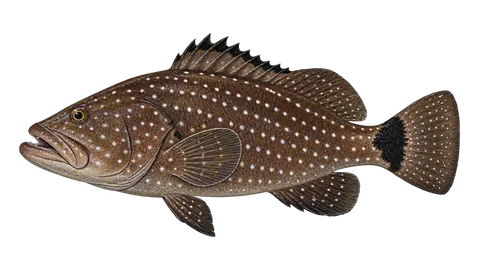
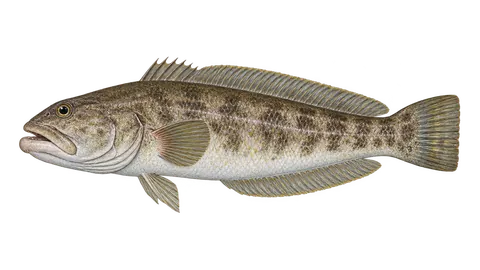
Scientific illustration of Tilefish
common size
45–75 cm
maximum
107 cm
common weight
1–5 kg
record/max.
16.7 kg
depth
140–500 m
ideal water
10–16 °C
location

Sample location: choose yours to see the forecast for where you fish.

period

Reading the weather across 3 global models and 31 simulations…

the species

everything about the tilefish

overview

who is the tilefish

The peixe-batata is a latilid (tilefish family) of deep waters, living on mud and sand bottoms of the outer shelf and slope, from 140 to 500 m, from Rio de Janeiro to Argentina. It is caught mainly by longline and bottom line, often together with the snowy grouper, and fishing has reduced its populations. It is on the national list as Vulnerable, and Portaria Interministerial 40/2018 allows catching and keeping only specimens from 40 cm, with a closed season for the fleet from September 1 to October 31 between 100 and 600 m in the Southeast and South. In recreational fishing it appears in very deep bottom trips. Because of the depth, it almost always comes up with barotrauma.

fun facts

  • The fleshy crest on the nape is the mark of the genus Lopholatilus.
  • It is caught together with the snowy grouper, and both species share the same recovery plan.
how to recognize it

identification

Elongated, robust body, large rounded head with a fleshy crest on the nape, in front of the dorsal fin, typical of the genus. Grayish to brown back and pale belly. Long, continuous dorsal fin and long anal fin. Differs from the namorado by the crest on the nape and the rounded head profile.

distribution

where found

open on the large map

From Rio de Janeiro to Rio Grande do Sul, continuing to Uruguay and Argentina, on the outer shelf and slope.

Habitat: Mud and sand bottoms of the outer shelf and upper slope, 140 to 500 m.

coast

Southeast CoastSouth Coastshelfoceanic

states

Rio de Janeiro, São Paulo, Paraná, Santa Catarina, Rio Grande do Sul

calendar and clock

when to fish

best season

time of year
JanFebSeaAprMayJunJulAugSepOctNovDec

Fished all year, respecting the fleet's closed season in September and October.

best time of day

0h6h12h18h sunrise ~6amsunset ~6pm

Any time. At great depth, the time of day matters little.

weather, water and behavior

what affects the tilefish
sensitivity The little bars show how much each factor affects this species. Five full: it feels it a lot.

cold and cold fronts

Lives in cold bottom water.

atmospheric pressure

A cold front brings rough seas.

moon

No significant effect.

rain

No effect at depth.

water level

Does not depend on water level.

noise

Not very sensitive.

wind

Strong wind prevents keeping the line vertical.

tide

Strong current requires a very heavy sinker.

depth

150 to 400 m.

technique, gear and bait

how to fish

rod
5'6" to 6'6", 50 to 80 lb
spinning / baitcasting reel
electric or high-profile baitcaster
line
braided line 50 to 80 lb
leader
monofilament 100 lb
hook
circle 6/0 to 9/0

natural baits

  • lula
  • fish fillet

accessories

  • 1 kg or heavier sinker
  • descompressor
  • ruler

tip from an angler

Measure before you decide: below 40 cm, release it with a descending device.

what the law says

rules for the tilefish

Summary of the regulations we found, with the source for each. Rules change; before keeping or transporting fish, check with the state environmental agency.
Conservation: Recovery plan (Portaria MMA 227/2018) with rules in PI SG-PR/MMA 40/2018, under review by Portaria 1.666/2026 (art. 11). Global assessment: VU (IUCN, 2024). IN MMA 53/2005 already set 40 cm from ES to RS.

Catch and retention only from 40 cm

40 cm (CT)North CoastNortheast CoastSoutheast CoastSouth Coast

Catch, retention, transport, and sale are allowed only for specimens with a total length of 40 cm or more. Outside the limits of the ordinance, directed fishing is prohibited, and fish caught by chance must be released alive or discarded on the spot, with a record.

Source: Portaria Interministerial SG-PR/MMA nº 40/2018, arts. 2º and 4º, subparagraph b

Fleet closed season Sep 1 to Oct 31 (100 to 600 m, Southeast and South)

fishing between 100 and 600 m depth prohibited for the listed fishing modes01/09 to 31/10Southeast CoastSouth Coast

From September 1 to October 31, fishing between 100 and 600 m depth is prohibited on the Southeast and South coast for the fishing modes listed in the ordinance (INI MPA/MMA 10/2011). On-board retention and landing of peixe-batata are tolerated only until September 5.

Source: Portaria Interministerial SG-PR/MMA nº 40/2018, art. 6º

Recovery plan under review

rules in force during the review

The species remains Vulnerable on the 2026 list. Its use depends on the recovery plan (Portaria MMA 227/2018) and the rules of PI 40/2018. Portaria GM/MMA 1.666/2026 ordered a review of the plans for species already on the list, and the earlier rules remain in force during the review. Confirm before keeping any fish.

Source: Portaria GM/MMA nº 1.666/2026, art. 11; PI SG-PR/MMA nº 40/2018, art. 1º

catch and release
catch and release Releasing the fish alive, quickly and with a wet hand. During a closed season it isn't always allowed: what the regulation says applies.

It comes from hundreds of meters: without a descending device, release rarely works. If you are going to release it, return it to the bottom with a descending device.

in the kitchen

White, soft flesh. May only be kept from 40 cm.

calculator

how much it weighs without taking it out of the water

Length-weight relationship W = a·Lb (a = 0.00708, b = 3.14; FishBase (estimativa bayesiana, comprimento total)). It's an average: a fat or lean fish can vary by 10% to 20%.

estimated weight

—

sources and references

The season weights (months), the time of day and the sensitivities (cold, pressure, moon, wind, rain, tide, strong light, murky water and noise) are the app's editorial estimates, based on the literature below and on the field experience of anglers and guides. They are not official data nor a measurement made for this species, and they may vary by region and year. Closed seasons and legal rules appear in the rules section, with the norm and a link.

  1. scientific FishBase — Lopholatilus villarii (ficha da espécie)Names, distribution, biology, length-weight relationship, and references. Page checked October 13, 2026. The maximum weight on the species page was calculated from the length-weight relationship for 107 cm.
  2. official Portaria GM/MMA nº 1.667, de 27 de abril de 2026 — Lista Nacional Oficial de Espécies da Fauna Ameaçadas de Extinção (peixes e invertebrados aquáticos)The species is listed as VU (checked in the text published in the DOU of April 28, 2026, section 1, p. 96).
  3. official Portaria GM/MMA nº 1.666, de 27 de abril de 2026 — regras e restrições para as espécies ameaçadas de peixes e invertebrados aquáticosArts. 3 and 11: full protection of threatened species, except use provided for in a recovery plan; current plans remain in force during the review.
  4. official Portaria Interministerial SG-PR/MMA nº 40, de 27 de julho de 2018 — uso sustentável e recuperação do cherne-verdadeiro (Hyporthodus niveatus) e do peixe-batata (Lopholatilus villarii)Text published in the DOU on July 30, 2018 (section 1, p. 4), copy on the Ibama website, checked October 13, 2026.
  5. official Instrução Normativa MMA nº 53, de 22 de novembro de 2005 — tamanho mínimo de captura de espécies marinhas e estuarinas do litoral Sudeste e SulText reproduced from the DOU of Nov 24, 2005, checked on Oct 13, 2026. Annex II; § 2 of art. 2 (exemption in competitions) was revoked by IN MMA nº 3/2006.
  6. official ICMBio/SALVE — Ficha de Lopholatilus villarii (avaliação nacional do risco de extinção)National assessment by ICMBio, published in 2024. DOI verified on Crossref.
  7. scientific IUCN Red List — Lopholatilus villarii (avaliação global: Vulnerável, VU, 17/09/2024)Global assessment. Link given on the FishBase entry (Red List, version 2025-2).
  8. scientific Figueiredo, J. L.; Menezes, N. A. (1980). Manual de peixes marinhos do sudeste do Brasil. III. Teleostei (2). São Paulo: Museu de Zoologia da USP. 90 p.Printed work; the URL is the bibliographic record on FishBase, which cites this work for the species.
  9. scientific Haimovici, M.; Velasco, G. (2000). Length-weight relationships of marine fishes from southern Brazil. Naga, ICLARM Quarterly 23(1): 19–23.Length-weight relationships measured in southern Brazil. Printed work; the URL is the bibliographic record in FishBase, which cites this work for the species.
don't confuse

similar species