Skip to content
fishing forecast

peixe-rei-do-mar

Odontesthes argentinensis · Atherinopsidae · omnivore

SeaEstuary

The silverside of the beaches, jetties and estuaries of the South, a marine cousin of the lake pejerrey. It travels in schools and is caught on float with small baits, especially in the cold.

Also called: peixe-rei-do-mar, peixe-rei, mamarreis

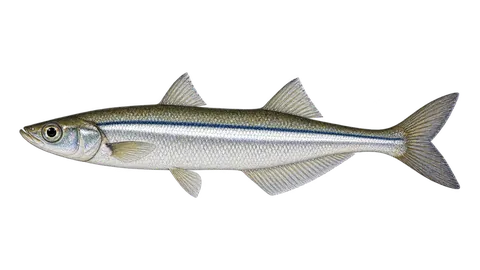
Scientific illustration of Peixe-rei-do-mar
common size
20–30 cm
maximum
42 cm
common weight
0.1–0.2 kg
record/max.
0.5 kg
depth
0–10 m
ideal water
14–22 °C
location

Sample location: choose yours to see the forecast for where you fish.

period

Reading the weather across 3 global models and 31 simulations…

the species

everything about the peixe-rei-do-mar

overview

who is the peixe-rei-do-mar

The peixe-rei-do-mar is an atherinopsid, the silverside family, from the coastal strip of southern Brazil, Uruguay and Argentina. It occupies beaches, jetties, bays and the mouths of estuaries and coastal lagoons, and enters brackish water; it is common in the Patos Lagoon estuary. It grows past 40 cm, but the usual size is 20 to 30 cm. It eats small crustaceans, larvae and tiny fish. It is the silverside of the jetties of Rio Grande do Sul and of the piers of Uruguay and Buenos Aires, caught on float with small baits. It is not the same as the freshwater pejerrey (Odontesthes bonariensis), of lakes and rivers, which has its own entry.

fun facts

  • In the Patos Lagoon estuary it can share space with the freshwater silverside and the sand silverside, three species that anglers often just call pejerrey.
  • In Buenos Aires, the rule allows 40 pejerreyes per day, four times the limit for the other species in the same category.
how to recognize it

identification

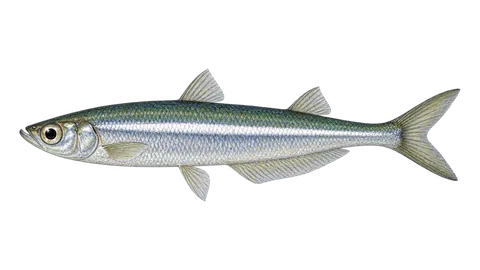
Elongated, slender body, greenish to bluish back and silvery flanks, with a broad silver band along the flank. Two small, separate dorsal fins (the first with 6 fine spines), long anal fin and small mouth. Telling it apart from the freshwater silverside by appearance is hard: habitat helps, but in estuaries the two species can mix, and a reliable separation requires counting scales and rays. The sand silverside (Atherinella brasiliensis), from the beaches, is smaller.

distribution

where found

open on the large map

From the São Paulo coast to Rio Grande do Sul, most common in Santa Catarina and Rio Grande do Sul, including the Patos Lagoon estuary. Outside Brazil, Uruguay and Argentina as far as northern Patagonia.

Habitat: Beaches, surf zone, jetties, bays and mouths of estuaries and coastal lagoons, in salt and brackish water.

coast

Southeast CoastSouth Coastcoastal

states

São Paulo, Paraná, Santa Catarina, Rio Grande do Sul

calendar and clock

when to fish

best season

time of yearbest: May–Sep
JanFebSeaAprMayJunJulAugSepOctNovDec

It is a cold-water fish: at the jetties and beaches of Rio Grande do Sul, Uruguay and Buenos Aires, the peak season runs from autumn to late winter.

best time of day

0h6h12h18h sunrise ~6amsunset ~6pm

Daytime. Active by day, in schools near the surface and in midwater; morning and late afternoon usually produce more at the jetties.

weather, water and behavior

what affects the peixe-rei-do-mar
sensitivity The little bars show how much each factor affects this species. Five full: it feels it a lot.

cold and cold fronts

It tolerates cold water well; winter is exactly when it comes closest to shore.

atmospheric pressure

Right after the cold front, as the wind dies down, the schools return to the jetties.

moon

Little effect.

rain

Heavy rain that muddies the water at the inlet scatters the schools.

water level

At the mouths of lagoons and estuaries, it follows the incoming salt water.

noise

Moderate: shallow schools flee noise and shadows on the water.

wind

Strong crosswind makes it hard to control the float and the fine line.

tide

Tide and current moving through the inlet bring food and schools.

depth

0.5 to 4 m; adjust the float until you find the school.

technique, gear and bait

how to fish

rod
3.0 to 4.2 m, light, 10 to 40 g
spinning / baitcasting reel
spinning reel 2500 to 4000
line
monofilament 0.20 to 0.25 mm
leader
monofilament or fluorocarbon 0.18 to 0.22 mm
hook
fine hooks, sizes 6 to 2

lures

  • small spoons and metal jigs
  • small artificial lure rig (sabiki type)

natural baits

  • shrimp pieces
  • fish fillet in thin strips
  • corrupto

accessories

  • long float for silversides
  • 2- or 3-hook rig with beads
  • landing net

tip from an angler

Adjust the float depth until you find the school, almost always in midwater; small bait and fine line make the difference.

what the law says

rules for the peixe-rei-do-mar

Summary of the regulations we found, with the source for each. Rules change; before keeping or transporting fish, check with the state environmental agency.
Conservation: Not assessed by the IUCN, according to FishBase. Not on the national list (Portaria GM/MMA 1.667/2026); ICMBio published a national assessment in 2026.

Federal reference minimum size (10 cm, ES to RS)

10 cm (TL)ESRJSPPRSCRSSoutheast CoastSouth Coastconfirm with the agency

IN MMA 53/2005 sets 10 cm for 'peixe-rei' on the coast from ES to RS, citing Odontesthes bonariensis and Atherinella brasiliensis. The peixe-rei-do-mar (O. argentinensis) is not named: use 10 cm as the minimum reference and confirm with the competent agency.

Source: IN MMA nº 53/2005, Annex II (peixe-rei)

Buenos Aires (AR): up to 40 pejerreyes per day

40 fish per angler per dayconfirm with the agency

On the sea coast of Buenos Aires province, pejerreyes fall under "directed fishing", with a limit of 40 fish per angler per day (other species in that category have a limit of 10). A line may have up to five single hooks, or the "lengüe", a rig of up to 15 hooks with artificial lures. We have not confirmed whether the rule remains unchanged.

Source: Disposición nº 217/2007 — Directorate of Fishing Development, Province of Buenos Aires, arts. 5º, 11 and 12

catch and release
catch and release Releasing the fish alive, quickly and with a wet hand. During a closed season it isn't always allowed: what the regulation says applies.

A delicate fish that loses scales easily: wet your hand, remove the hook quickly and release without squeezing.

in the kitchen

White, fine, delicate flesh; a classic fried whole or as breaded fillets in Uruguay and Argentina.

calculator

how much it weighs without taking it out of the water

Length-weight relationship W = a·Lb (a = 0.00513, b = 3.06; FishBase (estimativa bayesiana com dados da espécie e do gênero, comprimento total); peso máximo calculado por esta relação). It's an average: a fat or lean fish can vary by 10% to 20%.

estimated weight

—

sources and references

The season weights (months), the time of day and the sensitivities (cold, pressure, moon, wind, rain, tide, strong light, murky water and noise) are the app's editorial estimates, based on the literature below and on the field experience of anglers and guides. They are not official data nor a measurement made for this species, and they may vary by region and year. Closed seasons and legal rules appear in the rules section, with the norm and a link.

  1. scientific FishBase — Odontesthes argentinensis (ficha da espécie)Names, distribution, biology, length-weight relationship, country list and references. Page checked on Oct 13, 2026.
  2. official Portaria GM/MMA nº 1.667, de 27 de abril de 2026 — Lista Nacional Oficial de Espécies da Fauna Ameaçadas de Extinção (peixes e invertebrados aquáticos)Most recent national list. The species is not on it (search by scientific name in the text published in the DOU, checked on October 13, 2026).
  3. official ICMBio/SALVE — Ficha de Odontesthes argentinensis (avaliação nacional do risco de extinção)National extinction risk assessment by ICMBio, published in 2026. DOI checked on Crossref.
  4. official Instrução Normativa MMA nº 53, de 22 de novembro de 2005 — tamanho mínimo de captura de espécies marinhas e estuarinas do litoral Sudeste e SulReproduction of the text published in the DOU of 24/11/2005, checked on 13/10/2026. Annexes I and II. Annex II sets 10 cm for 'peixe-rei', citing Odontesthes bonariensis and Atherinella brasiliensis, without mentioning O. argentinensis.
  5. official Disposição nº 217/2007 (Província de Buenos Aires) — pautas de manejo da pesca esportiva na costa marítima bonaerenseText on the Buenos Aires Province rules portal, checked on 13/10/2026. Pejerreyes in "directed fishing", with a limit of 40 fish per day. We have not confirmed later changes.
don't confuse

similar species