overview
who is the kelp bass
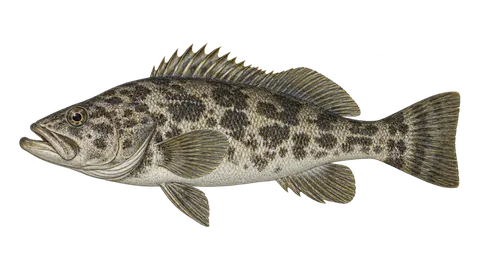
Serranid of the northeastern Pacific, from the Columbia River (USA) to southern Baja California. It lives in and near kelp forests and rocky reefs, usually between 2 and 21 m; the largest ones are deeper. Juveniles eat bottom crustaceans, and adults eat fish and squid. It grows slowly and can live past 30 years, so large specimens are few and valuable. It is one of the mainstays of sport fishing in southern California and northern Baja California, from boats, kayaks and rocky shores, with swimbaits, silicone lures, jigs and live anchovy. Known for a short, strong run toward the kelp.
fun facts
- FishBase records specimens up to 34 years old.
- The English name, calico, comes from the checkered pattern that resembles printed fabric.
how to recognize it
identification
Elongated, slightly compressed body, olive-brown to greenish back with square pale spots that form a checkerboard pattern, pale belly. The third and fourth dorsal spines are nearly the same length. The barred sand bass (P. nebulifer) has a much longer third spine and dark bars; the spotted sand bass (P. maculatofasciatus) is covered in spots. The Peru and Chile cabrilla is another species (P. humeralis).
how kelp bass fishing looks
Loading the next 7 days…
Each card shows the day's index (0 to 100) and, below it, a strip with the index for each hour, from 0h to 23h. from poor to excellent.