

brazilian bocachico
Prochilodus brevis
The curimatã of the rivers and dams of the Northeast. A net and cast-net fish of the sertão, found in markets from Ceará to Paraíba.
- common size
- 20–30 cm
- maximum
- 33 cm
- common weight
- 0.1–0.4 kg
- record/max.
- 0.6 kg
- depth
- 0.5–6 m
- ideal water
- 26–31 °C
how to recognize it
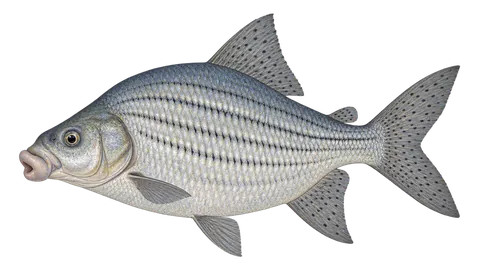
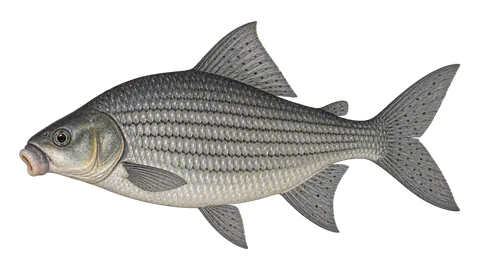
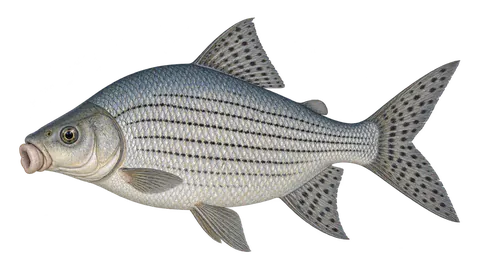
Tall, silver body with fine dark lines formed by the scale edges. Fleshy sucker mouth. Greyish fins, without strong bands. It is the only Prochilodus in the coastal rivers of the eastern Northeast; the larger curimatã-pacu is from the São Francisco.
Also called: curimatã, curimatá, curimatã-comum, curimbatá
don't confuse with:
where found
open on the large mapWhere to look: Dams, intermittent and perennial rivers, slack water with muddy bottoms.
Small and medium coastal rivers of the eastern Northeast and semi-arid dams, such as those on the Jaguaribe (CE), Piranhas-Açu (RN/PB) and Apodi.
native to the basins
states
Ceará, Rio Grande do Norte, Paraíba, Pernambuco
famous destinations
when to fish
next 7 days
Loading the next 7 days…
best season
Available all year in the dams. In the rains (February to May in Ceará) the schools move to spawn, and there is a closed season for nets.
best time of day
Daytime, with peaks at dawn and dusk. Feeds during the day; most active early and late in the afternoon.
what affects the brazilian bocachico
cold and cold fronts
Little effect from the Northeast's climate.
atmospheric pressure
Little effect.
moon
Little known effect.
rain
The first rains and rising rivers trigger spawning.
water level
A low dam concentrates the fish; a full dam spreads it out.
noise
Sinks with movement along the bank.
wind
Strong wind on a large dam hinders float fishing.
depth
Bottom, 1 to 4 m.
how to fish
natural baits
- flour dough
- bread dough
- feed dough
tip from an angler
Groundbait the spot one day ahead and use soft dough with a small hook hidden in it.
- rod
- 3 to 4 m cane pole or light 6' rod, 8 to 15 lb
- spinning / baitcasting reel
- spinning reel 1000 to 2500 (optional)
- line
- monofilament 0.20 to 0.30 mm
- leader
- optional
- hook
- small, #6 to 2
accessories
- bran chum
- small float
catch and release
Delicate mouth: remove the hook carefully and release it quickly.
rules for the brazilian bocachico
Rules change; before keeping or transporting fish, check with the state environmental agency.
CE: closed season Feb 1 to Apr 30
mesh nets and trade prohibited01/02 to 30/04CE details
In the Ceará basins, mesh gear and trade in curimatã (and in piau, sardinha, branquinha, piaba and tambaqui) are prohibited from Feb 1 to Apr 30. Angling with a handline or pole is outside the ban.
Source: Portaria IBAMA nº 04/2008
RN: closed season Dec 1 to Feb 28
fishing prohibited during the period01/12 to 28/02RNconfirm with the agency details
The curimatã is on the closed-season list for the Rio Grande do Norte basins, from Dec 1 to Feb 28. We did not check the angler exceptions in the text of the rule: confirm with Ibama.
Source: IN IBAMA nº 209/2008
PB: closed season Dec 1 to Feb 28
fishing prohibited during the period01/12 to 28/02PBconfirm with the agency details
The curimatã is on the closed-season list for the Paraíba basins, from Dec 1 to Feb 28. We did not check the angler exceptions in the text of the rule: confirm with Ibama.
Source: IN IBAMA nº 210/2008
piracema and closed seasons
Each bar is the period when fishing is prohibited or restricted. The green line is today. Tap the name to see what is still allowed.
Closed season in the Ceará basins
Allowed: Recreational fishing with handline or rod is outside the prohibition.
Source: Portaria IBAMA nº 04/2008
Conservation: Not on the national list (Portaria GM/MMA 1.667/2026).
how much it weighs without taking it out of the water
estimated weight
—
how we calculate
Length-weight relationship W = a·Lb (a = 0.01514, b = 3.0; FishBase). It's an average: a fat or lean fish can vary by 10% to 20%.
more about the brazilian bocachico
A smaller curimatã, typical of coastal rivers and the semi-arid dams of the Northeast. It eats mud and detritus and breeds in the rainy season, when the rivers run again and the dams fill. It is one of the most valuable species in artisanal dam fishing, along with tilapia, pescada and trahira, and it was widely studied by DNOCS in dams such as Pereira de Miranda, in Pentecoste (CE). On the hook it is caught rarely, with dough and a small hook over groundbait. In inland markets it is sold fresh and salted.
Family: Prochilodontidae · detritivore
fun facts
- FishBase holds age and growth studies done by DNOCS at the Pereira de Miranda dam, in Pentecoste (CE), under the former name Prochilodus cearensis.
- Breeding follows the rainy season, which in the semi-arid is short and irregular.
in the kitchen
Tasty meat with bones. Fried, grilled or in caldeirada; widely sold salted in the sertão.
similar species
sources and references (7)
The season weights (months), the time of day and the sensitivities (cold, pressure, moon, wind, rain, tide, strong light, murky water and noise) are the app's editorial estimates, based on the literature below and on the field experience of anglers and guides. They are not official data nor a measurement made for this species, and they may vary by region and year. Closed seasons and legal rules appear in the rules section, with the norm and a link.
- scientific FishBase — Prochilodus brevis (ficha da espécie)Names, distribution, biology, length-weight relationship and references. Page checked on October 13, 2026.
- official Portaria GM/MMA nº 1.667, de 27 de abril de 2026 — Lista Nacional Oficial de Espécies da Fauna Ameaçadas de Extinção (peixes e invertebrados aquáticos)Most recent national list. The species is not on it (search by scientific name in the text published in the DOU, checked on October 13, 2026).
- official ICMBio/SALVE — Ficha de Prochilodus brevis (avaliação nacional do risco de extinção)National assessment by ICMBio, published in 2024. DOI verified on Crossref.
- scientific IUCN Red List — Prochilodus brevis (avaliação global: Pouco Preocupante, LC, 07/11/2018)Global assessment. Link given on the FishBase entry (Red List, version 2025-2).
- scientific Castro, R. M. C.; Vari, R. P. (2004). Detritivores of the South American fish family Prochilodontidae (Teleostei: Ostariophysi: Characiformes): a phylogenetic and revisionary study. Smithsonian Contributions to Zoology 622: 1–189.Revision of the family, with the distribution of Prochilodus brevis. DOI checked in Crossref.
- scientific Nascimento, W. S.; Nascimento, R. S. S.; Chellappa, N. T.; Chellappa, S. (2012). Biologia reprodutiva do curimatã comum, Prochilodus brevis (Characiformes: Prochilodontidae) no açude Marechal Dutra, Rio Grande do Norte, Brasil. Biota Amazônia 2(2): 31–43.DOI checked in Crossref.
- scientific Freire, D. O.; Chacon, J. O. (1971). Idade e crescimento da curimatã comum, Prochilodus cearensis Steindachner, no açude Pereira de Miranda, Pentecoste, Ceará, Brasil. Boletim Técnico do DNOCS 29: 95–109.Printed work; the URL is the bibliographic record on FishBase, which cites this work for the species.