Skip to content
catalog Pinguipedidae · predator

argentinian sandperch

Pseudopercis semifasciata

Sea

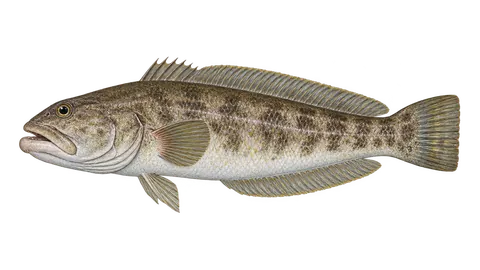
Argentina's "salmón de mar", cousin of the Brazilian namorado: body mottled with brown, large mouth and a black spot on the tail. It lives among rocks and reefs from southeastern Brazil to Patagonia, and is a prize of bottom fishing.

Also called: namorado-do-sul, namorado

Scientific illustration of Argentinian sandperch
common size
40–70 cm
maximum
100 cm
common weight
1–4 kg
record/max.
10.0 kg
depth
5–60 m
ideal water
13–20 °C
overview

who is the argentinian sandperch

The namorado-do-sul is a sandperch (family Pinguipedidae), the family of the Brazilian namorado (Pseudopercis numida). It lives on stone and sand bottoms of the coast and shelf, down to about 100 m, from southeastern Brazil to the Golfo San Jorge in Argentina. It reaches 1 m and 10 kg, with reports of larger fish, and has low fecundity and low resilience to fishing. In Argentina, where it is called salmón de mar, it is one of the most sought-after fish in boat and spearfishing in northern Patagonia and a benchmark for meat. In Brazil it is most common in the South, on parcels and rock reefs, and is often confused with the common namorado.

fun facts

  • Semifasciata means "half-striped", for the bands of spots on the body.
  • FishBase records reports from Rio de Janeiro anglers of fish up to 24 kg, well above the published maximum of 10 kg; some of these records may be of the common namorado.
how to recognize it

identification

Elongated, almost cylindrical body, large head, wide mouth with thick lips. Light brown background with several vertical and horizontal bands formed by dark brown spots, a row of spots along the middle of the dorsal fin and a clearly visible black spot at the base of the upper tail lobe. Long dorsal fin with 4 or 5 short spines and 24 to 27 soft rays. The common namorado (P. numida) lacks this mottled pattern.

how argentinian sandperch fishing looks

Loading the next 7 days…

Each card shows the day's index (0 to 100) and, below it, a strip with the index for each hour, from 0h to 23h. from poor to excellent.

distribution

where found

open on the large map

From Rio de Janeiro to Rio Grande do Sul, most common in the South. Outside Brazil, Uruguay and Argentina down to the Golfo San Jorge.

Habitat: Stone bottoms and rocky reefs mixed with sand, coastal parcels and wrecks.

coast

Southeast CoastSouth Coastcoastalshelf

states

Rio de Janeiro, São Paulo, Paraná, Santa Catarina, Rio Grande do Sul

calendar and clock

when to fish

best season

time of yearbest: Nov–Feb
JanFebSeaAprMayJunJulAugSepOctNovDec

In Argentina the peak season runs from spring to the end of summer, when fish move closer to the coastal rocks; in winter they stay deeper.

best time of day

0h6h12h18h sunrise ~6amsunset ~6pm

Daytime. Hunts by day, lying in wait next to rocks; bites better in light and clearer water.

weather, water and behavior

what affects the argentinian sandperch
sensitivity The little bars show how much each factor affects this species. Five full: it feels it a lot.

cold and cold fronts

Cold water pushes fish from the shallow rocks out to the shelf.

atmospheric pressure

A cold front with rough sea keeps the boat off the parcel; settled weather produces more.

moon

Small effect.

rain

Little effect at sea; murky water from heavy rain near the coast is a nuisance.

water level

Not applicable at sea.

noise

Sensitive on shallow rock: anchor carefully and avoid noise on the hull.

wind

Strong wind creates drift and pulls the bait off the rock.

tide

Moderate current helps; on spring tides, use a heavier sinker.

depth

10 to 40 m for most boat catches.

technique, gear and bait

how to fish

rod
6'6" to 7'6", 20 to 40 lb (boat) or 3.6 to 4.2 m (rocky shore)
spinning / baitcasting reel
spinning reel 5000 to 8000 or medium baitcasting reel
line
braid 30 to 50 lb
leader
fluorocarbon 0.60 to 0.80 mm
hook
circle 4/0 to 7/0

lures

  • jig, 60 to 150 g
  • large vinyl on a heavy jig head

natural baits

  • lula
  • caranguejo
  • fillet or small whole fish

accessories

  • sinker, 100 to 200 g
  • long-nose pliers
  • descender

tip from an angler

When you feel the bite, pull the fish off the rock within the first few meters: if it dives into a crevice, the line will break.

what the law says

rules for the argentinian sandperch

Summary of the regulations we found, with the source for each. Rules change; before keeping or transporting fish, check with the state environmental agency.
Conservation: Not assessed by the IUCN, according to FishBase. Not on the national list (Portaria GM/MMA 1.667/2026) nor in IN MMA 53/2005. Low fecundity and low resilience make the species sensitive to fishing.

Buenos Aires (AR): up to 10 fish per day in directed fishing

10 fish per angler per dayconfirm with the agency

The same rule places salmón de mar in "directed fishing", with a limit of 10 fish per angler per day and a maximum of 50 fish in 24 hours when categories are combined. Once the bag limit is reached, only catch and release is allowed.

Source: Disposición nº 217/2007 — Directorate of Fishing Development, Ministry of Agrarian Affairs of the Province of Buenos Aires, arts. 5º, 11, 17 and 18

catch and release
catch and release Releasing the fish alive, quickly and with a wet hand. During a closed season it isn't always allowed: what the regulation says applies.

It comes up from depth: if the swim bladder swells, use a descender to return the fish to depth. Hold it with both hands, supporting the belly, and avoid hot deck surfaces.

in the kitchen

White, firm flesh, highly valued in Argentina; grilled, baked or in steaks.

calculator

how much it weighs without taking it out of the water

Length-weight relationship W = a·Lb (a = 0.00933, b = 3.03; FishBase (estimativa bayesiana com dados da espécie e da subfamília, comprimento total)). It's an average: a fat or lean fish can vary by 10% to 20%.

estimated weight

—

sources and references

The season weights (months), the time of day and the sensitivities (cold, pressure, moon, wind, rain, tide, strong light, murky water and noise) are the app's editorial estimates, based on the literature below and on the field experience of anglers and guides. They are not official data nor a measurement made for this species, and they may vary by region and year. Closed seasons and legal rules appear in the rules section, with the norm and a link.

  1. scientific FishBase — Pseudopercis semifasciata (ficha da espécie)Names, distribution, biology, length-weight relationship, country list and references. Page checked on Oct 13, 2026.
  2. official Portaria GM/MMA nº 1.667, de 27 de abril de 2026 — Lista Nacional Oficial de Espécies da Fauna Ameaçadas de Extinção (peixes e invertebrados aquáticos)Most recent national list. The species is not on it (search by scientific name in the text published in the DOU, checked on October 13, 2026).
  3. official ICMBio/SALVE — Ficha de Pseudopercis semifasciata (avaliação nacional do risco de extinção)National extinction risk assessment by ICMBio, published in 2024. DOI checked on Crossref.
  4. official Disposição nº 217/2007 (Província de Buenos Aires) — pautas de manejo da pesca esportiva na costa marítima bonaerenseText on the Buenos Aires Province rules portal, checked on 13/10/2026. Salmón de mar in "directed fishing" (10 fish/day) and minimum size of 37 cm in Annex 2. We have not confirmed later changes.
  5. official Instrução Normativa MMA nº 53, de 22 de novembro de 2005 — tamanho mínimo de captura de espécies marinhas e estuarinas do litoral Sudeste e SulReproduction of the text published in Brazil's Official Gazette (DOU) of 24/11/2005, checked on 13/10/2026. Annexes I and II. The species does not appear in the annexes.
don't confuse

similar species