

- common size
- 40–70 cm
- maximum
- 100 cm
- common weight
- 1–4 kg
- record/max.
- 10.0 kg
- depth
- 5–60 m
- ideal water
- 13–20 °C

the right time
to be on the water
Choose the place and the species. The index, from 0 to 100, combines weather, sun, moon and tide with each fish's habits. Up to 28 days, with each day's confidence.
Loading the forecast…
—
Looking for alerts within 30 km…
Looking for what anglers have logged near here…
what you need to fish herelicense, certification and boat documents
fish likely at this spot
Tap a fish to see its forecast.
hour by hour
slide your finger or mouse over the chart to see each hoursee hour-by-hour table
why this index at —?
choose the day
the fishing month at a glance
what's the best window for the crew?
Choose how many fishing days. We compare each stretch by its average index, discount days with a warning or closed season, and show the 3 best.
trend for the coming weeks
Line: the middle value of 31 simulations of the American GEFS model. Band: where 8 out of 10 fall. Narrow, firm trend; wide, high uncertainty.
everything about the argentinian sandperch
how to recognize it
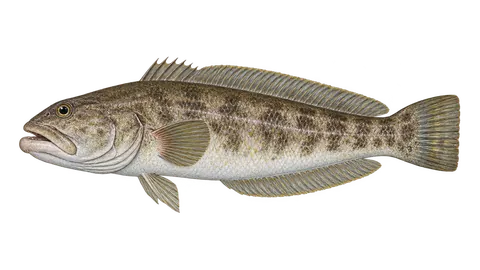
Elongated, almost cylindrical body, large head, wide mouth with thick lips. Light brown background with several vertical and horizontal bands formed by dark brown spots, a row of spots along the middle of the dorsal fin and a clearly visible black spot at the base of the upper tail lobe. Long dorsal fin with 4 or 5 short spines and 24 to 27 soft rays. The common namorado (P. numida) lacks this mottled pattern.
Also called: namorado-do-sul, namorado
don't confuse with:
where found
open on the large mapWhere to look: Stone bottoms and rocky reefs mixed with sand, coastal parcels and wrecks.
From Rio de Janeiro to Rio Grande do Sul, most common in the South. Outside Brazil, Uruguay and Argentina down to the Golfo San Jorge.
coast
states
Rio de Janeiro, São Paulo, Paraná, Santa Catarina, Rio Grande do Sul
when to fish
best season
In Argentina the peak season runs from spring to the end of summer, when fish move closer to the coastal rocks; in winter they stay deeper.
best time of day
Daytime. Hunts by day, lying in wait next to rocks; bites better in light and clearer water.
what affects the argentinian sandperch
cold and cold fronts
Cold water pushes fish from the shallow rocks out to the shelf.
atmospheric pressure
A cold front with rough sea keeps the boat off the parcel; settled weather produces more.
moon
Small effect.
rain
Little effect at sea; murky water from heavy rain near the coast is a nuisance.
water level
Not applicable at sea.
noise
Sensitive on shallow rock: anchor carefully and avoid noise on the hull.
wind
Strong wind creates drift and pulls the bait off the rock.
tide
Moderate current helps; on spring tides, use a heavier sinker.
depth
10 to 40 m for most boat catches.
how to fish
lures
- jig, 60 to 150 g
- large vinyl on a heavy jig head
natural baits
- lula
- caranguejo
- fillet or small whole fish
tip from an angler
When you feel the bite, pull the fish off the rock within the first few meters: if it dives into a crevice, the line will break.
- rod
- 6'6" to 7'6", 20 to 40 lb (boat) or 3.6 to 4.2 m (rocky shore)
- spinning / baitcasting reel
- spinning reel 5000 to 8000 or medium baitcasting reel
- line
- braid 30 to 50 lb
- leader
- fluorocarbon 0.60 to 0.80 mm
- hook
- circle 4/0 to 7/0
accessories
- sinker, 100 to 200 g
- long-nose pliers
- descender
catch and release
It comes up from depth: if the swim bladder swells, use a descender to return the fish to depth. Hold it with both hands, supporting the belly, and avoid hot deck surfaces.
rules for the argentinian sandperch
Rules change; before keeping or transporting fish, check with the state environmental agency.
Buenos Aires (AR): minimum size 37 cm
37 cmconfirm with the agency details
On the sea coast of Buenos Aires province, sport fishing for salmón de mar has a minimum size of 37 cm (Annex 2 of Disposition 217/2007). We have not confirmed whether the rule remains unchanged, nor found a separate rule for Río Negro and Chubut.
Buenos Aires (AR): up to 10 fish per day in directed fishing
10 fish per angler per dayconfirm with the agency details
The same rule places salmón de mar in "directed fishing", with a limit of 10 fish per angler per day and a maximum of 50 fish in 24 hours when categories are combined. Once the bag limit is reached, only catch and release is allowed.
Conservation: Not assessed by the IUCN, according to FishBase. Not on the national list (Portaria GM/MMA 1.667/2026) nor in IN MMA 53/2005. Low fecundity and low resilience make the species sensitive to fishing.
how much it weighs without taking it out of the water
estimated weight
—
how we calculate
Length-weight relationship W = a·Lb (a = 0.00933, b = 3.03; FishBase (estimativa bayesiana com dados da espécie e da subfamília, comprimento total)). It's an average: a fat or lean fish can vary by 10% to 20%.
more about the argentinian sandperch
The namorado-do-sul is a sandperch (family Pinguipedidae), the family of the Brazilian namorado (Pseudopercis numida). It lives on stone and sand bottoms of the coast and shelf, down to about 100 m, from southeastern Brazil to the Golfo San Jorge in Argentina. It reaches 1 m and 10 kg, with reports of larger fish, and has low fecundity and low resilience to fishing. In Argentina, where it is called salmón de mar, it is one of the most sought-after fish in boat and spearfishing in northern Patagonia and a benchmark for meat. In Brazil it is most common in the South, on parcels and rock reefs, and is often confused with the common namorado.
Family: Pinguipedidae · predator
fun facts
- Semifasciata means "half-striped", for the bands of spots on the body.
- FishBase records reports from Rio de Janeiro anglers of fish up to 24 kg, well above the published maximum of 10 kg; some of these records may be of the common namorado.
in the kitchen
White, firm flesh, highly valued in Argentina; grilled, baked or in steaks.
similar species
sources and references (5)
The season weights (months), the time of day and the sensitivities (cold, pressure, moon, wind, rain, tide, strong light, murky water and noise) are the app's editorial estimates, based on the literature below and on the field experience of anglers and guides. They are not official data nor a measurement made for this species, and they may vary by region and year. Closed seasons and legal rules appear in the rules section, with the norm and a link.
- scientific FishBase — Pseudopercis semifasciata (ficha da espécie)Names, distribution, biology, length-weight relationship, country list and references. Page checked on Oct 13, 2026.
- official Portaria GM/MMA nº 1.667, de 27 de abril de 2026 — Lista Nacional Oficial de Espécies da Fauna Ameaçadas de Extinção (peixes e invertebrados aquáticos)Most recent national list. The species is not on it (search by scientific name in the text published in the DOU, checked on October 13, 2026).
- official ICMBio/SALVE — Ficha de Pseudopercis semifasciata (avaliação nacional do risco de extinção)National extinction risk assessment by ICMBio, published in 2024. DOI checked on Crossref.
- official Disposição nº 217/2007 (Província de Buenos Aires) — pautas de manejo da pesca esportiva na costa marítima bonaerenseText on the Buenos Aires Province rules portal, checked on 13/10/2026. Salmón de mar in "directed fishing" (10 fish/day) and minimum size of 37 cm in Annex 2. We have not confirmed later changes.
- official Instrução Normativa MMA nº 53, de 22 de novembro de 2005 — tamanho mínimo de captura de espécies marinhas e estuarinas do litoral Sudeste e SulReproduction of the text published in Brazil's Official Gazette (DOU) of 24/11/2005, checked on 13/10/2026. Annexes I and II. The species does not appear in the annexes.
how we calculatewhere each number comes from
The weather comes from three independent global models, cross-checked hour by hour: when they agree, confidence goes up; when they diverge, the band between them shows on the chart. Beyond 16 days, we use the GEFS ensemble of 31 simulations: if 20 of the 31 predict rain, the chance of rain is 65%. Sun and moon are calculated astronomically, with no uncertainty.
The index adds up, weighted for each species: time of day (species curve anchored to real sunrise and sunset), moon (transits, rise and set, phase), pressure (3 h trend and 24 h swing), water temperature (in rivers, estimated from air temperature; at sea, estimated by an ocean model), wind, rain, clouds, tide and the month in the species' cycle.
sources for this lookup
how accurate the forecast is
Accuracy measured in the reference project (4 regions, 93 days, forecast vs. observed): maximum temperature is off by 0.6 °C on average the next day and 1.7 °C at 7 days; rain of 5 mm or more is detected 76% of the time the next day and 57% at 7 days. Detection isn't everything: the false alarm rate isn't published here yet, and 93 days in 4 regions is still a small sample. We now also measure every day, at the app's destinations: