


the right time
to be on the water
Choose the place and the species. The index, from 0 to 100, combines weather, sun, moon and tide with each fish's habits. Up to 28 days, with each day's confidence.
Loading the forecast…
—
hour by hour
slide your finger or mouse over the chart to see each hoursee hour-by-hour table
why this index at —?
choose the day
the fishing month at a glance
what's the best window for the crew?
Choose how many fishing days. We compare each stretch by its average index, discount days with a warning or closed season, and show the 3 best.
trend for the coming weeks
Line: the middle value of 31 simulations of the American GEFS model. Band: where 8 out of 10 fall. Narrow, firm trend; wide, high uncertainty.
everything about the gafftopsail sea catfish
how to recognize it
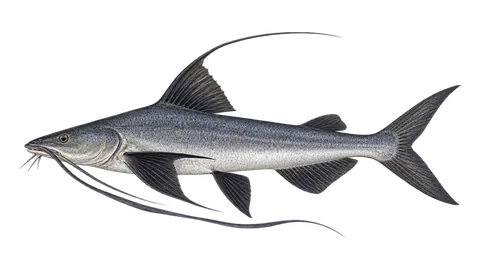
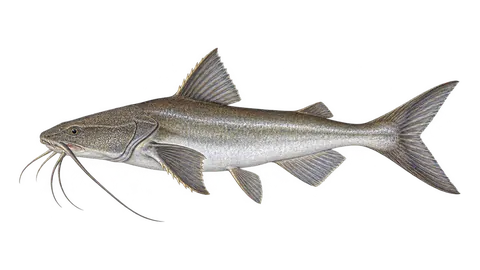
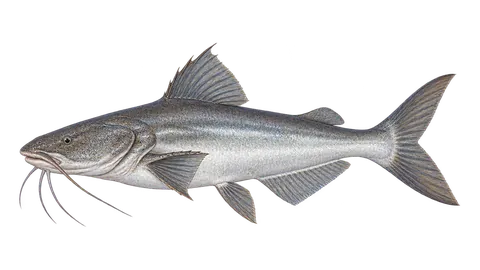
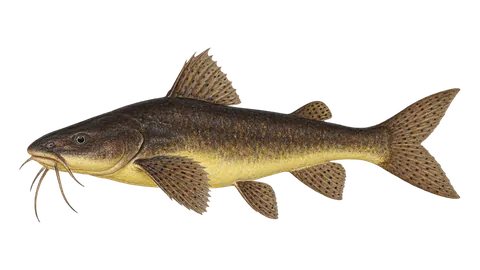
Scaleless catfish with a flattened head and a wide mouth. Its mark is the first dorsal ray and the first ray of each pectoral fin, stretched into long, flattened filaments like flags, plus the long, flattened maxillary barbels; there is a pair of barbels on the chin. Anal fin with 22 to 28 soft rays. The bandeirado (Bagre bagre) looks very similar, and telling the two apart by appearance is hard: it helps to know that the bandeirado is the filament catfish of the river mouths of northern Brazil. The bagres-guri, -amarelo and -branco have no filaments.
Also called: bagre-de-penacho, bagre-bandeira, bagre-de-fita, bagre-fita, gafftopsail catfish
don't confuse with:
where found
open on the large mapWhere to look: Shallow coastal waters, bays, river mouths and estuaries of relatively high salinity, over mud and sand bottoms; frequents piers, bridges and fishing walkways.
FishBase gives the distribution of Bagre marinus for the Gulf of Mexico, Cuba, the western Caribbean and northern South America, sometimes in rivers and estuaries. According to the 2022 review by Marceniuk and colleagues, B. marinus in the strict sense occurs only in the Gulf of Mexico and the southeastern US, and the fish from the Caribbean and the South American coast would be B. filamentosus. FishBase lists Brazil without detailing stretches of coast; this profile marks the North and Northeast because they are closest to the Caribbean and the Guianas.
coast
when to fish
best season
Near shore, fishing is better in the warm part of the year; the pattern above follows the northern hemisphere (Gulf of Mexico and Caribbean). In tropical waters the catfish is fished all year.
best time of day
Any time. It feeds all day, but bites most during light changes, in the late afternoon and at night, when it moves up to the edges.
what affects the gafftopsail sea catfish
cold and cold fronts
It loses activity and moves away from shore when the water cools; in the tropics the effect is small.
atmospheric pressure
Small effect.
moon
Small effect.
rain
Muddy water after rain does not drive the catfish away; it finds food by smell and with its barbels.
water level
Not applicable at sea.
noise
Little sensitive to noise; the caution is with what comes out of the water: spines that wound.
wind
Light chop does not get in the way of bottom fishing; strong wind makes it hard to stay on the pier.
tide
A moving tide gathers food at river mouths and channels; the catfish strikes most on the rising and falling tide.
depth
Usually 1 to 15 m, close to the bottom.
how to fish
lures
- 7 to 14 g jig with a silicone tail imitating shrimp (it takes them, but not often)
natural baits
- shrimp
- pieces of sardine or manjuba
- siri
- squid strips
tip from an angler
Sinker on the end and bait on the bottom, near a pier, bridge or channel mouth. To remove the hook, use pliers: the dorsal and pectoral spines wound and the venom hurts.
- rod
- 7' to 8', medium action, 15 to 30 lb
- spinning / baitcasting reel
- spinning reel 4000 to 5000
- line
- monofilament 15 to 25 lb or braid 20 to 30 lb
- leader
- monofilament or fluorocarbon 30 to 40 lb, 40 cm
- hook
- circle hook 2/0 to 4/0
accessories
- long-nose pliers
- thick gloves
- boga-grip
catch and release
Hold the catfish by the body, with a cloth or thick glove, away from the dorsal and pectoral spines, which are serrated and venomous. Remove the hook with long-nose pliers and release it with its head in the water. If you are injured, wash the wound with hot water (as hot as you can bear) and seek care if it swells badly.
rules for the gafftopsail sea catfish
Rules change; before keeping or transporting fish, check with the state environmental agency.
Mexico: up to 5 per species and 10 saltwater fish per day
5 specimens of the species per angler per day, within the limit of 10 saltwater fish details
In sport and recreational fishing in Mexican federal waters, each angler may keep up to 10 marine fish per day, no more than 5 of the same species. The bagre-de-penacho is not among the species reserved for sport fishing and has no quota of its own. Fish over the bag limit must go back alive, and sport-caught fish may not be sold. Anglers fishing from a boat need the sport and recreational fishing permits provided for in the rule.
Conservation: Not on the Brazilian national list (Portaria GM/MMA nº 1.667/2026). The IUCN assessment (Least Concern, 2014) treats Bagre marinus in the broad sense, predating the 2022 taxonomic review. Outside Mexico we found no specific rule for the catfish.
how much it weighs without taking it out of the water
estimated weight
—
how we calculate
Length-weight relationship W = a·Lb (a = 0.00646, b = 3.12; FishBase (relação peso-comprimento bayesiana, estimativa da própria espécie)). It's an average: a fat or lean fish can vary by 10% to 20%.
more about the gafftopsail sea catfish
The bagre-de-penacho (gafftopsail catfish, bagre bandera) is a marine catfish living in coastal waters, bays and high-salinity estuaries, over mud and sand bottoms, down to about 50 m. It is opportunistic: it eats small fish and bottom invertebrates. The male incubates the eggs in its mouth, usually 15 to 30, at most 50. The dorsal and pectoral spines are serrated and venomous. The meat is good and the species is commercially fished; in sport fishing it is common on piers, bridges and walkways. A note on taxonomy: a 2022 review restricted the name Bagre marinus to the Gulf of Mexico and the southeastern US and revalidated Bagre filamentosus for the Caribbean and the Atlantic coast of South America. Fish from the Caribbean and Brazil that FishBase and many guides treat as B. marinus may therefore be this other species.
Family: Ariidae · predator
fun facts
- The male carries the eggs in its mouth, usually 15 to 30 and at most 50, according to FishBase.
- The English name, gafftopsail, refers to the tall, pointed dorsal fin, which looks like a boat's sail.
- A 2022 review of the genus Bagre separated the catfish of the Gulf of Mexico from those of the Caribbean and the South American coast, and the tropical species went back to being B. filamentosus.
in the kitchen
White, firm flesh, considered good and sold fresh. Clean it with gloves, remove the skin and bones, and prepare it fried, baked or as moqueca; bleed it and ice it right after catching.
similar species
sources and references (5)
The season weights (months), the time of day and the sensitivities (cold, pressure, moon, wind, rain, tide, strong light, murky water and noise) are the app's editorial estimates, based on the literature below and on the field experience of anglers and guides. They are not official data nor a measurement made for this species, and they may vary by region and year. Closed seasons and legal rules appear in the rules section, with the norm and a link.
- scientific FishBase: Bagre marinus (ficha da espécie)Size, length-weight, depth, habitat, distribution, biology and IUCN status. Page checked Oct 13, 2026. The common size range is an editorial estimate around the common length of 50 cm reported by FishBase.
- scientific FishBase: nomes populares de Bagre marinusNames by country and language.
- official Portaria GM/MMA nº 1.667, de 27 de abril de 2026: Lista Nacional Oficial de Espécies da Fauna Ameaçadas de Extinção (peixes e invertebrados aquáticos)The species is not on the list. Checked in the DOU of April 28, 2026.
- scientific Marceniuk, A. P.; Oliveira, C.; Sales, J. B. L.; Betancur-R., R. (2022). The marine catfishes of the genus Bagre (Siluriformes; Ariidae) from the Western Atlantic. Marine Biodiversity 52(1).Redescribes B. marinus with a distribution restricted to the Gulf of Mexico and the southeastern US, and revalidates B. filamentosus for the Caribbean and the Atlantic coast of South America. Summary checked in the FAPESP record; the full article was not read.
- official NOM-017-PESC-1994 (pesca deportivo-recreativa em águas de jurisdição federal do México), modificação publicada no DOF em 25/11/2013 (Sagarpa/Conapesca)Limit of 10 marine fish per angler per day, no more than 5 of the same species (item 4.9.1), return of the excess (4.9.5) and ban on selling sport-caught fish (4.11). Text checked Oct 13, 2026. The rule sets no quota of its own for this species.
how we calculatewhere each number comes from
The weather comes from three independent global models, cross-checked hour by hour: when they agree, confidence goes up; when they diverge, the band between them shows on the chart. Beyond 16 days, we use the GEFS ensemble of 31 simulations: if 20 of the 31 predict rain, the chance of rain is 65%. Sun and moon are calculated astronomically, with no uncertainty.
The index adds up, weighted for each species: time of day (species curve anchored to real sunrise and sunset), moon (transits, rise and set, phase), pressure (3 h trend and 24 h swing), water temperature (in rivers, estimated from air temperature; at sea, estimated by an ocean model), wind, rain, clouds, tide and the month in the species' cycle.
sources for this lookup
how accurate the forecast is
Accuracy measured in the reference project (4 regions, 93 days, forecast vs. observed): maximum temperature is off by 0.6 °C on average the next day and 1.7 °C at 7 days; rain of 5 mm or more is detected 76% of the time the next day and 57% at 7 days. Detection isn't everything: the false alarm rate isn't published here yet, and 93 days in 4 regions is still a small sample. We now also measure every day, at the app's destinations: