

blackbelly rosefish
Helicolenus dactylopterus
Pink bottom fish with venomous spines, living on mud and sand between 150 and 600 m. Caught in deep-water bottom fishing; handle with gloves, pliers and a descender.
- common size
- 20–35 cm
- maximum
- 50 cm
- common weight
- 0.1–0.6 kg
- record/max.
- 1.6 kg
- depth
- 150–600 m
- ideal water
- —
how to recognize it
Pink to red body with faint dark bars and a dark Y-shaped mark between the soft dorsal and anal fins. The dorsal has 12 spines and 12 to 13 soft rays, and the anal has 3 spines and 5 soft rays. The spines have grooves with venom glands, so the fish should be handled with gloves. Anglers in Brazil or Uruguay are probably handling H. lahillei, which has an orange-reddish back, flanks spotted with red and reddish fins; the two are very similar, and reliable separation requires a specialist.
Also called: cantarilho, cantarilho-legítimo, boca-negra, blackbelly rosefish
don't confuse with:
where found
open on the large mapWhere to look: Soft bottoms (mud and sand) of the outer shelf and upper slope, mostly 150 to 600 m; FishBase records 50 to 1,100 m. Juveniles stay in the water column.
In Brazil, the South-western Atlantic fish is treated as Helicolenus lahillei: FishBase gives it from southern Rio Grande (RS) to Argentina, and an analysis of the main commercial fisheries of the Southeast and South includes it. FishBase also lists Brazil and Uruguay for H. dactylopterus, which mixes the two forms. In Latin America, H. dactylopterus proper goes from the Gulf of Mexico to Venezuela, with records in Colombia, Guyana, Suriname and Trinidad and Tobago. Outside the region it occurs on both sides of the North Atlantic, in the Mediterranean and in South Africa.
coast
when to fish
next 7 days
Loading the next 7 days…
best season
Resident bottom fish with no set season. We found no harvest calendar; what matters is calm seas and weak current to keep the bait still on the bottom.
best time of day
Any time. At the depth where it lives, daylight barely reaches; time of day changes fishing little. Fish when the sea and current allow the sinker to stay on the bottom.
what affects the blackbelly rosefish
cold and cold fronts
Does not apply on the bottom, where the temperature barely changes; surface temperature is not a limit for the species.
atmospheric pressure
Small effect; a choppy sea after a cold front makes it hard to keep the line on the bottom.
moon
No known effect; the moon matters more through the current.
rain
Little effect on the fish.
water level
Not applicable at sea.
noise
No known effect at this depth.
wind
Strong wind and waves push the boat and line off course; in rough seas it is hard to keep the sinker on the bottom.
tide
Strong current drags the sinker; fish at the turn of the tide or use a heavier sinker.
depth
From 150 to 600 m for most catches; FishBase records 50 to 1,100 m.
how to fish
natural baits
- lula
- strips or fillet of fish
- shrimp
tip from an angler
Have the descender ready before lowering the line. Hold the fish from below, away from the dorsal fin and spines, and wear gloves.
- rod
- 5'6" to 6'6", 50 to 80 lb, or a rod designed for deep-water fishing
- spinning / baitcasting reel
- electric or high-profile baitcaster
- line
- braided line 50 to 80 lb
- leader
- fluorocarbon or monofilament 80 to 100 lb
- hook
- circle 5/0 to 8/0, in a rig with two or three hooks
accessories
- sinker of 500 g to 1.5 kg depending on the current
- descompressor
- thick gloves and pliers
- wet cloth
catch and release
It comes from hundreds of meters down and often arrives with barotrauma (eyes and stomach pushed out). To release it, return it to the bottom with a descender; puncturing the swim bladder without technique kills it. The spines have venom glands: use gloves and pliers.
rules for the blackbelly rosefish
Rules change; before keeping or transporting fish, check with the state environmental agency.
Mexico: up to 5 per species and 10 saltwater fish per day
5 specimens of the species per angler per day, within the limit of 10 saltwater fish details
In recreational sport fishing in Mexican federal waters, each angler may keep up to 10 marine fish per day, with a maximum of 5 of the same species. The cantarilho is not among the species reserved for sport fishing (billfish, sailfish, swordfish, tarpon, roosterfish and dorado, up to 50 nautical miles from shore, item 0.3 of the rule) or among those with their own limit (billfish, sharks, hake, tarpon, dorado, roosterfish and baya), and has no limit of its own. Anything over the limit goes back alive into the water, and sport-caught fish may not be sold.
Colombia: AUNAP license and catch-and-release in sport fishing
Individual AUNAP license; catch-and-release guidanceconfirm with the agency details
AUNAP Resolution 0549 of 2022 sets the guidelines for recreational sport fishing in Colombia. Anglers need a permit: for an individual, Colombian or foreign, it is a personal, non-transferable card. The rule makes "catch and release" the guidance and admits keeping only part of the catch for personal consumption, respecting the minimum sizes it sets. We did not confirm the daily limit or the minimum sizes by species: check with AUNAP before keeping fish.
Conservation: Not on the Brazilian national list (Portaria GM/MMA nº 1.667/2026). In 2025 ICMBio published the national assessment of the South-western Atlantic fish as Helicolenus lahillei; the category was not checked for this profile. We found no specific federal rule for the species.
how much it weighs without taking it out of the water
estimated weight
—
how we calculate
Length-weight relationship W = a·Lb (a = 0.01047, b = 3.08; FishBase (relação peso-comprimento bayesiana, estimativa da própria espécie)). It's an average: a fat or lean fish can vary by 10% to 20%.
more about the blackbelly rosefish
The cantarilho is an Atlantic bottom fish with a pink body and strong spines, related to scorpionfish. It lives on soft bottoms of the outer shelf and upper slope, between 50 and 1,100 m, but is most common from 150 to 600 m. It eats crustaceans, fish, squid and echinoderms. It is long-lived (maximum recorded age 43 years), matures around 32 cm, and reaches 50 cm and 1.6 kg. Juveniles live free in the water. In Latin America FishBase gives it from the Gulf of Mexico to Venezuela, and also for Brazil and Uruguay; but the South-western Atlantic populations are now treated as another species, Helicolenus lahillei, including in the ICMBio assessment. In sport fishing it falls under deep-water bottom fishing, using natural bait.
Family: Sebastidae · predator
fun facts
- It can live past 40 years: the maximum age recorded by FishBase is 43.
- Reproduction is between laying eggs and bearing live young (FishBase describes zygoparous oviparity), and larvae and juveniles live free in the water.
- FishBase treats the South-western Atlantic cantarilho as another species, H. lahillei, which reaches 45 cm and lives at 80 to 215 m.
in the kitchen
It is a commercially fished species, sold fresh, according to FishBase. When cleaning, watch out for the venomous spines.
similar species
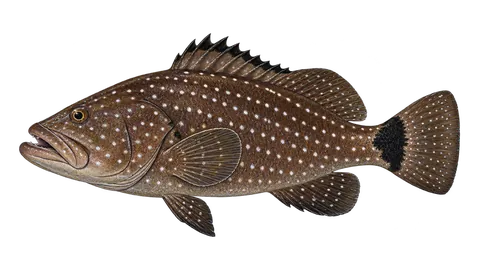
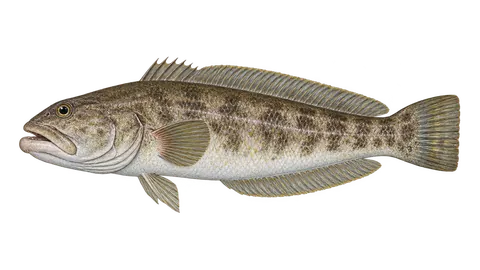
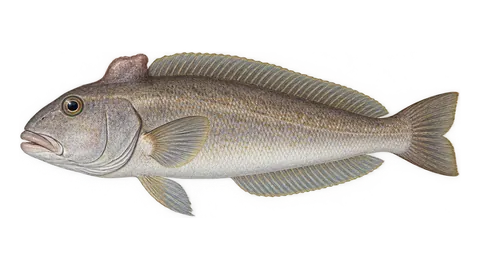
sources and references (9)
The season weights (months), the time of day and the sensitivities (cold, pressure, moon, wind, rain, tide, strong light, murky water and noise) are the app's editorial estimates, based on the literature below and on the field experience of anglers and guides. They are not official data nor a measurement made for this species, and they may vary by region and year. Closed seasons and legal rules appear in the rules section, with the norm and a link.
- scientific FishBase: Helicolenus dactylopterus (ficha da espécie)Size, length-weight, depth, habitat, distribution, biology, danger (venom) and IUCN status. Page checked Oct 13, 2026. The distribution text runs from Canada to Venezuela; Brazil and Uruguay appear only in the country list.
- scientific FishBase: nomes populares de Helicolenus dactylopterusNames by country and language. Cantarilho, cantarilho-legítimo and boca-negra are on the Portuguese list; Portugal, the Azores and Madeira are among the countries of use. We found no established Brazilian common name for the species.
- official Portaria GM/MMA nº 1.667, de 27 de abril de 2026: Lista Nacional Oficial de Espécies da Fauna Ameaçadas de Extinção (peixes e invertebrados aquáticos)The species is not on the list (search for the genus Helicolenus in the text published in the DOU, checked Oct 13, 2026).
- scientific FishBase: Helicolenus lahillei (ficha da espécie)Species of the South-western Atlantic (from southern Rio Grande to Argentina), 80 to 215 m, up to 45 cm, with colour description. Page checked Oct 13, 2026.
- scientific Bernardes, R. A.; Mello, G. P. M. B.; Cergole, M. C. (2005). Helicolenus lahillei. In: Cergole, M. C.; Ávila-da-Silva, A. O.; Rossi-Wongtchowski, C. L. D. B. (orgs.). Análise das principais pescarias comerciais da região Sudeste-Sul do Brasil: dinâmica populacional das espécies em explotação. São Paulo: Instituto Oceanográfico, p. 57-61.Printed work; the URL is the bibliographic record in FishBase, which cites it for H. lahillei.
- scientific IUCN Red List: Helicolenus dactylopterus (avaliação global: Pouco Preocupante, LC, 06/05/2013)Global assessment. Link given on the FishBase profile (Red List, version 2025-2).
- official ICMBio/SALVE: Ficha de Helicolenus lahillei (avaliação nacional do risco de extinção)National assessment by ICMBio, published in 2025. DOI checked in Crossref on Oct 13, 2026; the assigned category was not checked for this profile.
- official DOF: Modificação da NOM-017-PESC-1994, para regular a pesca deportivo-recreativa em águas de jurisdição federal do MéxicoText signed Oct 14, 2013. Species reservation for sport fishing (item 0.3), daily quotas at sea (4.9.1), catch and release of the surplus (4.9.5) and a ban on selling the fish (4.11). Text checked Oct 13, 2026; the DOF publication date does not appear in the text consulted. The daily limit was confirmed only for Mexico; for other countries we did not confirm species-specific rules.
- official AUNAP (Colômbia): Resolução 0549 de 2022, lineamientos de ordenación pesquera para la pesca deportiva con fines recreativosWe checked, in a partial transcription of the text, what the rule says about the personal license (art. 6) and about "catch and release" as the premise, with retention for personal consumption only within minimum sizes (art. 8). We could not read the articles on the daily quota and minimum sizes, so those figures are left out.