Skip to content
catalog Paralichthyidae · predator

chilean flounder

Paralichthys adspersus

Sea

The flounder of the coast of Peru and Chile, a relative of Brazilian flounders. It ambushes prey on shallow sand and is one of the most prized fish in Peruvian cooking; in Peru it has a minimum size of 38 cm.

Also called: linguado-do-pacífico, linguado-fino

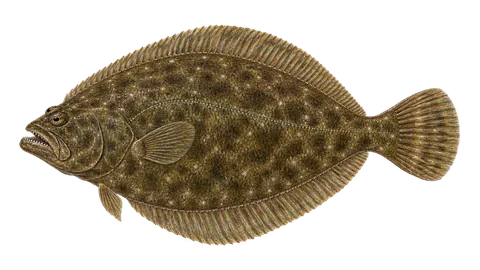
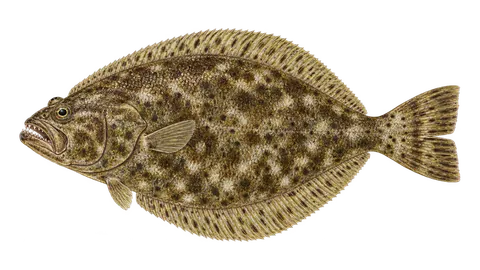
Scientific illustration of Chilean flounder
common size
35–55 cm
maximum
70 cm
common weight
0.6–2.5 kg
record/max.
4.1 kg
depth
1–35 m
ideal water
15–21 °C
overview

who is the chilean flounder

The Pacific flounder is a paralichthyid, the family of left-eyed flounders, from Ecuador to Chile. It lives on soft sand and mud bottoms of the shallow shelf, from 1 to 35 m, and ambushes small fish and crustaceans while buried and camouflaged. It reaches 70 cm. In Peru it is one of the most expensive and sought-after fish, the basis of classic ceviche, and it is caught with nets, lines and spearfishing. Amateur anglers find it in beach and boat fishing, using live bait and artificials worked on the bottom.

fun facts

  • It hatches like a normal fish, with one eye on each side; in the larval stage, the right eye migrates to the left side.
  • It changes the pattern of spots on the upper side to match the bottom.
how to recognize it

identification

Flattened fish with both eyes on the left side, which faces up: brown, with light and dark blotches that change with the bottom; underside white. Large mouth with strong teeth. Short pectoral fins (about half the head length on the eyed side) and a double-truncate tail. Long dorsal fin with 72 to 77 rays. It is the flounder found on the coast of Peru and Chile; Brazilian flounders are other species of the same genus.

how chilean flounder fishing looks

Loading the next 7 days…

Each card shows the day's index (0 to 100) and, below it, a strip with the index for each hour, from 0h to 23h. from poor to excellent.

distribution

where found

open on the large map

Does not occur in Brazil. Southeastern Pacific, from Ecuador to Chile.

Habitat: Sand and mud bottoms of the shallow shelf, beaches, bays and channels between sandbanks.

calendar and clock

when to fish

best season

time of yearbest: Nov–Mar
JanFebSeaAprMayJunJulAugSepOctNovDec

On the coast of Peru and central Chile, beach fishing usually produces more in the warmer months, from spring to late summer.

best time of day

0h6h12h18h sunrise ~6amsunset ~6pm

Daytime, with peaks at dawn and dusk. Ambushes prey during the day, with more activity at dawn and late afternoon.

weather, water and behavior

what affects the chilean flounder
sensitivity The little bars show how much each factor affects this species. Five full: it feels it a lot.

cold and cold fronts

Strong cold upwelling water reduces activity in the shallows.

atmospheric pressure

Rough sea hurts beach and boat fishing.

moon

Little effect.

rain

It hardly ever rains on the Peruvian coast; in Chile, muddy river water hurts the fishing.

water level

Not applicable at sea.

noise

Moderate in shallow, clear water.

wind

Calm to moderate sea is ideal for working bottom baits.

tide

The rising tide on beaches and channels brings the flounder into the shallows.

depth

1 to 15 m for beach and boat fishing.

technique, gear and bait

how to fish

rod
beach: 3.6 to 4.2 m, 60 to 150 g; boat: 6'6" to 7'0", 12 to 25 lb
spinning / baitcasting reel
spinning reel 4000 to 6000
line
braid 15 to 30 lb or monofilament 0.30 to 0.35 mm
leader
fluorocarbon 0.40 to 0.50 mm
hook
circle or wide gap 1/0 to 4/0

lures

  • 10 to 30 g shad on a jig head, worked on the bottom

natural baits

  • small live fish (pejerrey, anchoveta)
  • muy-muy
  • squid strips

accessories

  • sinker, 40 to 120 g
  • large landing net

tip from an angler

With live bait, wait: the flounder grabs the bait and swallows it slowly. Set the hook only when the line runs tight.

what the law says

rules for the chilean flounder

Summary of the regulations we found, with the source for each. Rules change; before keeping or transporting fish, check with the state environmental agency.
Conservation: Old global assessment. Peru has a minimum size. For Chile, we have not confirmed a minimum size in force for recreational fishing.

catch and release
catch and release Releasing the fish alive, quickly and with a wet hand. During a closed season it isn't always allowed: what the regulation says applies.

Hold it supporting the whole body, without squeezing the belly, remove the hook with pliers and release it belly down, letting it sink on its own.

in the kitchen

White, firm and delicate flesh, among the most prized in Peru: ceviche, tiradito, fried and grilled.

calculator

how much it weighs without taking it out of the water

Length-weight relationship W = a·Lb (a = 0.00631, b = 3.15; FishBase (estimativa bayesiana com dados da espécie e do gênero, comprimento total); peso máximo calculado por esta relação). It's an average: a fat or lean fish can vary by 10% to 20%.

estimated weight

—

sources and references

The season weights (months), the time of day and the sensitivities (cold, pressure, moon, wind, rain, tide, strong light, murky water and noise) are the app's editorial estimates, based on the literature below and on the field experience of anglers and guides. They are not official data nor a measurement made for this species, and they may vary by region and year. Closed seasons and legal rules appear in the rules section, with the norm and a link.

  1. scientific FishBase — Paralichthys adspersus (ficha da espécie)Names, distribution, biology, length-weight relationship, country list and references. Page checked on Oct 13, 2026.
  2. scientific IUCN Red List — Paralichthys adspersus (avaliação global: Pouco Preocupante, LC, 02/05/2008)Global assessment. Link given on the FishBase entry (Red List, version 2025-2).
  3. official Resolução Ministerial nº 00328-2022-PRODUCE (Peru) — tamanho mínimo de captura do lenguadoPublished in El Peruano on 02/10/2022: 38 cm total length and 25% tolerance. The previous value was 50 cm (R.M. nº 209-2001-PE).
  4. official Ministério da Produção do Peru (PRODUCE) — Pesca y Consumo Responsable: tallas mínimas de capturaOfficial minimum size table for consumers, checked on 13/10/2026. The page does not indicate the rule behind each value.
don't confuse

similar species