MS: minimum 38 cm
38 cmMS
Minimum size for piavuçu in MS. Counts as the only native fish in the recreational bag limit.
Source: Decreto estadual MS nº 15.375/2020 (amends Decreto nº 15.166/2019), art. 9º - Semadesc/Imasul
Megaleporinus macrocephalus
The largest of the piaus. Native to the Pantanal, now common in upper Paraná reservoirs. Caught on chum with corn and dough bait.
Also called: piavuçu, piauçu, piau-açu, piavussu, boga

A large, big-headed piau native to the Paraguay basin. It eats seeds, fruit, leaves, insects and mollusks. It was widely used in fish farming and escaped into upper Paraná reservoirs, where it formed large populations. There it is alien, not native. Caught on chum with corn, dough and minhocuçu (giant earthworm), it nibbles the bait before taking it: whoever waits too long to set the hook loses the fish. It fights well, with strong runs to the bottom. Outside the chum, look for backwaters and banks with sandy bottoms. In MS and MT the minimum size is 38 cm.
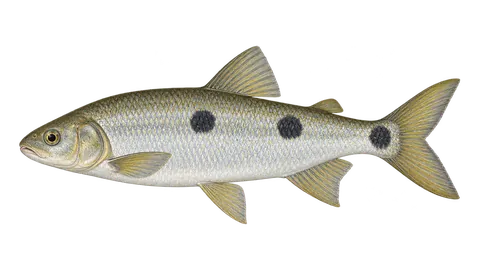
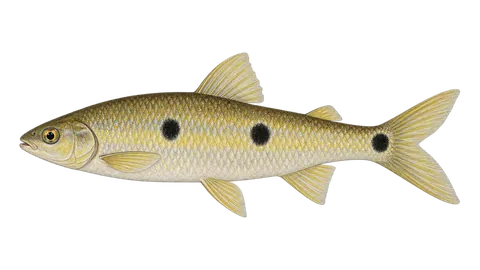
Large, broad head for a piau, small mouth with incisor teeth. Greenish-to-olive back, yellowish flanks. Juveniles with dark vertical bands. The piapara is more silvery and has three dark spots on the flank. The piau-três-pintas is smaller and has three well-marked black spots.
Loading the next 7 days…
Each card shows the day's index (0 to 100) and, below it, a strip with the index for each hour, from 0h to 23h. from poor to excellent.
Native to the Pantanal (Paraguay, Cuiabá, Miranda, Aquidauana, Taquari). Introduced to upper Paraná reservoirs (Grande, Paranaíba, Tietê, Paranapanema, Ivaí) and present in pay lakes.
Habitat: Backwaters, bank edges, bays and reservoirs; sand or mud bottom near submerged timber.
native to the basins
introduced in
states
Mato Grosso do Sul, Mato Grosso, São Paulo, Paraná, Goiás, Minas Gerais
Warm months are best. In winter chum takes longer to draw fish in.
Daytime, with peaks at dawn and dusk. Feeds by day, best in the morning and late afternoon. On chum, it responds at any hour.
A cold front knocks out the chum for 1 to 2 days.
Stable weather is better.
Small effect.
Light rain doesn't matter.
In reservoirs, stable level. In rivers, falling water concentrates fish in backwaters.
Wary over shallow chum; keep the boat away.
A light chop helps hide the line.
Bottom, 2 to 6 m, near the chum.
natural baits
accessories
Chum the spot with corn for a day or two. Set the hook on the first firm pull, without waiting for the second.
Summary of the regulations we found, with the source for each. Rules change; before keeping or transporting fish, check with the state environmental agency.
Conservation: In the Paraná basin it is an alien species.
Minimum size for piavuçu in MS. Counts as the only native fish in the recreational bag limit.
Source: Decreto estadual MS nº 15.375/2020 (amends Decreto nº 15.166/2019), art. 9º - Semadesc/Imasul
Minimum size in the Paraguay basin in MT. Recreational anglers may keep fish only for on-site consumption.
Source: Lei estadual MT nº 9.096/2009, art. 28 and Annex I (Paraguay Basin) - Sema-MT
IN Ibama 26/2009 uses "piavuçu" as one of the names of the piapara/piau-verdadeiro group, with 40 cm. In the Paraná basin, respect 40 cm.
Source: Instrução Normativa Ibama nº 26/2009 (fishing rules for the Paraná River basin), Annex
Source: Decreto estadual MS nº 15.166/2019, art. 9º (as amended by Decreto nº 15.375/2020)
Source: IN IBAMA nº 26/2009, Annex (Paraná River basin; stricter state rules prevail)
Allowed: Subsistence fishing by riverside residents and authorized scientific fishing. Decree 15.166/2019 (art. 11, §5) allows catch and release only in February and only in the channels of the Paraguay and Paraná rivers. For the rest of the period, not even catch and release is allowed. Check the Imasul portaria for each season.
Source: Decreto estadual MS nº 15.166/2019, art. 11; IN IBAMA nº 201/2008
Allowed: All fishing modalities are prohibited in rivers, including catch and release (Law 9.096/2009, art. 19-A). Exceptions: subsistence fishing from shore (3 kg or 1 fish, no transport or sale) and scientific fishing. Law 13.159/2025 now allows licensed sport fishing in UHE/PCH hydropower reservoirs, natural lakes and border rivers, subject to a scientific study and a license from the environmental agency. We have not confirmed whether these licenses are already being issued.
Hold it by the belly and caudal peduncle, remove the hook with pliers and return it to the water.
Good flesh, with bones; fried in thin steaks or baked.
Length-weight relationship W = a·Lb (a = 0.01096, b = 3.19; FishBase). It's an average: a fat or lean fish can vary by 10% to 20%.
estimated weight
—
The season weights (months), the time of day and the sensitivities (cold, pressure, moon, wind, rain, tide, strong light, murky water and noise) are the app's editorial estimates, based on the literature below and on the field experience of anglers and guides. They are not official data nor a measurement made for this species, and they may vary by region and year. Closed seasons and legal rules appear in the rules section, with the norm and a link.
Your location is saved only on this device and feeds the forecast, the map and the "today" on the home page.