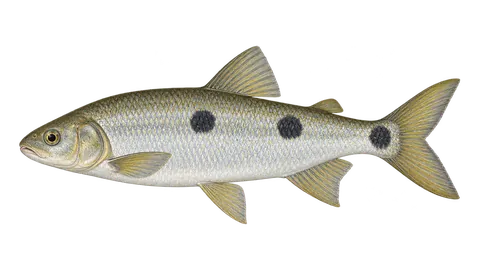
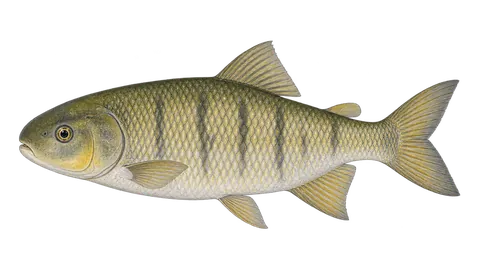
Paraná basin: minimum 25 cm
25 cmSPPRMGGOParaná
Federal minimum size for piau-três-pintas in the Paraná basin. In MG, IEF Portaria 111/2003 also sets 25 cm.
Source: Instrução Normativa Ibama nº 26/2009 (fishing rules for the Paraná River basin), Annex
MS: minimum 25 cm
25 cmMS
Minimum size for piau-três-pintas in MS.
Source: Decreto estadual MS nº 15.375/2020 (amends Decreto nº 15.166/2019), art. 9º - Semadesc/Imasul
MT: minimum 25 cm
25 cmMTParaguay (Pantanal)
Minimum size for piaus (Leporinus spp.) in the Paraguay basin in MT.
Source: Lei estadual MT nº 9.096/2009, art. 28 and Annex I (Paraguay Basin) - Sema-MT
Minimum size: 25 cm
MSParaguay (Pantanal)Paraná
Source: Decreto estadual MS nº 15.166/2019, art. 9º (as amended by Decreto nº 15.375/2020)
Minimum size: 25 cm
MTParaguay (Pantanal)
Source: Lei estadual MT nº 9.096/2009, Annex I, Paraguay basin (as amended by Lei nº 9.895/2013). Several of these species are under Zero Transport: the measure applies to catch and release and to on-site consumption
Minimum size: 25 cm
SPPRMGGOMSDFParaná
Source: IN IBAMA nº 26/2009, Annex (Paraná River basin; stricter state rules prevail)
Minimum size: 25 cm
PRParanáSoutheast Atlantic
Source: Portaria IAT nº 650/2025, Annex I (interior basins of PR, except Iguazu and coastal)
Minimum size: 25 cm
MG
Source: Portaria IEF-MG nº 111/2003 (IEF table)
Minimum size: 25 cm (max. 30 cm)
GOTocantins-Araguaia
Source: IN Semad-GO nº 17/2026, Annex I, Araguaia-Tocantins basin (on-site consumption only; zero transport)
Minimum size: 25 cm (max. 30 cm)
GOParaná
Source: IN Semad-GO nº 17/2026, Annex I, Paranaíba basin (on-site consumption only; zero transport)
piracema closures in the basins where the species lives
Spawning closure (piracema) in the Paraná River basin
01/11 to 28/02SPPRMGGOMSDF
Allowed: Recreational fishing only for non-native species and hybrids (peacock bass, tilapia, black bass, carp, croaker, etc.; piauçu remains prohibited), with handline, simple pole, or rod with spinning or baitcasting reel, up to 10 kg + 1 fish. In rivers, from shore only; in reservoirs, from a boat or from shore. Prohibited: floodplain lakes, aquatic-animal bait, within 1,500 m of dams and waterfalls, and within 500 m of confluences. Tournaments only in reservoirs and only with non-native species.
Source: IN IBAMA nº 25/2009
Spawning closure (piracema) in Minas Gerais (state rule)
01/11 to 28/02MG
Allowed: Only exotic or hybrid species, 3 kg + 1 fish per day, with handline, rod, simple pole, or spinning or baitcasting reel. Nets prohibited. Keep the minimum distances from dams and reservoirs.
Source: Portarias IEF nº 154/2011 (São Francisco), 155/2011 (East) and 156/2011 (Grande/Paranaíba)
Closed season in Goiás (state rule)
01/11 to 28/02GO
Allowed: Sport and guided fishing only in reservoirs, catch and release with barbless hooks (no keeping, transporting or eating). Subsistence: up to 5 kg per day, for household consumption only.
Source: IN Semad-GO nº 17/2026, arts. 8º to 11
Spawning closure (piracema) in the Pantanal of Mato Grosso do Sul
05/11 to 28/02MS
Allowed: Subsistence fishing by riverside residents and authorized scientific fishing. Decree 15.166/2019 (art. 11, §5) allows catch and release only in February and only in the channels of the Paraguay and Paraná rivers. For the rest of the period, not even catch and release is allowed. Check the Imasul portaria for each season.
Source: Decreto estadual MS nº 15.166/2019, art. 11; IN IBAMA nº 201/2008
Spawning closure (piracema) in Mato Grosso (all basins)
01/10 to 31/01MT
Allowed: All fishing modalities are prohibited in rivers, including catch and release (Law 9.096/2009, art. 19-A). Exceptions: subsistence fishing from shore (3 kg or 1 fish, no transport or sale) and scientific fishing. Law 13.159/2025 now allows licensed sport fishing in UHE/PCH hydropower reservoirs, natural lakes and border rivers, subject to a scientific study and a license from the environmental agency. We have not confirmed whether these licenses are already being issued.
Source: IN Interministerial MAPA/MMA nº 10/2017; Resolução Cepesca-MT nº 1/2026; Lei estadual MT nº 9.096/2009, arts. 19-A and 27 (Leis 12.434/2024 and 13.159/2025)
Spawning closure (piracema) in the Araguaia River basin
01/11 to 28/02GOTOPAMT
Allowed: Recreational fishing only in reservoirs, with handline, rod, or spinning or baitcasting reel. Fish may only be eaten on site, not transported. Competitions prohibited. Subsistence: 3 kg + 1 fish. State rules (GO and TO) may be stricter.
Source: IN Interministerial MPA/MMA nº 12/2011
Spawning closure (piracema) in the Tocantins and Gurupi river basins
01/11 to 28/02TOPAMAGO
Allowed: Recreational fishing only in reservoirs, with on-site consumption. Subsistence: 5 kg + 1 fish. State rules may be stricter.
Source: IN Interministerial MPA/MMA nº 13/2011
Spawning closure (piracema) in Tocantins (state rule)
01/11 to 28/02TO
Allowed: In 2025/26: catch and release with barbless hooks and recreational fishing card; subsistence fishing on foot or from a rowboat, with simple pole or handline.
Source: Portaria Naturatins nº 244/2025 (2025/26 season); INIs MPA/MMA nº 12 and 13/2011
Spawning closure (piracema) in the São Francisco River basin (rivers and reservoirs)
01/11 to 28/02MGBAPEALSEGODF
Allowed: Recreational fishing from a boat or from shore with handline, rod, spinning or baitcasting reel, up to 5 kg + 1 fish. Prohibited within 1,000 m of dams, waterfalls and rapids, and within 500 m of confluences. Floodplain lakes have a longer closed season (see next item).
Source: Portaria IBAMA nº 50/2007
São Francisco: floodplain lakes
01/11 to 30/04MGBAPEALSEGODF
Allowed: No fishing in the floodplain lakes during the period.
Source: Portaria IBAMA nº 50/2007
Closed season in the rivers of Marajó Island (PA)
01/01 to 30/04PA
Allowed: The same recreational-angler exceptions as in Portaria 48/2007 apply (handline or rod, 5 kg + 1 fish), unless a stricter state rule applies.
Source: Portaria IBAMA nº 48/2007
Closed season in the Amazon basin in Amapá
15/11 to 15/03AP
Allowed: Recreational anglers with handline or rod, line and hook are outside the Annex II prohibitions, with a bag limit of 5 kg + 1 fish, unless a stricter state rule applies.
Source: Portaria IBAMA nº 48/2007
Closed season in Roraima
01/03 to 30/06RR
Allowed: Subsistence fishing only.
Source: Portaria IBAMA nº 48/2007
Border rivers MT/RO and MT/PA
05/11 to 28/02MTROPA
Allowed: See the exceptions in Portaria 48/2007 and the state rules for each bank.
Source: Portaria IBAMA nº 48/2007