Skip to content
fishing forecast

largemouth bass

Micropterus salmoides · Centrarchidae · predator

Freshwaternon-native in Brazil

Exotic North American predator, found in reservoirs in the South and Southeast. Technical fishing with artificial lures. Never release it into a new environment.

Also called: black bass, bass, achigã, perca-americana

Scientific illustration of Largemouth bass
common size
25–45 cm
maximum
97 cm
common weight
0.5–2.5 kg
record/max.
10.1 kg
depth
0.5–8 m
ideal water
20–27 °C
location

Sample location: choose yours to see the forecast for where you fish.

period

Reading the weather across 3 global models and 31 simulations…

the species

everything about the largemouth bass

overview

who is the largemouth bass

North American predator, introduced to Brazil for sport fishing and now established in reservoirs, small farm ponds and cooler rivers of the South and Southeast. It is exotic and a voracious predator: it eats lambaris, young native fish, frogs and shrimp, and can wipe out small species from entire lakes. That is why releasing black bass where it doesn't exist is a serious environmental offense. For anglers it is the fish of technical lure fishing: silicone worm, spinnerbait, crankbait and topwater. It strikes hard, jumps and shakes its head.

fun facts

  • The male digs the nest and guards eggs and fry, attacking anything that comes near.
  • It is the fish that launched the big artificial-lure bass tournaments in the United States.
how to recognize it

identification

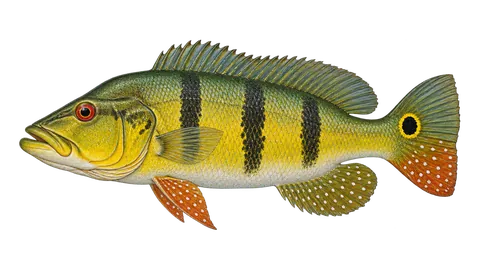
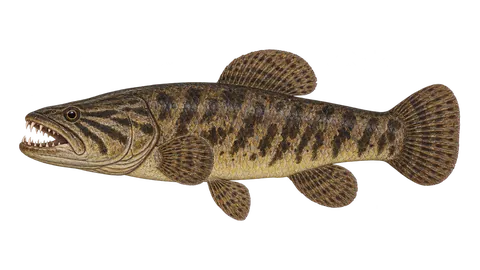
Sturdy olive-green body, greenish-silver flanks with a dark, irregular lateral band from snout to tail. Huge mouth: the upper jaw extends past the eye. Dorsal fin with a spiny part and a soft part, nearly separate. Peacock bass has an ocellus on the tail and vertical bars. Trahira has no spines on the dorsal fin.

distribution

where found

open on the large map

Exotic, native to North America. Small reservoirs and farm ponds in PR, SC and RS (including the highland plateau), reservoirs in SP and southern MG, and cooler rivers.

Habitat: Reservoirs and small farm ponds with structure: snags, rocks, cutbanks, submerged vegetation and points.

introduced in

ParanáUruguaySouth AtlanticSoutheast Atlantic

states

Paraná, Santa Catarina, Rio Grande do Sul, São Paulo, Minas Gerais

calendar and clock

when to fish

best season

time of yearbest: Oct–Mar
JanFebSeaAprMayJunJulAugSepOctNovDec

Spring and summer. In spring (September to November) it moves into shallow water to build nests. In winter it stays deep and slow.

best time of day

0h6h12h18h sunrise ~6amsunset ~6pm

Daytime, with peaks at dawn and dusk. Peaks at dawn and late afternoon; on cloudy days it strikes all day.

weather, water and behavior

what affects the largemouth bass
sensitivity The little bars show how much each factor affects this species. Five full: it feels it a lot.

cold and cold fronts

Tolerates cold water, but slows down below 15 °C.

atmospheric pressure

Very sensitive to cold fronts: after the front passes, drop the lure and slow down.

moon

Small effect; spring nests follow the moon in some reservoirs.

rain

Drizzle and overcast weather are often excellent.

water level

A rising level that floods the vegetation pulls the black bass into the shallows.

noise

Wary in clear water; long casts.

wind

The windward bank concentrates the lure and black bass.

depth

Shallow early and late in the afternoon; 3 to 8 m in strong sun and in the cold.

technique, gear and bait

how to fish

rod
6' to 6'6", fast action, 8 to 17 lb
spinning / baitcasting reel
low-profile baitcasting reel 100 or spinning reel 2500
line
braided 15 to 20 lb
leader
fluorocarbon 12 to 16 lb
hook
offset 2/0 to 4/0 for silicone; treble hooks on hard lures

lures

  • silicone worm (Texas and wacky rig)
  • spinnerbait
  • crankbait
  • skirted jig
  • popper and small zara
  • frog

natural baits

  • live lambari
  • minhocuçu

accessories

  • alicate
  • polarized glasses

tip from an angler

Work slowly near snags and walls. After a cold front, use silicone on the bottom, almost still.

what the law says

rules for the largemouth bass

Summary of the regulations we found, with the source for each. Rules change; before keeping or transporting fish, check with the state environmental agency.
Conservation: Considered invasive; harms lambaris and young native fish.

Releasing it into the natural environment without a license is an offense

releasing or introducing fish into rivers, reservoirs and lakes is prohibitedPRSCRSSPMGconfirm with the agency

Introducing an exotic species, or one outside its natural range, without a technical opinion and a license is a federal environmental offense. This includes releasing a fish from a tank, pay lake or aquarium into a river or reservoir. In MG, the IEF states that stocking without a license is prohibited.

Source: Lei federal nº 9.605/1998, art. 31, and Decreto federal nº 6.514/2008, art. 25

PR: exotics allowed; returning them to the water is restricted

exotics may be caught freely; confirm the release rulePRParanáSoutheast Atlanticconfirm with the agency

In PR, non-native fish may be caught in the interior basins. Portaria IAT 650/2025 sets a rule on releasing non-natives, with an exception for catch-and-release events aimed at them. Confirm with IAT before returning the fish to the water.

Source: Portaria IAT nº 650/2025 (fishing in the interior basins of PR; replaced Portarias IAT 177/2025 and 223/2025) - Instituto Água e Terra

catch and release
catch and release Releasing the fish alive, quickly and with a wet hand. During a closed season it isn't always allowed: what the regulation says applies.

Where it is already established, follow local rules. Never transport it alive to another lake or river.

in the kitchen

White, firm meat; fried or grilled fillet.

calculator

how much it weighs without taking it out of the water

Length-weight relationship W = a·Lb (a = 0.01047, b = 3.08; FishBase). It's an average: a fat or lean fish can vary by 10% to 20%.

estimated weight

—

sources and references

The season weights (months), the time of day and the sensitivities (cold, pressure, moon, wind, rain, tide, strong light, murky water and noise) are the app's editorial estimates, based on the literature below and on the field experience of anglers and guides. They are not official data nor a measurement made for this species, and they may vary by region and year. Closed seasons and legal rules appear in the rules section, with the norm and a link.

  1. scientific FishBase — Micropterus salmoides (ficha da espécie)Names, distribution, biology, length-weight relationship and references. Page checked on October 13, 2026.
  2. scientific IUCN Red List — Micropterus salmoides (avaliação global: Pouco Preocupante, LC, 14/11/2018)Global assessment. Link given on the FishBase entry (Red List, version 2025-2).
  3. technical CABI Compendium — Micropterus salmoides (largemouth bass). Qin, J. (2024).Technical sheet for an invasive species (DOI checked in Crossref).
  4. scientific IUCN SSC Invasive Species Specialist Group — Global Invasive Species Database: Micropterus salmoidesPage checked on Oct 13, 2026.
don't confuse

similar species