

- common size
- 35–55 cm
- maximum
- 70 cm
- common weight
- 1–3 kg
- record/max.
- 3.8 kg
- depth
- 0.3–4 m
- ideal water
- 23–30 °C

the right time
to be on the water
Choose the place and the species. The index, from 0 to 100, combines weather, sun, moon and tide with each fish's habits. Up to 28 days, with each day's confidence.
Loading the forecast…
—
Looking for alerts within 30 km…
Looking for what anglers have logged near here…
what you need to fish herelicense, certification and boat documents
fish likely at this spot
Tap a fish to see its forecast.
hour by hour
slide your finger or mouse over the chart to see each hoursee hour-by-hour table
why this index at —?
choose the day
the fishing month at a glance
what's the best window for the crew?
Choose how many fishing days. We compare each stretch by its average index, discount days with a warning or closed season, and show the 3 best.
trend for the coming weeks
Line: the middle value of 31 simulations of the American GEFS model. Band: where 8 out of 10 fall. Narrow, firm trend; wide, high uncertainty.
everything about the trairão-do-sudeste
how to recognize it
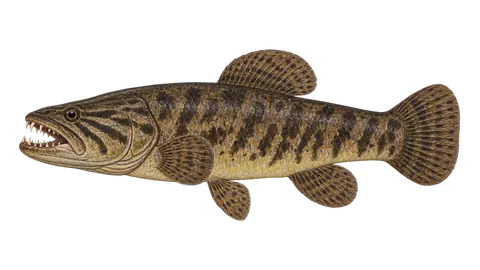
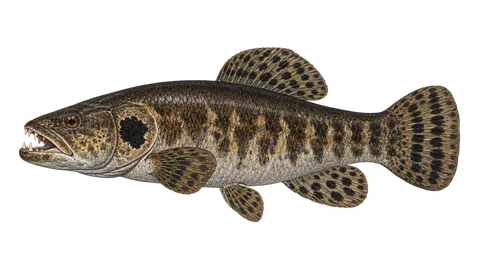
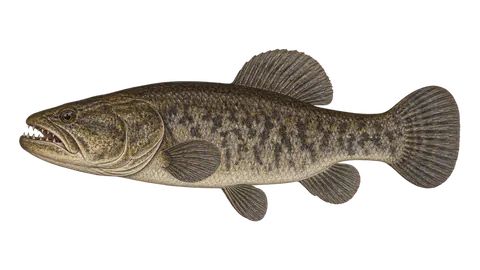
Cylindrical, robust body, large head and wide mouth full of conical teeth. Like all trairões, it has no teeth on the tongue and the inner edges of the jaw run parallel; in the trahira (H. malabaricus) they converge toward the tip. It has 42 to 46 scales in the lateral line and 4 to 6 pores under the jaw (6 to 8 in the trairão-do-sul). Grayish-brown color, pale belly, without the strong blotched pattern of the trahira.
Also called: trairão, trairão-do-sudeste
don't confuse with:
where found
open on the large mapWhere to look: River backwaters, oxbow lakes, veredas and reservoirs; banks with submerged timber, water hyacinth, flooded grass and rocks.
São Francisco, upper Paraná (such as the Grande River and its tributaries) and Doce River basins, mainly in Minas Gerais. Also in reservoirs and fee-fishing ponds, sometimes with fish from farms of uncertain origin.
native to the basins
states
Minas Gerais, Bahia, São Paulo, Goiás, Espírito Santo
when to fish
best season
Warm months, September to March. In winter it eats little and stays deeper. The piracema (spawning closure) shuts fishing for native species in the Paraná basin and in Minas Gerais from November to February.
best time of day
Daytime, with peaks at dawn and dusk. Attacks by day, with peaks early in the morning and late in the afternoon; on warm nights it also hunts.
what affects the trairão-do-sudeste
cold and cold fronts
Cold water drops activity; during cold fronts it almost stops.
atmospheric pressure
Warm, stable days are the best.
moon
Little effect.
rain
Light rain doesn't bother it; a flash flood of the streams muddies the water and scatters the fish.
water level
Stable, clean river concentrates the fish along the bank.
noise
Sensitive to hull knocks and engine noise near the bank; approach by paddle or electric trolling motor.
wind
A light chop helps topwater lures; strong wind makes precise casting hard.
depth
Shallow, 0.3 to 2 m, close to the structure; drops a little in the cold.
how to fish
lures
- rubber frog
- zara/stickbait 9 to 12 cm
- prop bait
- spinnerbait
natural baits
- live lambari
- live bait native to the same basin
tip from an angler
Work the lure slowly along the submerged timber and wait to feel the weight before setting the hook: it often misses the first strike.
- rod
- 6' to 6'6", fast action, 12 to 25 lb
- spinning / baitcasting reel
- low-profile baitcasting reel 100 to 200 or spinning reel 3000
- line
- braid 30 to 50 lb
- leader
- fluorocarbon or monofilament 40 to 60 lb, 40 to 60 cm
- hook
- reinforced treble hooks 1/0 to 2/0; offset hook 4/0 to 5/0 for soft plastic lures
accessories
- long-nose pliers
- boga-grip
catch and release
Use long-nose pliers and a lip grip (boga): the teeth cut. Support the body, take a quick photo and release it at the bank where you caught it.
rules for the trairão-do-sudeste
Rules change; before keeping or transporting fish, check with the state environmental agency.
GO: São Francisco trairão treated as non-native
catch and transport without size or quantity limitGO details
Annex II of the Goiás rule lists the trairão (Hoplias cf. lacerdae) as a non-native species from fish farming in the São Francisco basin, with free catch and transport. The 'cf.' marks doubt about the species; in GO's other basins the trairão is not on that list.
Source: IN Semad-GO nº 17/2026, art. 5º and Annex II (São Francisco basin)
piracema and closed seasons
Each bar is the period when fishing is prohibited or restricted. The green line is today. Tap the name to see what is still allowed.
Spawning closure (piracema) in the Paraná River basin
Allowed: Recreational fishing only for non-native species and hybrids (peacock bass, tilapia, black bass, carp, croaker, etc.; piauçu remains prohibited), with handline, simple pole, or rod with spinning or baitcasting reel, up to 10 kg + 1 fish. In rivers, from shore only; in reservoirs, from a boat or from shore. Prohibited: floodplain lakes, aquatic-animal bait, within 1,500 m of dams and waterfalls, and within 500 m of confluences. Tournaments only in reservoirs and only with non-native species.
Source: IN IBAMA nº 25/2009
Spawning closure (piracema) in Minas Gerais (state rule)
Allowed: Only exotic or hybrid species, 3 kg plus one fish per day or outing, with handline, rod or pole with spinning or baitcasting reel (at most 5 per angler). Nets prohibited. Respect the minimum distances from dams, waterfalls and rapids and the marginal lagoons.
Source: Portarias IEF nº 154/2011 (São Francisco), 155/2011 (East) and 156/2011 (Grande/Paranaíba)
Closed season in Goiás (state rule)
Allowed: Sport and guided fishing only in reservoirs, catch and release with barbless hooks (no keeping, transporting or eating). Subsistence: up to 5 kg per day, for household consumption only.
Spawning closure (piracema) in the São Francisco River basin (rivers and reservoirs)
Allowed: Recreational fishing from a boat or from shore with handline, rod, spinning or baitcasting reel, up to 5 kg + 1 fish. Prohibited within 1,000 m of dams, waterfalls and rapids, and within 500 m of confluences. Floodplain lakes have a longer closed season (see next item).
Source: Portaria IBAMA nº 50/2007
São Francisco: floodplain lakes
Allowed: No fishing in the floodplain lakes during the period.
Source: Portaria IBAMA nº 50/2007
Spawning closure (piracema) in the Southeast basins
Allowed: In rivers, shore fishing only; in reservoirs, from a boat or from shore. Only non-native species, hybrids, and giant river prawn (camarão-gigante-da-malásia), up to 10 kg + 1 fish. Prohibited in floodplain lakes and within 1,000 m of dams.
Source: IN IBAMA nº 195/2008
Conservation: Not on the national list of threatened species (Portaria GM/MMA nº 1.667/2026).
how much it weighs without taking it out of the water
estimated weight
—
how we calculate
Length-weight relationship W = a·Lb (a = 0.00794, b = 3.18; FishBase). It's an average: a fat or lean fish can vary by 10% to 20%.
more about the trairão-do-sudeste
One of the five trairões of the Hoplias lacerdae group, revalidated in the 2009 revision that separated Brazilian trairões by basin. It lives in the São Francisco, upper Paraná and Doce basins, especially in Minas Gerais. It is larger and more robust than the common trahira: FishBase records 60 cm standard length and 3.8 kg in fish from the Sapucaí-Mirim River, in the Grande River basin. It stays still at the shore, among submerged timber, water hyacinth and rocks, and attacks fish and other animals that pass close. It bites better in the warm months. Part of the trairão in fee-fishing ponds and reservoirs in the Southeast comes from fish farming and is not always identified as the species; in Goiás, the fishing rule treats the São Francisco basin trairão as non-native, from fish farming.
Family: Erythrinidae · predator
fun facts
- Until 2009, almost all trairões in Brazil were called Hoplias lacerdae; the revision split off five species, and the trairão of the São Francisco, upper Paraná and Doce went back to being H. intermedius.
- The largest size on FishBase comes from a study at small hydroelectric dams on the Sapucaí-Mirim River, in the Grande River basin.
in the kitchen
White, tasty flesh, with Y-shaped bones along the back; fried in steaks or as well-boned fillets.
similar species
sources and references (6)
The season weights (months), the time of day and the sensitivities (cold, pressure, moon, wind, rain, tide, strong light, murky water and noise) are the app's editorial estimates, based on the literature below and on the field experience of anglers and guides. They are not official data nor a measurement made for this species, and they may vary by region and year. Closed seasons and legal rules appear in the rules section, with the norm and a link.
- scientific FishBase — Hoplias intermedius (ficha da espécie)Diagnosis, distribution, maximum length and weight, length-weight relationship and country list. The entry has no common names. Page checked on Oct 13, 2026.
- scientific IUCN Red List — Hoplias intermedius (avaliação global: Pouco Preocupante, LC, 07/11/2018)Global assessment. Link given on the FishBase entry (Red List, version 2025-2).
- official Portaria GM/MMA nº 1.667, de 27 de abril de 2026 — Lista Nacional Oficial de Espécies da Fauna Ameaçadas de Extinção (peixes e invertebrados aquáticos)The species is not on the list (checked against the text published in the DOU of 28/04/2026, section 1, p. 96).
- scientific Oyakawa, O. T.; Mattox, G. M. T. (2009). Revision of the Neotropical trahiras of the Hoplias lacerdae species-group (Ostariophysi: Characiformes: Erythrinidae) with descriptions of two new species. Neotropical Ichthyology 7(2): 117-140.Distribution of H. intermedius (São Francisco, upper Paraná and Doce) and group characters. DOI checked on Crossref.
- scientific Freitas-Souza, D. et al. (2016). Length-weight relationships for 11 species at three small hydropower plants on the Sapucaí-Mirim River (Grande River basin, Brazil). Journal of Applied Ichthyology 32: 1360-1362.Source of the maximum length and weight cited by FishBase.
- official IN Semad-GO nº 17/2026 — normas de pesca em Goiás (Anexos I e II)Annex II, São Francisco basin: trairão (Hoplias cf. lacerdae) non-native from fish farming. Page checked on Oct 13, 2026.
how we calculatewhere each number comes from
The weather comes from three independent global models, cross-checked hour by hour: when they agree, confidence goes up; when they diverge, the band between them shows on the chart. Beyond 16 days, we use the GEFS ensemble of 31 simulations: if 20 of the 31 predict rain, the chance of rain is 65%. Sun and moon are calculated astronomically, with no uncertainty.
The index adds up, weighted for each species: time of day (species curve anchored to real sunrise and sunset), moon (transits, rise and set, phase), pressure (3 h trend and 24 h swing), water temperature (in rivers, estimated from air temperature; at sea, estimated by an ocean model), wind, rain, clouds, tide and the month in the species' cycle.
sources for this lookup
how accurate the forecast is
Accuracy measured in the reference project (4 regions, 93 days, forecast vs. observed): maximum temperature is off by 0.6 °C on average the next day and 1.7 °C at 7 days; rain of 5 mm or more is detected 76% of the time the next day and 57% at 7 days. Detection isn't everything: the false alarm rate isn't published here yet, and 93 days in 4 regions is still a small sample. We now also measure every day, at the app's destinations: