

- common size
- 70–110 cm
- maximum
- 180 cm
- common weight
- 6–25 kg
- record/max.
- 100.0 kg
- depth
- 1.5–15 m
- ideal water
- 24–30 °C

the right time
to be on the water
Choose the place and the species. The index, from 0 to 100, combines weather, sun, moon and tide with each fish's habits. Up to 28 days, with each day's confidence.
Loading the forecast…
—
Looking for alerts within 30 km…
Looking for what anglers have logged near here…
what you need to fish herelicense, certification and boat documents
fish likely at this spot
Tap a fish to see its forecast.
hour by hour
slide your finger or mouse over the chart to see each hoursee hour-by-hour table
why this index at —?
choose the day
the fishing month at a glance
what's the best window for the crew?
Choose how many fishing days. We compare each stretch by its average index, discount days with a warning or closed season, and show the 3 best.
trend for the coming weeks
Line: the middle value of 31 simulations of the American GEFS model. Band: where 8 out of 10 fall. Narrow, firm trend; wide, high uncertainty.
everything about the spotted sorubim
how to recognize it
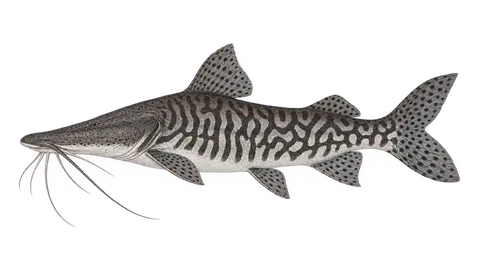
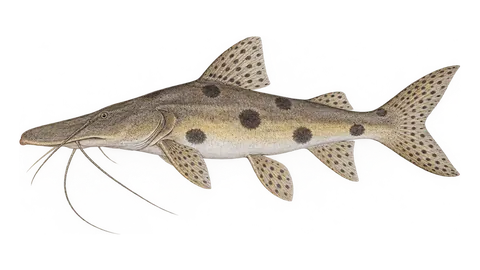
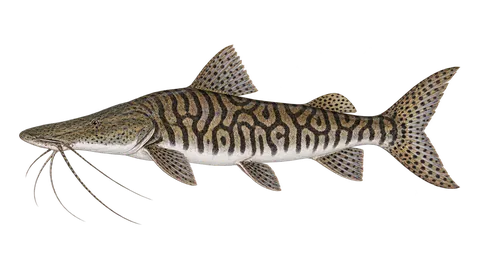
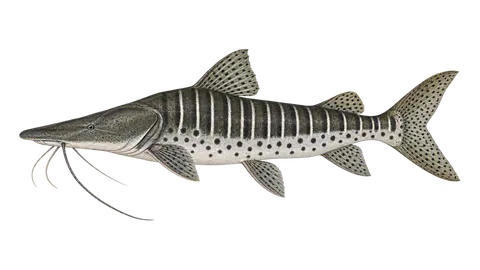
Very long, flat head shaped like a spade. Blue-grey back, white belly sharply set off. Flank with many round black spots and some narrow pale vertical bands edged in black. The cachara has broad dark bands that join into a net and few spots. The "ponto e vírgula" is a farmed hybrid with a mixed pattern.
Also called: pintado, surubim, surubim-pintado
don't confuse with:
where found
open on the large mapWhere to look: Deep pools and river channel by day; at night, bank edges, bay and corixo mouths, sandy beaches and backwaters.
Pantanal (Paraguay, Cuiabá, São Lourenço, Miranda, Taquari, Aquidauana), upper Paraná (Paraná, Grande, Paranaíba, Tietê, Paranapanema) and São Francisco (Três Marias, Pirapora, Januária, middle river in Bahia).
native to the basins
states
Mato Grosso do Sul, Mato Grosso, Minas Gerais, Goiás, São Paulo, Paraná, Bahia, Rio Grande do Sul
when to fish
best season
Falling water and dry season (April to October) concentrate the pintado in pools and bay mouths. August to October is the peak in the Pantanal. During high water it spreads over the flooded fields.
best time of day
Night and twilight. Feeds at night and around dawn and dusk. The best time runs from sunset until about 2 a.m. and at first light. By day it only bites on the bottom of the pool.
what affects the spotted sorubim
cold and cold fronts
A cold snap (friagem) in the Pantanal stops the pintado for 2 to 3 days. Keep at it once the water warms back up.
atmospheric pressure
Falling pressure before a cold front usually means a good night of fishing; after the front, slow.
moon
Dark nights (new and waning moon) produce more along the shore. On full-moon nights it stays deeper.
rain
Light night rain doesn't matter. Thunderstorm with lightning: get off the river.
water level
A draining river is the best time: water flowing out of the fields carries tuviras and small fish to the mouths.
noise
Boat anchored, motor off and lantern pointed into the boat.
wind
Little effect on the bottom.
depth
Pool of 5 to 15 m by day; shoreline 1.5 to 4 m at night.
how to fish
lures
- mid-water lure 12 to 15 cm at night and before dawn
- jig head with 4 to 6 in. shad
natural baits
- tuvira
- muçum
- minhocuçu
- lambari
- curimbatá piece (where permitted)
tip from an angler
While drifting, the bait should brush the bottom. When you feel the pull, give it 2 to 3 seconds of line, then set the hook firmly and long.
- rod
- 6' to 7', medium-fast action, 20 to 50 lb
- spinning / baitcasting reel
- high-profile or round baitcasting reel size 300 to 400, or 5000 to 6000 spinning reel
- line
- braided line 50 to 80 lb or monofilament 0.50 to 0.60 mm
- leader
- monofilament 80 to 100 lb or wire leader 45 to 60 lb, 40 to 60 cm
- hook
- 6/0 to 10/0 maruseigo or circle hook; sliding olive sinker 30 to 80 g
accessories
- large pliers
- heavy boga-grip
- headlamp
- luva
catch and release
Heavy fish: don't lift it by the mouth vertically. Support the body with both hands, keep it in the water as much as possible and release it facing into the current. Watch out for the pectoral spines.
rules for the spotted sorubim
Rules change; before keeping or transporting fish, check with the state environmental agency.
MS: minimum 85 cm
85 cmMS details
Minimum size for pintado in MS. Counts as the only native fish in the recreational bag limit.
Source: Decreto estadual MS nº 15.375/2020 (amends Decreto nº 15.166/2019), art. 9º - Semadesc/Imasul
MS: maximum 125 cm
125 cmMS details
Above 125 cm catching is banned in MS: release large breeders.
Source: Decreto estadual MS nº 15.375/2020 (amends Decreto nº 15.166/2019), art. 9º - Semadesc/Imasul
Zero transport in MT: pintado/sorubim on the banned list
transport, storage and trade banned until Dec 31, 2028MT details
Art. 19-B bans for 5 years (since Jan 1, 2024) transporting, storing and trading pintado/sorubim caught in rivers of MT. Recreational anglers may only keep up to 2 kg or 1 fish for consumption on site (within 500 m of the river), and art. 19-C excludes the species from art. 19-B: in practice, for this species, catch and release only. The law provides for an evaluation after 3 years (2027) that may revise the list. List checked in the consolidated text published by Sema-MT on May 29, 2026; Law 13.159/2025 did not change the list.
Source: Lei estadual MT nº 9.096/2009, arts. 19-B and 19-C (added by Lei nº 12.434/2024) - Sema-MT
PR: catch and release only
possession, keeping and transport bannedPR details
In PR the pintado is among the species with possession, keeping and transport banned in inland waters. Release immediately at the same spot.
Paraná basin: minimum 90 cm
90 cmSPMGGO details
Federal minimum size for sorubim/pintado in the Paraná basin. The stricter state rule prevails.
Source: Instrução Normativa Ibama nº 26/2009 (fishing rules for the Paraná River basin), Annex
MG (São Francisco): minimum 80 cm
80 cmMG details
Minimum size for sorubim in MG. In the Minas rivers of the Paraná basin, the stricter federal minimum of 90 cm applies.
Source: Portaria IEF-MG nº 111/2003 (minimum catch sizes in MG) - IEF/Semad-MG
Fishing subject to the Recovery Plan
sustainable use with management details
Vulnerable species on the national list. Portaria MMA 355/2023 recognized the pintado as suitable for fishing, provided it follows the Recovery Plan and the current management rules.
Source: Portaria MMA nº 355/2023
other rules that mention the spotted sorubim (14)
Pintado (VU): catching only within the recovery plan
Paraguay (Pantanal)ParanáSão FranciscoUruguayconfirm with the agency details
Pintado (spotted sorubim, Pseudoplatystoma corruscans) has been Vulnerable since Portaria MMA 148/2022 and remains VU on the 2026 list. Use is allowed only under the recovery plan (Portaria MMA 355/2023) and PI MPA/MMA 15/2024, which sets closed seasons and minimum sizes by basin: upper Paraguay 85 cm, Paraná 90 cm, São Francisco 80 cm, Uruguay 80 cm. Because the species was already on the list, the 180-day deadline of Portaria 1.666/2026 (art. 12) does NOT apply to it: art. 11 applies, keeping the plan and rules in force during the review. As of Oct 2026, the plan was still published on the MMA website. Stricter state restrictions: MT (transport prohibited until Dec 31, 2028), PR (catch and release only) and GO (threatened species may not be caught, IN Semad 17/2026). Watch for a possible revision of the plan.
Mato Grosso: Zero Transport for 12 species
MT details
Transport, storage and sale are fully prohibited for 5 years from Jan 1, 2024 for: cachara, caparari, dorado, jaú, matrinchã (Brycon spp.), pintado/surubim (Pseudoplatystoma spp.), piraíba, piraputanga, pirarara, arapaima (pirarucu), trairão and peacock bass (tucunaré, Cichla spp.). For recreational anglers: catch and release only. These 12 species may not even be eaten on site, since the 2 kg or 1 fish limit excludes the art. 19-B list. The law cites jaú as Zungaro zungaro; we also include the Pantanal jaú (Z. jahu) out of caution. The list may still change: § 2 (exotic and predatory species), § 3 (review through study) and the 3-year assessment planned for 2027. A TJMT news report of Jun 2, 2026 confirms the 12 prohibited species. The STF denied a preliminary injunction in the ADIs against the law in 2024; we found no merits ruling.
Mato Grosso: fishing for threatened species absolutely prohibited
MTconfirm with the agency details
Section 10 of art. 19-A of Law 9.096/2009 absolutely prohibits fishing for any species that is, or comes to be, on official lists of threatened or overexploited species. This covers pintado (VU) and, from Nov 24, 2026 (Portaria GM/MMA 1.748/2026), tambaqui.
Source: Lei estadual MT nº 9.096/2009, art. 19-A, §10 (Lei nº 12.434/2024)
Paraná: jaú, pintado, cachara, dorado and piracanjuba catch and release only
PR details
Possession, killing and transport of these species are prohibited in Paraná's inland waters (Paraná and Atlantic Southeast basins, except the Iguaçu River and the coast). Catch and release only, with immediate release at the same spot.
Goiás: threatened species excluded from catching
GO details
IN Semad 17/2026 excludes threatened species on the national list from catching; the list updates automatically with each new MMA list. In Goiás, pintado, piracanjuba, matrinchã B. gouldingi and, since Oct 25, 2026, new species on the list may not be killed.
Rio Grande do Sul: dorado, pintado and piracanjuba on the state threatened list
RSconfirm with the agency details
State Decree 51.797/2014 declares as threatened in RS: dorado (EN in the Patos Lagoon basin, VU in the Uruguay basin), pintado (EN) and piracanjuba (CR). The decree itself does not set catching rules: confirm with Sema-RS whether there is a retention restriction. Good practice is to release.
Minimum size: 85 cm
Paraguay (Pantanal) details
Minimum size: 90 cm
Paraná details
Minimum size: 80 cm
São Francisco details
Minimum size: 80 cm
Uruguay details
Minimum size: 85 cm (max. 125 cm)
MS details
Source: Decreto estadual MS nº 15.166/2019, art. 9º (as amended by Decreto nº 15.375/2020)
Minimum size: 85 cm
MT details
Minimum size: 90 cm
SPPRMGGOMSDF details
Minimum size: 80 cm
MG details
piracema and closed seasons
Each bar is the period when fishing is prohibited or restricted. The green line is today. Tap the name to see what is still allowed.
Spawning closure (piracema) in the Paraná River basin
Allowed: Recreational fishing only for non-native species and hybrids (peacock bass, tilapia, black bass, carp, croaker, etc.; piauçu remains prohibited), with handline, simple pole, or rod with spinning or baitcasting reel, up to 10 kg + 1 fish. In rivers, from shore only; in reservoirs, from a boat or from shore. Prohibited: floodplain lakes, aquatic-animal bait, within 1,500 m of dams and waterfalls, and within 500 m of confluences. Tournaments only in reservoirs and only with non-native species.
Source: IN IBAMA nº 25/2009
Spawning closure (piracema) in Minas Gerais (state rule)
Allowed: Only exotic or hybrid species, 3 kg plus one fish per day or outing, with handline, rod or pole with spinning or baitcasting reel (at most 5 per angler). Nets prohibited. Respect the minimum distances from dams, waterfalls and rapids and the marginal lagoons.
Source: Portarias IEF nº 154/2011 (São Francisco), 155/2011 (East) and 156/2011 (Grande/Paranaíba)
Closed season in Goiás (state rule)
Allowed: Sport and guided fishing only in reservoirs, catch and release with barbless hooks (no keeping, transporting or eating). Subsistence: up to 5 kg per day, for household consumption only.
Spawning closure (piracema) in the Pantanal of Mato Grosso do Sul
Allowed: Subsistence by riverside and artisanal fishers: on land or in a rowboat, with a pole, handline and hook, up to 3 kg or 1 fish per day, with no sale or transport.
Spawning closure (piracema) in Mato Grosso (all basins)
Allowed: All fishing modalities are prohibited in rivers, including catch and release (Law 9.096/2009, art. 19-A). Exceptions: subsistence fishing from shore (3 kg or 1 fish, no transport or sale) and scientific fishing. Law 13.159/2025 now allows licensed sport fishing in UHE/PCH hydropower reservoirs, natural lakes and border rivers, subject to a scientific study and a license from the environmental agency. We have not confirmed whether these licenses are already being issued.
Spawning closure (piracema) in the São Francisco River basin (rivers and reservoirs)
Allowed: Recreational fishing from a boat or from shore with handline, rod, spinning or baitcasting reel, up to 5 kg + 1 fish. Prohibited within 1,000 m of dams, waterfalls and rapids, and within 500 m of confluences. Floodplain lakes have a longer closed season (see next item).
Source: Portaria IBAMA nº 50/2007
São Francisco: floodplain lakes
Allowed: No fishing in the floodplain lakes during the period.
Source: Portaria IBAMA nº 50/2007
Spawning closure (piracema) in the Uruguay River basin
Allowed: Recreational fishing from shore, or from a boat without motor. Only handline or rod, line and hook, one gear per angler, up to 5 kg. Prohibited in floodplain lakes, within 1,500 m of dams, within 500 m of confluences, and in stretches listed in the rule (e.g., Turvo River).
Source: IN IBAMA nº 193/2008
Conservation: It was already on the previous list (Portaria MMA 148/2022). Fishing follows the rules of Interministerial Portaria no. 15/2024, kept during the plan's review (art. 11 of Portaria GM/MMA no. 1.666/2026). States such as PR ban possession. Confirm with MMA/Ibama and the state agency before keeping any fish.
how much it weighs without taking it out of the water
estimated weight
—
how we calculate
Length-weight relationship W = a·Lb (a = 0.00776, b = 3.08; FishBase). It's an average: a fat or lean fish can vary by 10% to 20%.
more about the spotted sorubim
One of the largest leather catfish in the Center-South, over 1.5 m. A nocturnal predator: by day it stays in deep pools and at night moves to the shallows and bay mouths after tuviras, muçuns and curimbatás. It is a migrant and depends on free-flowing rivers to breed. Drifting with tuvira in the Pantanal, it is the most sought-after fish. The fight is heavy and long, and the fish heads for submerged timber. It is listed nationally as Vulnerable and has strict rules: transport banned in MT, keeping banned in PR and a size window in MS. Check the state rule before keeping any fish.
Family: Pimelodidae · predator
fun facts
- Crossed with the cachara in fish farming: the hybrid is sold as "ponto e vírgula".
- Large specimens are almost always females, which is why MS has a maximum size window.
- It uses its barbels to find prey in the dark and in murky water.
in the kitchen
White, firm, boneless flesh; moqueca, grilled steaks and stew. Keep fish only within the size window and where permitted.
similar species
sources and references (8)
The season weights (months), the time of day and the sensitivities (cold, pressure, moon, wind, rain, tide, strong light, murky water and noise) are the app's editorial estimates, based on the literature below and on the field experience of anglers and guides. They are not official data nor a measurement made for this species, and they may vary by region and year. Closed seasons and legal rules appear in the rules section, with the norm and a link.
- scientific FishBase — Pseudoplatystoma corruscans (ficha da espécie)Names, distribution, biology, length-weight relationship and references. Page checked on October 13, 2026.
- official Portaria GM/MMA nº 1.667, de 27 de abril de 2026 — Lista Nacional Oficial de Espécies da Fauna Ameaçadas de Extinção (peixes e invertebrados aquáticos)The species is listed as VU (checked in the text published in the DOU of April 28, 2026, section 1, p. 96).
- official Portaria MMA nº 148, de 7 de junho de 2022 — atualização da Lista Nacional de Espécies Ameaçadas de ExtinçãoPrevious national list, cited in this species' conservation history.
- official ICMBio/SALVE — Ficha de Pseudoplatystoma corruscans (avaliação nacional do risco de extinção)National assessment by ICMBio, published in 2024. DOI verified on Crossref.
- scientific IUCN Red List — Pseudoplatystoma corruscans (avaliação global: Quase Ameaçada, NT, 21/12/2020)Global assessment. Link given on the FishBase entry (Red List, version 2025-2).
- scientific Buitrago-Suárez, U. A.; Burr, B. M. (2007). Taxonomy of the catfish genus Pseudoplatystoma Bleeker (Siluriformes: Pimelodidae) with recognition of eight species. Zootaxa 1512: 1–38.Includes P. corruscans, P. reticulatum, P. tigrinum and P. punctifer, among others.
- scientific Britski, H. A.; Silimon, K. Z. S.; Lopes, B. S. (2007). Peixes do Pantanal: manual de identificação. 2ª ed. Brasília: Embrapa Informação Tecnológica. 227 p.Printed work; the URL is the bibliographic record on FishBase, which cites this work for the species.
- scientific Ota, R. R.; Deprá, G. C.; Graça, W. J.; Pavanelli, C. S. (2018). Peixes da planície de inundação do alto rio Paraná e áreas adjacentes: revised, annotated and updated. Neotropical Ichthyology 16(2): e170094.Annotated list of species of the upper Paraná River, indicating native and non-native ones. Open access; species name checked in the text.
how we calculatewhere each number comes from
The weather comes from three independent global models, cross-checked hour by hour: when they agree, confidence goes up; when they diverge, the band between them shows on the chart. Beyond 16 days, we use the GEFS ensemble of 31 simulations: if 20 of the 31 predict rain, the chance of rain is 65%. Sun and moon are calculated astronomically, with no uncertainty.
The index adds up, weighted for each species: time of day (species curve anchored to real sunrise and sunset), moon (transits, rise and set, phase), pressure (3 h trend and 24 h swing), water temperature (in rivers, estimated from air temperature; at sea, estimated by an ocean model), wind, rain, clouds, tide and the month in the species' cycle.
sources for this lookup
how accurate the forecast is
Accuracy measured in the reference project (4 regions, 93 days, forecast vs. observed): maximum temperature is off by 0.6 °C on average the next day and 1.7 °C at 7 days; rain of 5 mm or more is detected 76% of the time the next day and 57% at 7 days. Detection isn't everything: the false alarm rate isn't published here yet, and 93 days in 4 regions is still a small sample. We now also measure every day, at the app's destinations: